
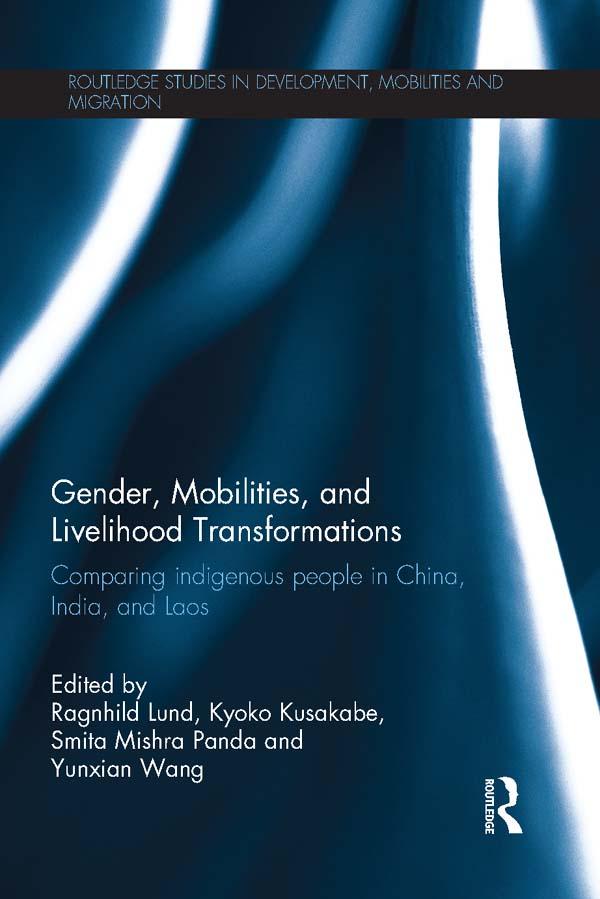
In the era of globalization many minority populations are subject to marginalization and expulsion from their traditional habitats due to rapid economic restructuring and changing politico-spatial relations. This book presents an analytical framework for understanding how mobility is an inherent part of such changes.
The book demonstrates how current neoliberal policies are making people increasingly on the move – whether voluntarily or forced, and whether individually, as family, or as whole communities – and how such mobility is changing the livelihoods of indigenous people, with particular focus on how these transformations are gendered. It queries how state policies and cross-border and cross-regional connections have shaped and redefined the livelihood patterns, rights and citizenship, identities, and gender relations of indigenous peoples. It also identifies the dynamic changes that indigenous men and women are facing, given rapid infrastructure improvements and commercialization and/or industrialization in their places of Environment.
With a focus on mobility, this innovative book gives students and researchers in development studies, gender studies, human geography, anthropology and Asian studies a more realistic assessment of peoples livelihood choices under a time of rapid transformation, and the knowledge produced may add value to present development policies and practices.
Zahle einfach mit Karte, Klarna, Apple Pay oder Google Pay. Nicht zufrieden? Du hast immer ein 14-tägiges Widerrufsrecht. Lies mehr in unseren AGB. Hast du Fragen, schreib uns eine E-Mail an hello@memmo.org.
Memmo macht das Lernen einfacher – wo auch immer du bist. Bei uns findest du deine Kursbücher und smarte Lerntools an einem Ort: Zusammenfassungen, Quizzes, Podcasts und Lernkarten. Und Ted, dein Lernbuddy, beantwortet alles, was du wissen möchtest. Über 50.000 Studierende lernen bereits hier – gemacht, damit du schneller lernst und weniger Stress hast.