
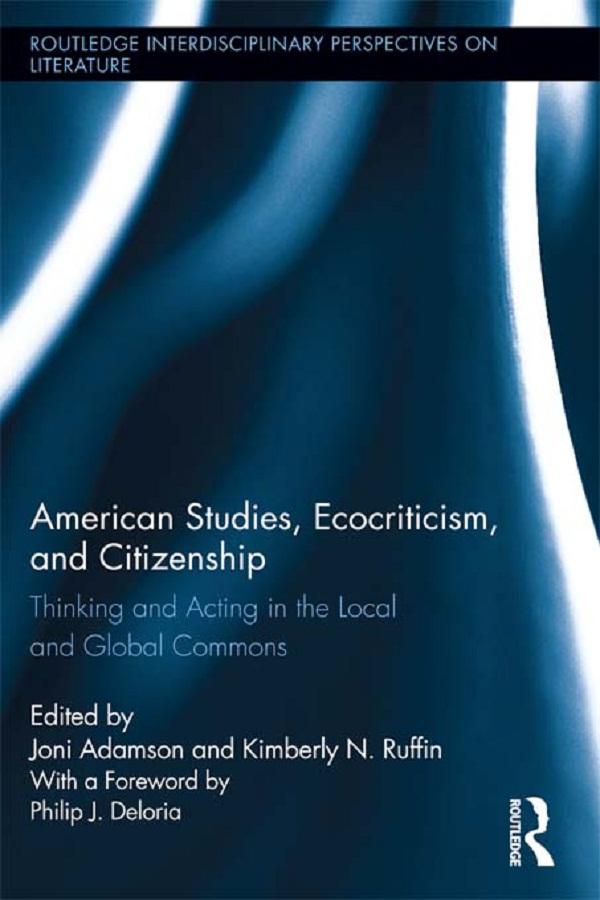
This collection reclaims public intellectuals and scholars important to the foundational work in American Studies that contributed to emerging conceptions of an "ecological citizenship" advocating something other than nationalism or an "exclusionary ethics of place." Co-editors Adamson and Ruffin recover underrecognized field genealogies in American Studies (i.e. the work of early scholars whose scope was transnational and whose activism focused on race, class and gender) and ecocriticism (i.e. the work of movement leaders, activists and scholars concerned with environmental justice whose work predates the 1990s advent of the field). They stress the necessity of a confluence of intellectual traditions, or "interdisciplinarities," in meeting the challenges presented by the "anthropocene," a new era in which human beings have the power to radically endanger the planet or support new approaches to transnational, national and ecological citizenship. Contributors to the collection examine literary, historical, and cultural examples from the 19th century to the 21st. They explore notions of the common—namely, common humanity, common wealth, and common ground—and the relation of these notions to often conflicting definitions of who (or what) can have access to "citizenship" and "rights." The book engages in scholarly ecological analysis via the lens of various human groups—ethnic, racial, gendered, coalitional—that are shaping twenty-first century environmental experience and vision. Read together, the essays included in American Studies, Ecocriticism, and Citizenship create a "methodological commons" where environmental justice case studies and interviews with activists and artists living in places as diverse as the U.S., Canada, Haiti, Puerto Rico, Taiwan and the Navajo Nation, can be considered alongside literary and social science analysis that contributes significantly to current debates catalyzed by nuclear meltdowns, oil spills, hurricanes, and climate change, but also by hopes for a common future that will ensure the rights of all beings--human and nonhuman-- to exist, maintain, and regenerate life cycles and evolutionary processes
Zahle einfach mit Karte, Klarna, Apple Pay oder Google Pay. Nicht zufrieden? Du hast immer ein 14-tägiges Widerrufsrecht. Lies mehr in unseren AGB. Hast du Fragen, schreib uns eine E-Mail an hello@memmo.org.
Memmo macht das Lernen einfacher – wo auch immer du bist. Bei uns findest du deine Kursbücher und smarte Lerntools an einem Ort: Zusammenfassungen, Quizzes, Podcasts und Lernkarten. Und Ted, dein Lernbuddy, beantwortet alles, was du wissen möchtest. Über 50.000 Studierende lernen bereits hier – gemacht, damit du schneller lernst und weniger Stress hast.