
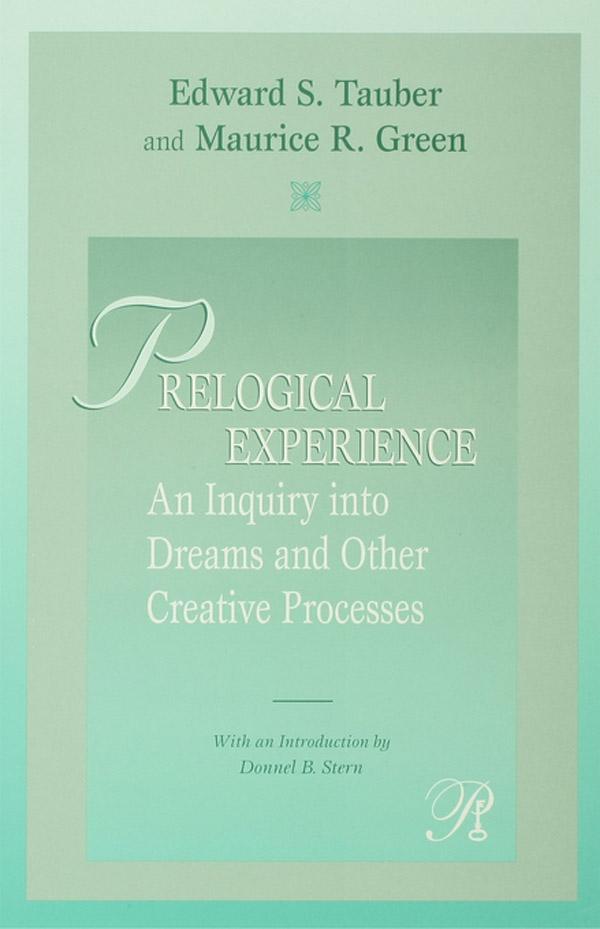
One of the foundational texts of interpersonal psychoanalysis, Prelogical Experience (1959) is a pioneering attempt to elaborate an interpersonal theory of personality that encompasses the nonpropositional, nonverbal dimension of human experience. Prelogical processes, the authors hold, cannot be consigned to infancy; rather they shape experience throughout life and are especially salient in relation to dreams, emotion, perception, and the arts.
Of special note is Tauber and Green's elaboration of the clinical situation that grows out of an appreciation of prelogical experience. In a striking anticipation of contemporary thinking, they approach patient-therapist interaction in terms of the continuous exchange of "presentational data" by patient and analyst. These data enable patient and therapist alike to "know" more about the other than can ever be expressed in propositional terms.
This perspective assigns an important role to what Piaget would term "the cognitive unconscious" in the clinical process. It likewise sustains a view of the countertransference - which includes the analyst's own dreams - as a vital source of presentational data about the patient. As Donnel Stern notes in his Introduction, these and other insights "amount to a surprisingly contemporary description of psychoanalytic treatment."
Zahle einfach mit Karte, Klarna, Apple Pay oder Google Pay. Nicht zufrieden? Du hast immer ein 14-tägiges Widerrufsrecht. Lies mehr in unseren AGB. Hast du Fragen, schreib uns eine E-Mail an hello@memmo.org.
Memmo macht das Lernen einfacher – wo auch immer du bist. Bei uns findest du deine Kursbücher und smarte Lerntools an einem Ort: Zusammenfassungen, Quizzes, Podcasts und Lernkarten. Und Ted, dein Lernbuddy, beantwortet alles, was du wissen möchtest. Über 50.000 Studierende lernen bereits hier – gemacht, damit du schneller lernst und weniger Stress hast.