
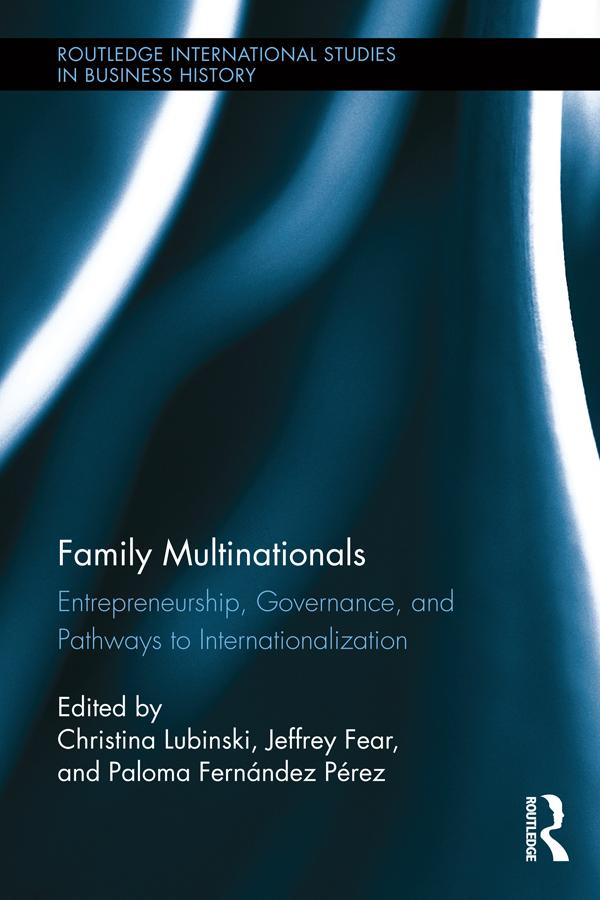
In contrast to widespread assessments that family enterprises lack sufficient resources and capabilities to go global, many family companies are competing successfully in an increasingly globalized business environment. Worldwide, a large number of thriving multinationals are still family-owned and/or under family control. While there is abundant literature on the phenomenon of globalization from many different disciplines, neither the literature on multinationals nor the growing field of family business studies have systematically investigated family multinationals yet. This volume is one of the first to deal explicitly with family multinationals and the role of the family in internationalization. It situates itself at the crossroads of internationalization studies on the one hand and family business research on the other.
Why do families continue to play such a large role in some of the most prominent firms in emerging and mature economies? How did they manage to maintain ownership control, yet divest of unrelated business ventures? How did they internationalize yet maintain control? This book identifies the idiosyncratic strategies and structures of family multinationals in different countries and at different points in time. A comparative historical and case study approach allows us to explore the role of the family through the firms’ various internationalization pathways and understand long-term developments and path dependencies.
Zahle einfach mit Karte, Klarna, Apple Pay oder Google Pay. Nicht zufrieden? Du hast immer ein 14-tägiges Widerrufsrecht. Lies mehr in unseren AGB. Hast du Fragen, schreib uns eine E-Mail an hello@memmo.org.
Memmo macht das Lernen einfacher – wo auch immer du bist. Bei uns findest du deine Kursbücher und smarte Lerntools an einem Ort: Zusammenfassungen, Quizzes, Podcasts und Lernkarten. Und Ted, dein Lernbuddy, beantwortet alles, was du wissen möchtest. Über 50.000 Studierende lernen bereits hier – gemacht, damit du schneller lernst und weniger Stress hast.