
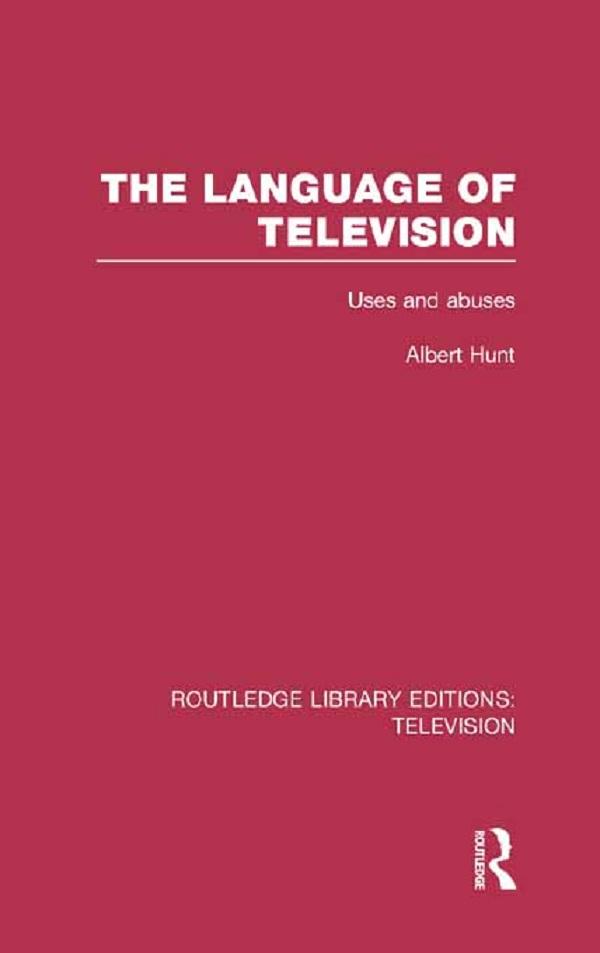
The first part of this book assesses how television presents viewers with information - contrasting the ‘official reality’ of news and current affairs programmes with the anarchic view of the world put out by such as Morecambe and Wise and the two Ronnies. It challenges the politics of programme schedules and takes care to consider the language used in programs designed for different purposes.
The second, inspiring part contains accounts of three of the author's collaborative video projects which aimed to use the medium of video storytelling to access a different way of teaching. The third and most polemical part of the book explores more about education in relation to television and video. Originally published in 1981, it is a book about the way that television, through massive and constant reinforcement, made its own language the only language; and it presents the attempts – instructive, hilarious, occasionally quite touching – made by the author and students to discover other possible languages that television might use.
Zahle einfach mit Karte, Klarna, Apple Pay oder Google Pay. Nicht zufrieden? Du hast immer ein 14-tägiges Widerrufsrecht. Lies mehr in unseren AGB. Hast du Fragen, schreib uns eine E-Mail an hello@memmo.org.
Memmo macht das Lernen einfacher – wo auch immer du bist. Bei uns findest du deine Kursbücher und smarte Lerntools an einem Ort: Zusammenfassungen, Quizzes, Podcasts und Lernkarten. Und Ted, dein Lernbuddy, beantwortet alles, was du wissen möchtest. Über 50.000 Studierende lernen bereits hier – gemacht, damit du schneller lernst und weniger Stress hast.