
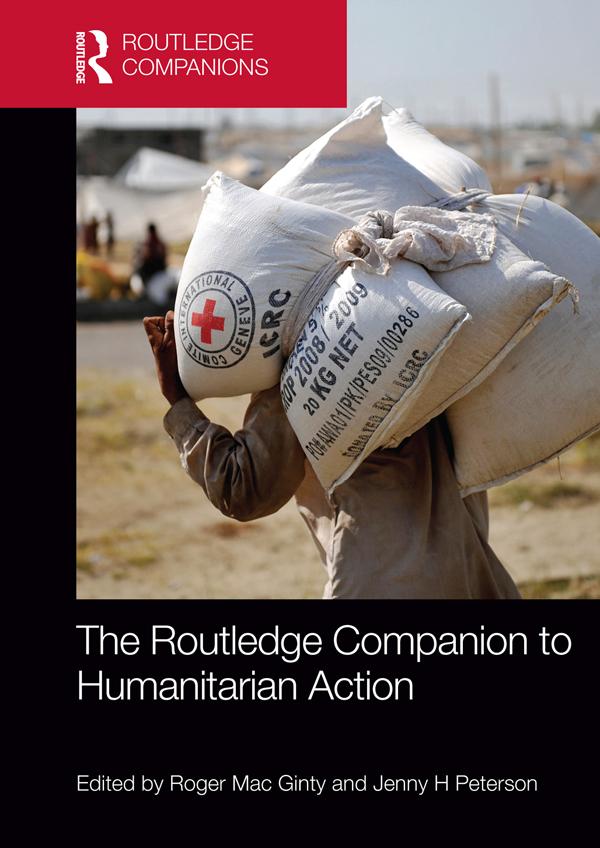
The Companion on Humanitarian Action addresses the political, ethical, legal and practical issues which influence reactions to humanitarian crisis. It does so by exploring the daily dilemmas faced by a range of actors, including policy makers, aid workers, the private sector and the beneficiaries of aid and by challenging common perceptions regarding humanitarian crisis and the policies put in place to address these. Through such explorations, it provides practitioners and scholars with the knowledge needed to both understand and improve upon current forms of humanitarian action.
The Companion will be of use to those interested a range of humanitarian programmes ranging from emergency medical assistance, military interventions, managing refugee flows and the implementation of international humanitarian law. As opposed to addressing specific programmes, it will explore five themes seen as relevant to understanding and engaging in all modes of humanitarian action. The first section explores varying interpretations of humanitarianism, including critical historical and political-economic explanations as well as more practice based explorations focused on notions needs assessments and evaluation. Following this, readers will be exposed to the latest debates on a range of humanitarian principles including neutrality and sovereignty, before exploring the key issues faced by the main actors involved in humanitarian crisis (from international NGOs to local community based organizations). The final two sections address what are seen as key dilemmas in regards to humanitarian action and emerging trends in the humanitarian system, including the increasing role of social media in responding to crises.
Whilst not a ‘how to guide’, the Companion contains many practical insights for policy makers and aid workers, whilst also offering analytical insights for students of humanitarian action. Indeed, throughout the book, readers will come to the realization that understanding and improving humanitarian action simultaneously requires both active critical reflection and an acceptance of the urgency and timeliness of action that is required for humanitarian assistance to have an impact on vital human needs. Exploring a sector that is far from homogenous, both practitioners and scholars alike will find the contributions of this book offers them a deeper understanding of the motivations and mechanics of current interventions, but also insight into current changes and progress occurring in the field of humanitarian practice.
Zahle einfach mit Karte, Klarna, Apple Pay oder Google Pay. Nicht zufrieden? Du hast immer ein 14-tägiges Widerrufsrecht. Lies mehr in unseren AGB. Hast du Fragen, schreib uns eine E-Mail an hello@memmo.org.
Memmo macht das Lernen einfacher – wo auch immer du bist. Bei uns findest du deine Kursbücher und smarte Lerntools an einem Ort: Zusammenfassungen, Quizzes, Podcasts und Lernkarten. Und Ted, dein Lernbuddy, beantwortet alles, was du wissen möchtest. Über 50.000 Studierende lernen bereits hier – gemacht, damit du schneller lernst und weniger Stress hast.