
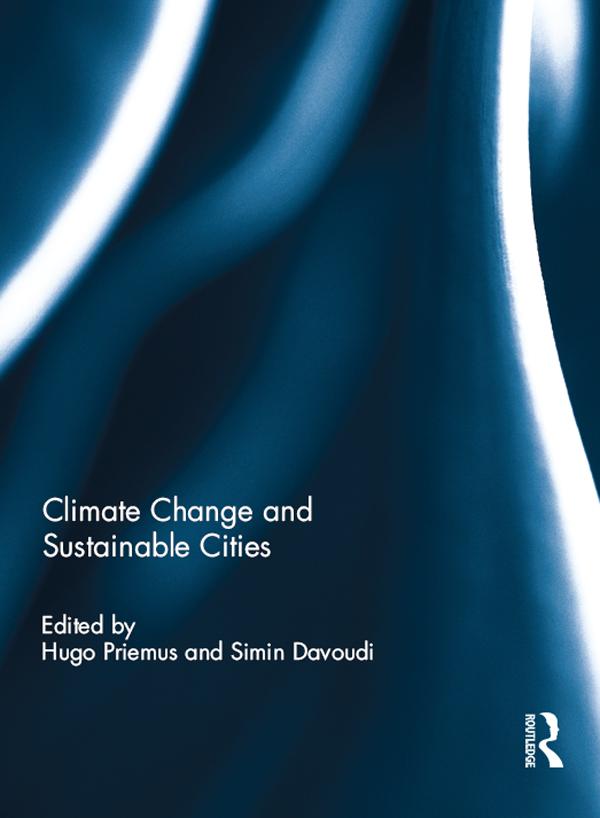
Climate change has demonstrated, perhaps more than any other environmental concerns, the complexities of the human-nature interrelationship and the need for embedding a far greater environmental consciousness into our social values and norms. A drastic reduction in global greenhouse gas emissions requires a transition to low carbon cities. This demands a better understanding of the interactions between social, technical, and spatial processes which constitute cities.
The aim of this book is to explore these interactions and urge urban planners and other built environment professionals to revisit some of their traditional concepts, methods, and ways of thinking about what constitutes a ‘good’ city and according to whose priorities. The book brings together nine contributions ranging from broad overviews to sector-specific analysis, paying particular attention to the role of urban planning. Contributors cover climate change mitigation and adaptation, deal with different scales of analysis ranging from international and European to national and city perspectives, and discuss a range of policy sectors including housing, transport, energy, sea level rise as well as pathways for climate policy implementation. The diversity of the contributions is itself a reflection of the multitude of climate change concerns that preoccupy researchers, policy makers and practitioners.
This book was published as a special issue of European Planning Studies.
Zahle einfach mit Karte, Klarna, Apple Pay oder Google Pay. Nicht zufrieden? Du hast immer ein 14-tägiges Widerrufsrecht. Lies mehr in unseren AGB. Hast du Fragen, schreib uns eine E-Mail an hello@memmo.org.
Memmo macht das Lernen einfacher – wo auch immer du bist. Bei uns findest du deine Kursbücher und smarte Lerntools an einem Ort: Zusammenfassungen, Quizzes, Podcasts und Lernkarten. Und Ted, dein Lernbuddy, beantwortet alles, was du wissen möchtest. Über 50.000 Studierende lernen bereits hier – gemacht, damit du schneller lernst und weniger Stress hast.