
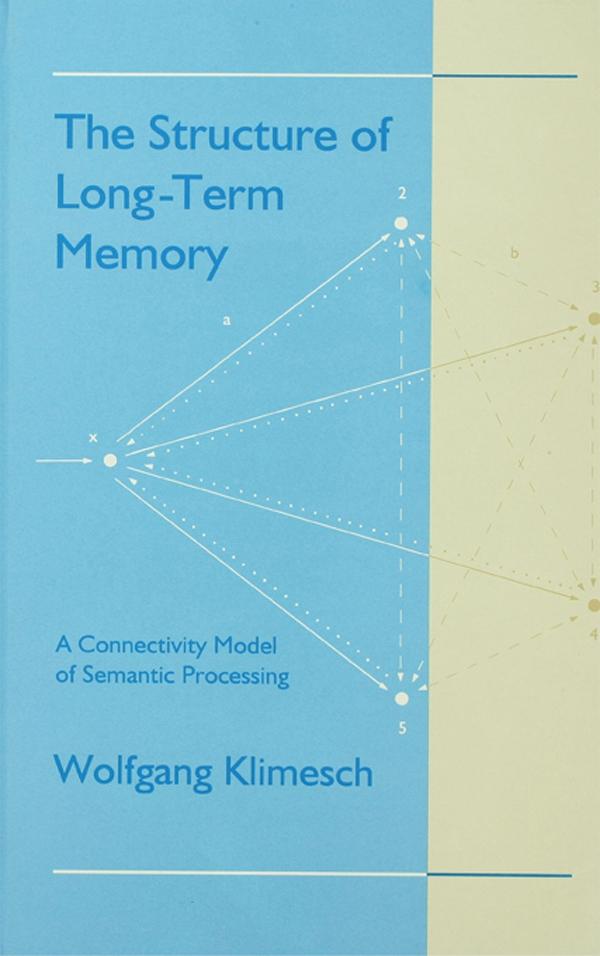
How is information stored and retrieved from long-term memory? It is argued that any systematic attempt to answer this question should be based on a particular set of specific representational assumptions that have led to the development of a new memory theory -- the connectivity model. One of the crucial predictions of this model is that, in sharp contrast to traditional theories, the speed of processing information increases as the amount and complexity of integrated knowledge increases. In this volume, the predictions of the model are examined by analyzing the results of a variety of different experiments and by studying the outcome of the simulation program CONN1, which illustrates the representation of complex semantic structures. In the final chapter, the representational assumptions of the connectivity model are evaluated on the basis of neuroanatomical and physiological evidence -- suggesting that neuroscience provides valuable knowledge which should guide the development of memory theories.
Zahle einfach mit Karte, Klarna, Apple Pay oder Google Pay. Nicht zufrieden? Du hast immer ein 14-tägiges Widerrufsrecht. Lies mehr in unseren AGB. Hast du Fragen, schreib uns eine E-Mail an hello@memmo.org.
Memmo macht das Lernen einfacher – wo auch immer du bist. Bei uns findest du deine Kursbücher und smarte Lerntools an einem Ort: Zusammenfassungen, Quizzes, Podcasts und Lernkarten. Und Ted, dein Lernbuddy, beantwortet alles, was du wissen möchtest. Über 50.000 Studierende lernen bereits hier – gemacht, damit du schneller lernst und weniger Stress hast.
Das könnte dir auch gefallen
Buch kaufen0