
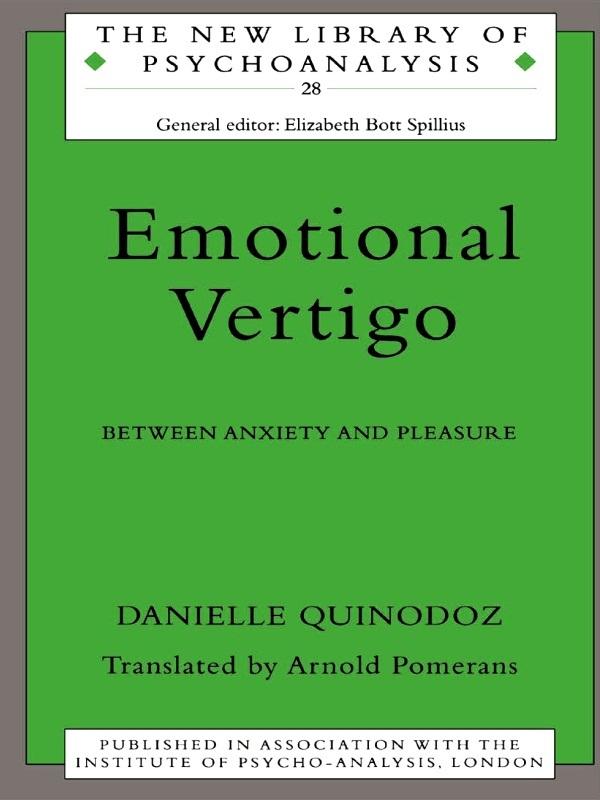
In this unique, prize-winning study Danielle Quinodoz unravels the unconscious significance of the feelings of vertigo which arise in situations where there is no immediate physical danger of falling and no organic cause. She traces the origins of such emotional vertigo to inner anxieties around separation which are expressed somatically at different levels according to the level of anxiety.
Through a detailed case study of a patient who developed the symptoms of vertigo during analysis the author offers some thought-provoking insights into the vicissitudes of the object relationship and the importance of the role of the analyst in helping the patient translate sensation into representation. She also reflects on the links between anxiety and pleasure in the experience of vertigo, clearly exemplified in sports such as rock-climbing or skiing, and shows how vertigo is inexorably linked to questions of equilibrium at the psychic as well as the physical level.
Emotional Vertigo is an excellent introduction to some of the central themes of current psychoanalytic thought.
Zahle einfach mit Karte, Klarna, Apple Pay oder Google Pay. Nicht zufrieden? Du hast immer ein 14-tägiges Widerrufsrecht. Lies mehr in unseren AGB. Hast du Fragen, schreib uns eine E-Mail an hello@memmo.org.
Memmo macht das Lernen einfacher – wo auch immer du bist. Bei uns findest du deine Kursbücher und smarte Lerntools an einem Ort: Zusammenfassungen, Quizzes, Podcasts und Lernkarten. Und Ted, dein Lernbuddy, beantwortet alles, was du wissen möchtest. Über 50.000 Studierende lernen bereits hier – gemacht, damit du schneller lernst und weniger Stress hast.