
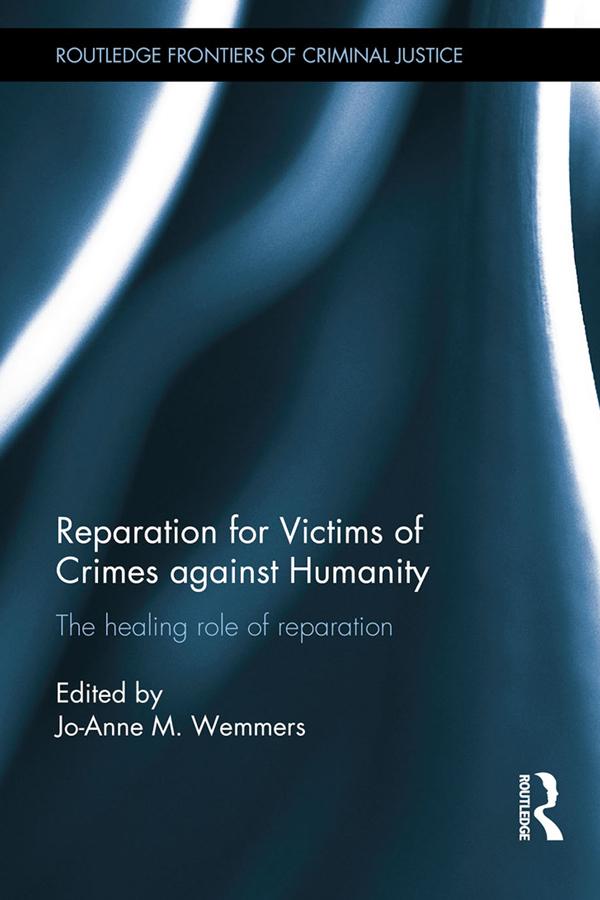
Each year, countless people fall victim to crimes against humanity. These include widespread occurrences of systematic murder, torture, rape, disappearances, forced deportation and political persecution. Crimes against humanity constitute an attack on human dignity and as such they violate the human rights of the victim, as well as the laws of humanity.
In recent years, following the creation of the International Criminal Court, there has been a growing interest in the prosecution of offenders and, in particular, in reparation following crimes against humanity. While such measures are meant to provide justice for victims, victims are often forgotten or lost in legal debates about what constitutes reparation and who is eligible to receive it.
This book reaches beyond the boundaries of law and psychology and takes a multidisciplinary approach to the question of reparation for victims of crimes against humanity. Law does not take place in a vacuum and it is important to consider the impact of the law on the psychology of the victim, as well as the legal principles themselves. Herein lies the originality of this book, which bridges the gaps between psychology, victimology, criminology and law and will be of key interest to academics and students engaged in the study of these areas.
Zahle einfach mit Karte, Klarna, Apple Pay oder Google Pay. Nicht zufrieden? Du hast immer ein 14-tägiges Widerrufsrecht. Lies mehr in unseren AGB. Hast du Fragen, schreib uns eine E-Mail an hello@memmo.org.
Memmo macht das Lernen einfacher – wo auch immer du bist. Bei uns findest du deine Kursbücher und smarte Lerntools an einem Ort: Zusammenfassungen, Quizzes, Podcasts und Lernkarten. Und Ted, dein Lernbuddy, beantwortet alles, was du wissen möchtest. Über 50.000 Studierende lernen bereits hier – gemacht, damit du schneller lernst und weniger Stress hast.