
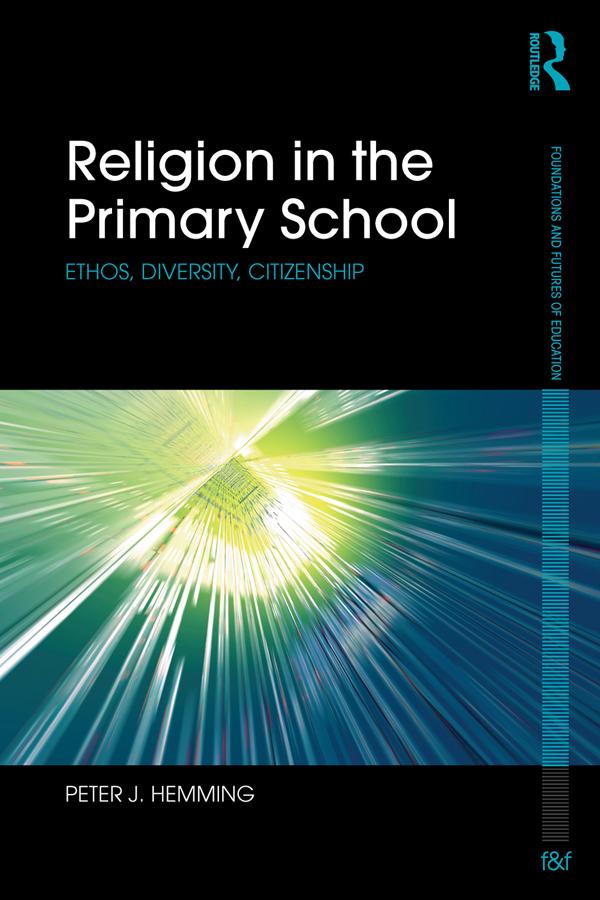
Religion and its relationship to schooling is an issue that has become more and more topical in recent years. In many countries, developments such as the diversification of state school sectors, concerns about social cohesion between ethnic and religious groups, and debates about national identity and values have raised old and new questions about the role of religion in education. Whilst the significance of this issue has been reflected in renewed interest from the academic community, much of this work has continued to be based around theoretical or pedagogical debates and stances, rather than evidence-based empirical research.
This book aims to address this gap by exploring the social and political role of religion in the context of the primary school. Drawing on original ethnographic research with a child-centred orientation, comparisons are drawn between Community and Roman Catholic primary schools situated within a multi-faith urban area in the UK. In doing so, the study explores a number of ways in which religion has the potential to contribute to everyday school life, including through school ethos and values, inter-pupil relations, community cohesion and social identity and difference. At the centre of the analysis are two key sociological debates about the significance of religion in late modern societies. The first is concerned with the place of religion in public life and the influence of secularisation and post-secularism on the relationship between religion and schooling. The second relates to the increasingly multi-faith nature of many national populations and the implications for religious citizenship in educational settings.
Religion in the Primary School will be a useful resource for academics, researchers and students as a key addition to existing knowledge in the disciplines of education, sociology and human geography. It will also be of value to both policy-makers and educationalists interested in the role of religion in schools and the implications for the wider community and society in a range of national contexts.
Zahle einfach mit Karte, Klarna, Apple Pay oder Google Pay. Nicht zufrieden? Du hast immer ein 14-tägiges Widerrufsrecht. Lies mehr in unseren AGB. Hast du Fragen, schreib uns eine E-Mail an hello@memmo.org.
Memmo macht das Lernen einfacher – wo auch immer du bist. Bei uns findest du deine Kursbücher und smarte Lerntools an einem Ort: Zusammenfassungen, Quizzes, Podcasts und Lernkarten. Und Ted, dein Lernbuddy, beantwortet alles, was du wissen möchtest. Über 50.000 Studierende lernen bereits hier – gemacht, damit du schneller lernst und weniger Stress hast.