
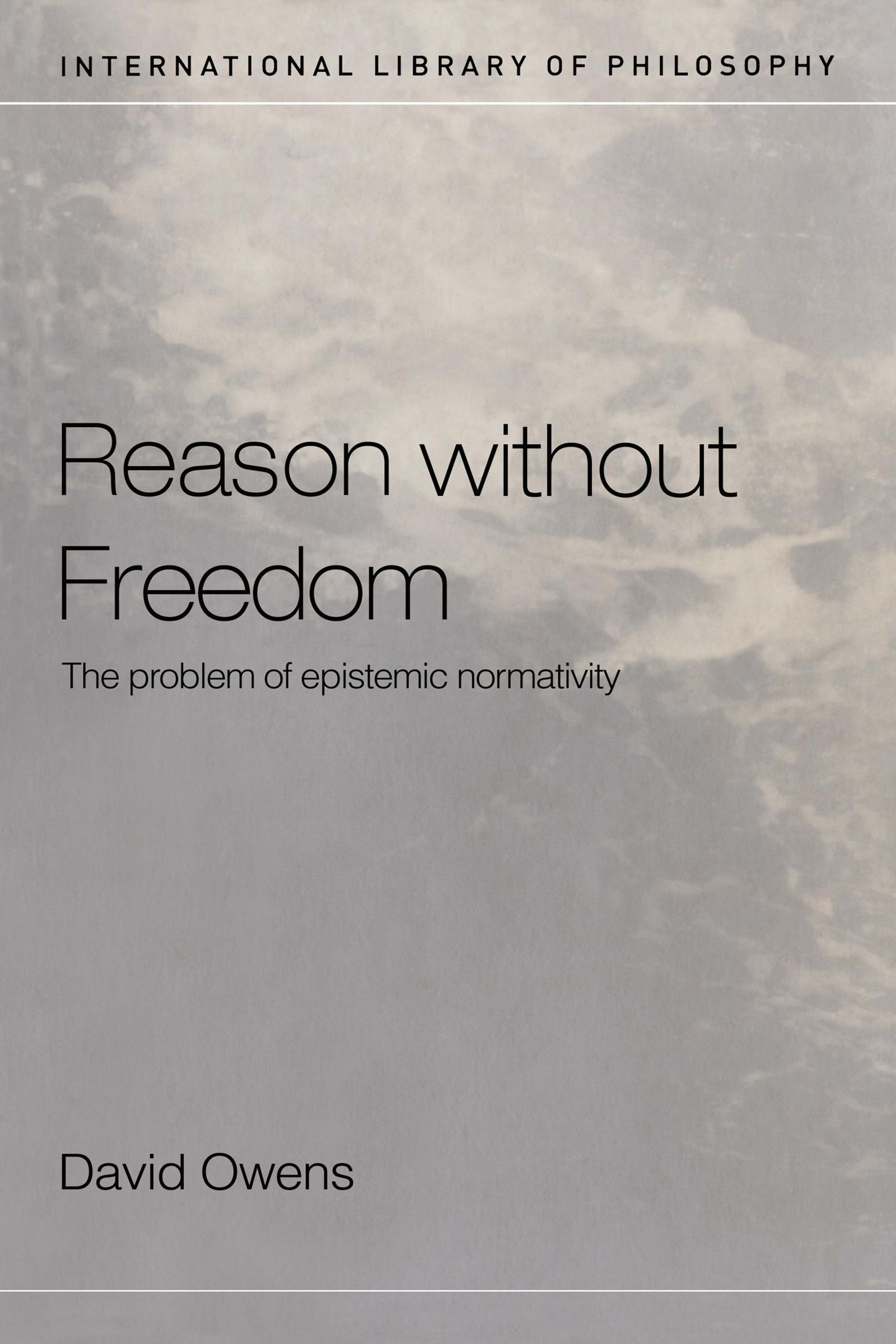
We call beliefs reasonable or unreasonable, justified or unjustified. What does this imply about belief? Does this imply that we are responsible for our beliefs and that we should be blamed for our unreasonable convictions? Or does it imply that we are in control of our beliefs and that what we believe is up to us? Reason Without Freedom argues that the major problems of epistemology have their roots in concerns about our control over and responsibility for belief. David Owens focuses on the arguments of Descartes, Locke and Hume - the founders of epistemology - and presents a critical discussion of the current trends in contemporary epistemology. He proposes that the problems we confront today - scepticism, the analysis of knowlege, and debates on epistemic justification - can be tackled only once we have understood the moral psychology of belief. This can be resolved when we realise that our responsibility for beliefs is profoundly different from our rationality and agency, and that memory and testimony can preserve justified belief without preserving the evidence which might be used to justify it. Reason Without Freedom should be of value to those interested in contemporary epistemology, philosophy of mind and action, ethics, and the history of 17th and 18th century.
Zahle einfach mit Karte, Klarna, Apple Pay oder Google Pay. Nicht zufrieden? Du hast immer ein 14-tägiges Widerrufsrecht. Lies mehr in unseren AGB. Hast du Fragen, schreib uns eine E-Mail an hello@memmo.org.
Memmo macht das Lernen einfacher – wo auch immer du bist. Bei uns findest du deine Kursbücher und smarte Lerntools an einem Ort: Zusammenfassungen, Quizzes, Podcasts und Lernkarten. Und Ted, dein Lernbuddy, beantwortet alles, was du wissen möchtest. Über 50.000 Studierende lernen bereits hier – gemacht, damit du schneller lernst und weniger Stress hast.
Das könnte dir auch gefallen
Buch kaufen0