
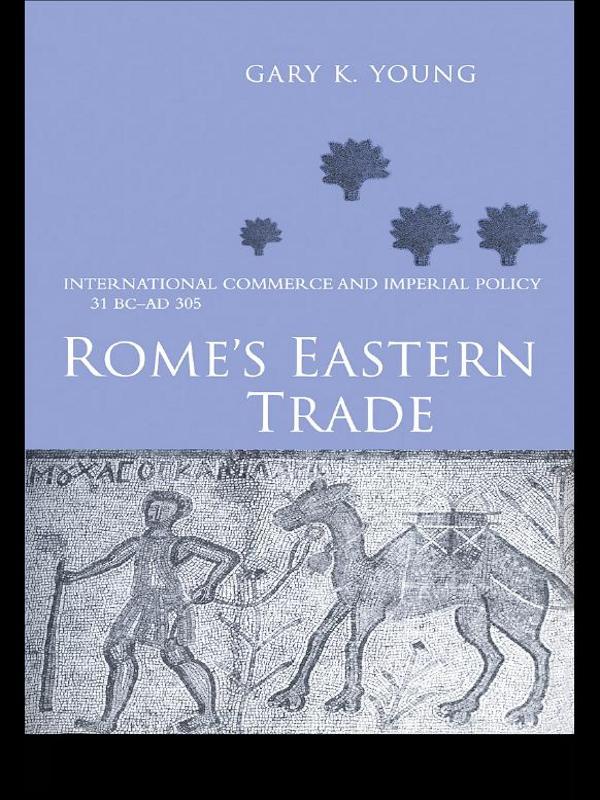
The spectacular ruins of such places as Palmyra and Petra bear witness to the wealth and power which could be derived from the silks, spices and incense of the east. Such goods were highly prized in the Roman Empire, and merchants were ready to face the perils of deserts, oceans, warfare and piracy to meet the demand for their wares. But exactly how did the trade in luxury goods operate, and to whose benefit? Gary K. Young's study offers unprecedented coverage of the major trading regions of Egypt, Arabia, Palmyra, and Syria, with detailed analysis of the routes used and of the roles of all the participants. He looks closely at the influence of the commerce in eastern goods both on the policy of the Roman imperial government, and upon local communities in the East itself. His findings contradict the standard view that the imperial government had a strong political interest in the eastern trade; rather its primary concern was the tax income the trade brought in. He also demonstrates the need for greater recognition of the efforts made by local authorities to exploit the trade to their own advantage. Incorporating the considerable archaeological research that has been undertaken in recent years, this comprehensive survey provides fresh insight into an important aspect of the eastern Roman Empire.
Zahle einfach mit Karte, Klarna, Apple Pay oder Google Pay. Nicht zufrieden? Du hast immer ein 14-tägiges Widerrufsrecht. Lies mehr in unseren AGB. Hast du Fragen, schreib uns eine E-Mail an hello@memmo.org.
Memmo macht das Lernen einfacher – wo auch immer du bist. Bei uns findest du deine Kursbücher und smarte Lerntools an einem Ort: Zusammenfassungen, Quizzes, Podcasts und Lernkarten. Und Ted, dein Lernbuddy, beantwortet alles, was du wissen möchtest. Über 50.000 Studierende lernen bereits hier – gemacht, damit du schneller lernst und weniger Stress hast.
Das könnte dir auch gefallen
Buch kaufen0