
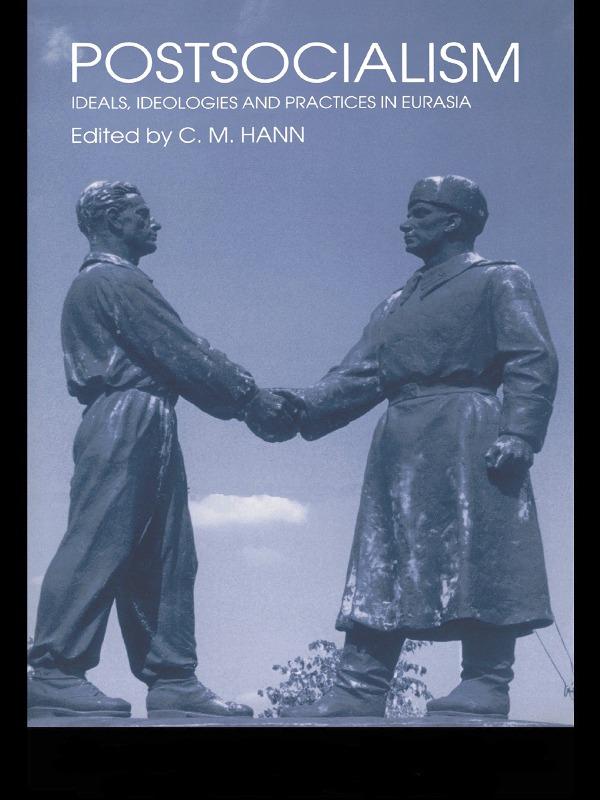
Social scientists did not predict the collapse of the socialist system in 1989-91 and their attempts to explain postsocialism have not been comprehensive. Economic disintegration and political instability have been documented, but the deeper causes have often gone unnoticed. Consequently the solutions proffered, such as the promotion of non-governmental organisations as the foundations of 'civil society', have so far brought little success.
Postsocialism presents, for the first time, the anthropological responses to these problems which are all grounded in intensive fieldwork. The authors demonstrate that even when local conditions are specific, the view 'from below' illuminates macro trends. A wide range of topics are discussed, including:
*the role of social and cultural capital in determining the 'winners' of rural decollectivization
*the devaluation of blue collar labour
*the position of Gypsies
*the viability of 'multicultural' models in situations of religious differences and ethnic violence
*new patterns of consumption in China
*the revival of rituals and the healing of socialist 'trauma'. _
Zahle einfach mit Karte, Klarna, Apple Pay oder Google Pay. Nicht zufrieden? Du hast immer ein 14-tägiges Widerrufsrecht. Lies mehr in unseren AGB. Hast du Fragen, schreib uns eine E-Mail an hello@memmo.org.
Memmo macht das Lernen einfacher – wo auch immer du bist. Bei uns findest du deine Kursbücher und smarte Lerntools an einem Ort: Zusammenfassungen, Quizzes, Podcasts und Lernkarten. Und Ted, dein Lernbuddy, beantwortet alles, was du wissen möchtest. Über 50.000 Studierende lernen bereits hier – gemacht, damit du schneller lernst und weniger Stress hast.