
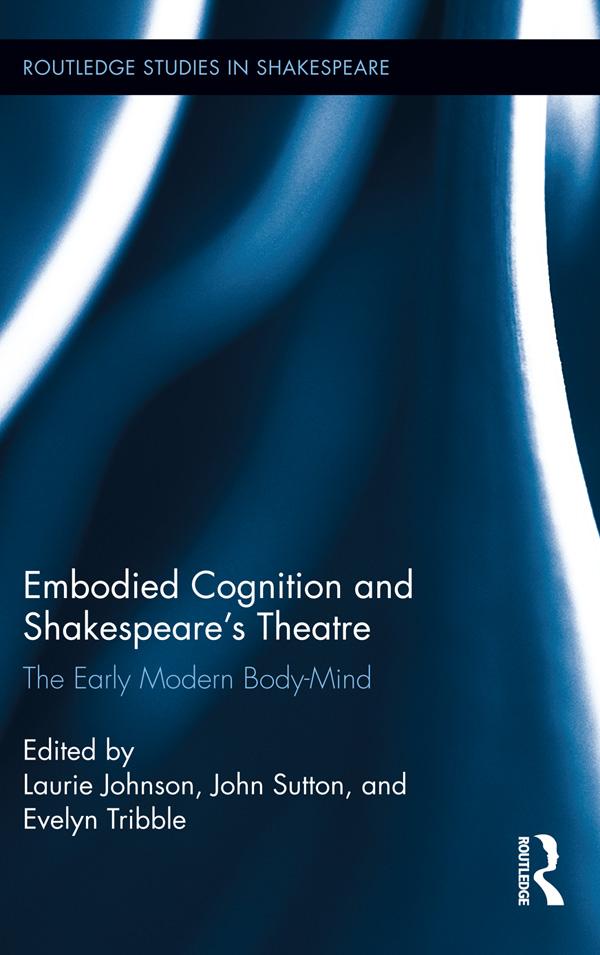
This collection considers issues that have emerged in Early Modern Studies in the past fifteen years relating to understandings of mind and body in Shakespeare’s world. Informed by The Body in Parts, the essays in this book respond also to the notion of an early modern ‘body-mind’ in which Shakespeare and his contemporaries are understood in terms of bodily parts and cognitive processes. What might the impact of such understandings be on our picture of Shakespeare’s theatre or on our histories of the early modern period, broadly speaking? This book provides a wide range of approaches to this challenge, covering histories of cognition, studies of early modern stage practices, textual studies, and historical phenomenology, as well as new cultural histories by some of the key proponents of this approach at the present time. Because of the breadth of material covered, full weight is given to issues that are hotly debated at the present time within Shakespeare Studies: presentist scholarship is presented alongside more historically-focused studies, for example, and phenomenological studies of material culture are included along with close readings of texts. What the contributors have in common is a refusal to read the work of Shakespeare and his contemporaries either psychologically or materially; instead, these essays address a willingness to study early modern phenomena (like the Elizabethan stage) as manifesting an early modern belief in the embodiment of cognition.
Zahle einfach mit Karte, Klarna, Apple Pay oder Google Pay. Nicht zufrieden? Du hast immer ein 14-tägiges Widerrufsrecht. Lies mehr in unseren AGB. Hast du Fragen, schreib uns eine E-Mail an hello@memmo.org.
Memmo macht das Lernen einfacher – wo auch immer du bist. Bei uns findest du deine Kursbücher und smarte Lerntools an einem Ort: Zusammenfassungen, Quizzes, Podcasts und Lernkarten. Und Ted, dein Lernbuddy, beantwortet alles, was du wissen möchtest. Über 50.000 Studierende lernen bereits hier – gemacht, damit du schneller lernst und weniger Stress hast.