
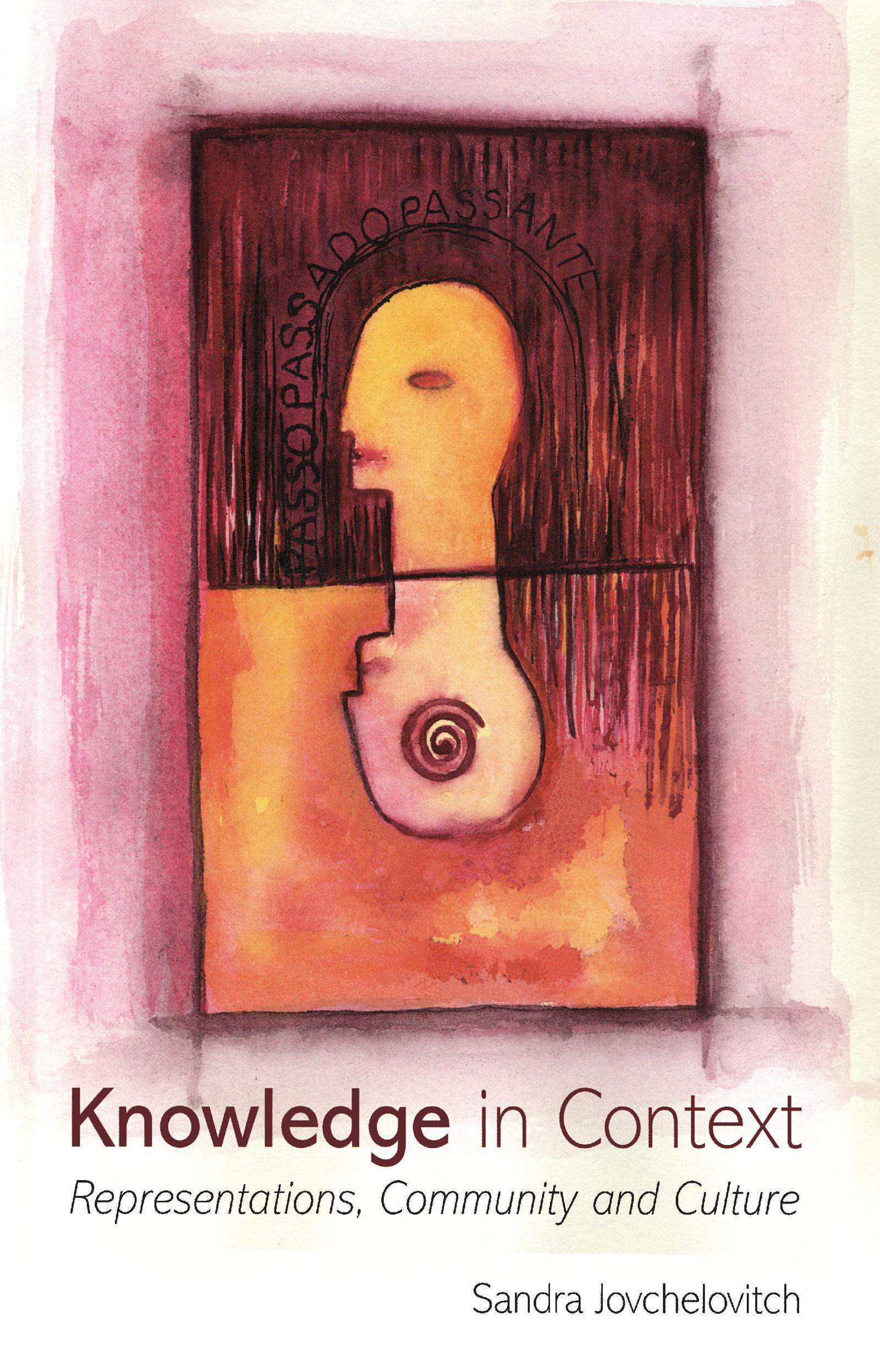
This book explores the relationship between knowledge and context through a novel analysis of processes of representation. Sandra Jovchelovitch argues that representation, a social psychological construct relating self, other and object-world, is at the basis of all knowledge. Understanding its genesis and actualisation in individual and social life explains what ties knowledge to persons, communities and cultures. It is through representation that we can appreciate the diversity of knowledge, and it is representation that opens the epistemic function of knowing to emotional and social rationalities.
Drawing on dialogues between psychology, sociology and anthropology, Jovchelovitch explores the dominant assumptions of western conceptions of knowledge and the quest for a unitary reason free from the ‘impurities’ of person, community and culture. She recasts questions related to historical comparisons between the knowledge of adults and children, ‘civilised’ and ‘primitive’ peoples, scientists and lay communities and examines the ambivalence of classical theorists such as Piaget, Vygotsky, Freud, Durkheim and Lévy-Bruhl in addressing these issues.
Against this background, Jovchelovitch situates and expands Moscovici’s theory of social representations, developing a framework to diagnose and understand knowledge systems, how they relate to different communities and what defines dialogical and non-dialogical encounters between knowledges in contemporary public spheres. Diversity in knowledge, she shows, is an asset of all human communities and dialogue between different forms of knowing constitutes the difficult but necessary task that can enlarge the frontiers of all knowledges.
Knowledge in context will make essential reading for all those wanting to follow debates on knowledge and representation at the cutting edge of social, cultural and developmental psychology, sociology, anthropology, development and cultural studies.
Zahle einfach mit Karte, Klarna, Apple Pay oder Google Pay. Nicht zufrieden? Du hast immer ein 14-tägiges Widerrufsrecht. Lies mehr in unseren AGB. Hast du Fragen, schreib uns eine E-Mail an hello@memmo.org.
Memmo macht das Lernen einfacher – wo auch immer du bist. Bei uns findest du deine Kursbücher und smarte Lerntools an einem Ort: Zusammenfassungen, Quizzes, Podcasts und Lernkarten. Und Ted, dein Lernbuddy, beantwortet alles, was du wissen möchtest. Über 50.000 Studierende lernen bereits hier – gemacht, damit du schneller lernst und weniger Stress hast.