
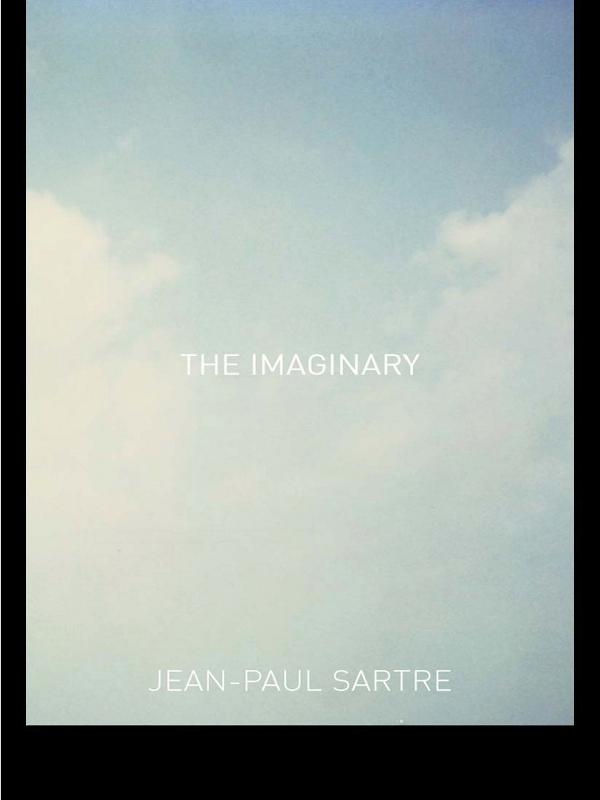
First published in 1940, Sartre's The Imaginary is a cornerstone of his philosophy. Sartre had become acquainted with the philosophy of Edmund Husserl in Berlin and was fascinated by his idea of the intentionality of consciousness as a key to the puzzle of existence.
Against this background, The Imaginary crystallized Sartre's worldview and artistic vision. Here he presented the first extended examination of the concepts of nothingness and freedom, both of which are derived from the ability of consciousness to imagine objects both as they are and as they are not. These ideas would drive Sartre's existentialism and his entire theory of human freedom, laying the foundation for his masterwork Being and Nothingness three years later. This new translation by Jonathan Webber rectifies flaws in the terminology of the first translation and recaptures the essence of Sartre's phenomenology. Webber's perceptive new introduction helps to decipher this challenging, seminal work, placing it in the context of the author's work and the history of philosophy.
Zahle einfach mit Karte, Klarna, Apple Pay oder Google Pay. Nicht zufrieden? Du hast immer ein 14-tägiges Widerrufsrecht. Lies mehr in unseren AGB. Hast du Fragen, schreib uns eine E-Mail an hello@memmo.org.
Memmo macht das Lernen einfacher – wo auch immer du bist. Bei uns findest du deine Kursbücher und smarte Lerntools an einem Ort: Zusammenfassungen, Quizzes, Podcasts und Lernkarten. Und Ted, dein Lernbuddy, beantwortet alles, was du wissen möchtest. Über 50.000 Studierende lernen bereits hier – gemacht, damit du schneller lernst und weniger Stress hast.