
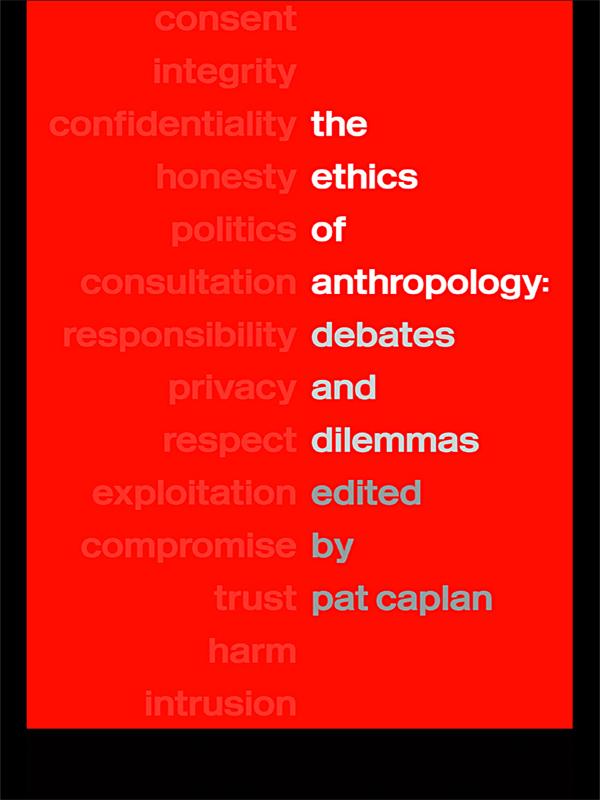
Since the inception of their discipline, anthropologists have studied virtually every conceivable aspect of other peoples' morality - religion, social control, sin, virtue, evil, duty, purity and pollution. But what of the examination of anthropology itself, and of its agendas, epistemes, theories and praxes? In 1991, Raymond Firth spoke of social anthropology as an essentially moral discipline. Is such a view outmoded in a postmodern era? Do anthropological ethics have to be re-thought each generation as the conditions of the discipline change, and as choices collide with moral alternatives? The Ethics of Anthropology looks at some of these crucial issues as they reflect on researcher relations, privacy, authority, secrecy and ownership of knowledge. The book combines theoretical papers and case studies from eminent scholars including Lisette Josephides, Steven Nugent, Marilyn Silverman, Andrew Spiegel and Veronica Strang. Showing how the topic of ethics goes to the heart of anthropology, it raises the controversial question of why - and for whom - the anthropological discipline functions.
Zahle einfach mit Karte, Klarna, Apple Pay oder Google Pay. Nicht zufrieden? Du hast immer ein 14-tägiges Widerrufsrecht. Lies mehr in unseren AGB. Hast du Fragen, schreib uns eine E-Mail an hello@memmo.org.
Memmo macht das Lernen einfacher – wo auch immer du bist. Bei uns findest du deine Kursbücher und smarte Lerntools an einem Ort: Zusammenfassungen, Quizzes, Podcasts und Lernkarten. Und Ted, dein Lernbuddy, beantwortet alles, was du wissen möchtest. Über 50.000 Studierende lernen bereits hier – gemacht, damit du schneller lernst und weniger Stress hast.