
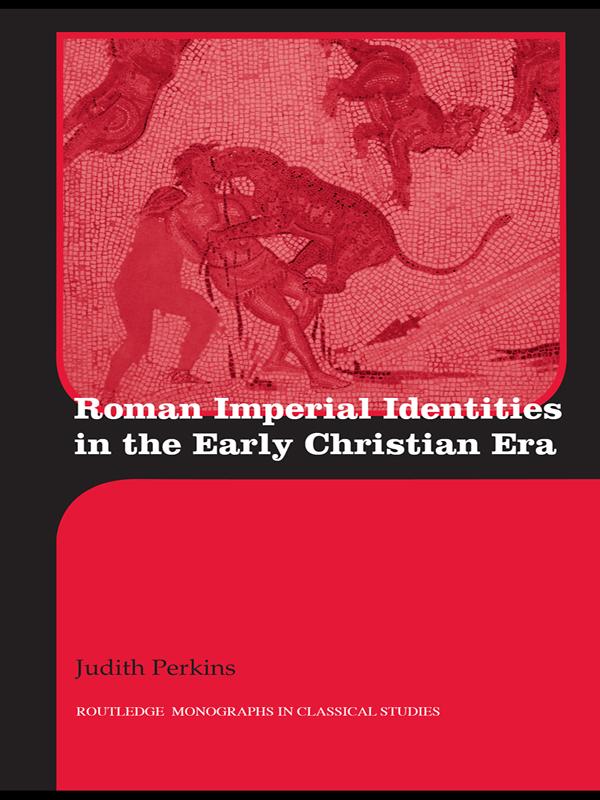
Through the close study of texts, Roman Imperial Identities in the Early Christian Era examines the overlapping emphases and themes of two cosmopolitan and multiethnic cultural identities emerging in the early centuries CE – a trans-empire alliance of the Elite and the "Christians." Exploring the cultural representations of these social identities, Judith Perkins shows that they converge around an array of shared themes: violence, the body, prisons, courts, and time.
Locating Christian representations within their historical context and in dialogue with other contemporary representations, it asks why do Christian representations share certain emphases? To what do they respond, and to whom might they appeal? For example, does the increasing Christian emphasis on a fully material human resurrection in the early centuries, respond to the evolution of a harsher and more status based judicial system?
Judith Perkins argues that Christians were so successful in suppressing their social identity as inhabitants of the Roman Empire, that historical documents and testimony have been sequestered as "Christian" rather than recognized as evidence for the social dynamics enacted during the period, Her discussion offers a stimulating survey of interest to students of ancient narrative, cultural studies and gender.
Zahle einfach mit Karte, Klarna, Apple Pay oder Google Pay. Nicht zufrieden? Du hast immer ein 14-tägiges Widerrufsrecht. Lies mehr in unseren AGB. Hast du Fragen, schreib uns eine E-Mail an hello@memmo.org.
Memmo macht das Lernen einfacher – wo auch immer du bist. Bei uns findest du deine Kursbücher und smarte Lerntools an einem Ort: Zusammenfassungen, Quizzes, Podcasts und Lernkarten. Und Ted, dein Lernbuddy, beantwortet alles, was du wissen möchtest. Über 50.000 Studierende lernen bereits hier – gemacht, damit du schneller lernst und weniger Stress hast.