
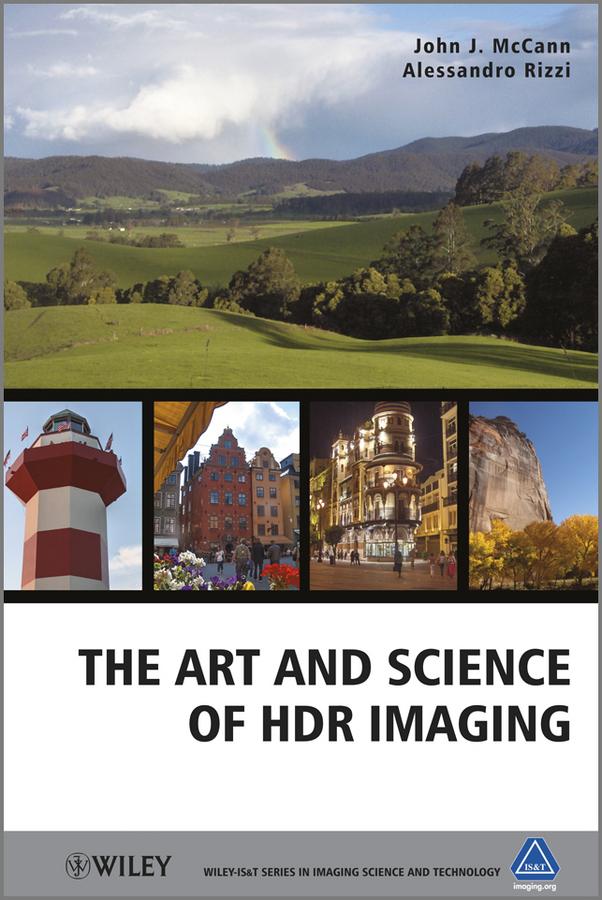
Human visual appearance and reproduction rendition of the HDR world requires spatial-image processing to overcome the veiling glare limits of optical imaging, in eyes and in cameras. Illustrated in full colour throughout, including examples of fine-art paintings, HDR photography, and multiple exposure scenes; this book uses techniques to study the HDR properties of entire scenes, and measures the range of light of scenes and the range that cameras capture. It describes how electronic image processing has been used to render HDR scenes since 1967, and examines the great variety of HDR algorithms used today. Showing how spatial processes can mimic vision, and render scenes as artists do, the book also:
- Gives the history of HDR from artists' spatial techniques to scientific image processing
- Measures and describes the limits of HDR scenes, HDR camera images, and the range of HDR appearances
- Offers a unique review of the entire family of Retinex image processing algorithms
- Describes the considerable overlap of HDR and Color Constancy: two sides of the same coin
- Explains the advantages of algorithms that replicate human vision in the processing of HDR scenes
- Provides extensive data to test algorithms and models of vision on an accompanying website
www.wiley.com/go/mccannhdr
Zahle einfach mit Karte, Klarna, Apple Pay oder Google Pay. Nicht zufrieden? Du hast immer ein 14-tägiges Widerrufsrecht. Lies mehr in unseren AGB. Hast du Fragen, schreib uns eine E-Mail an hello@memmo.org.
Memmo macht das Lernen einfacher – wo auch immer du bist. Bei uns findest du deine Kursbücher und smarte Lerntools an einem Ort: Zusammenfassungen, Quizzes, Podcasts und Lernkarten. Und Ted, dein Lernbuddy, beantwortet alles, was du wissen möchtest. Über 50.000 Studierende lernen bereits hier – gemacht, damit du schneller lernst und weniger Stress hast.