
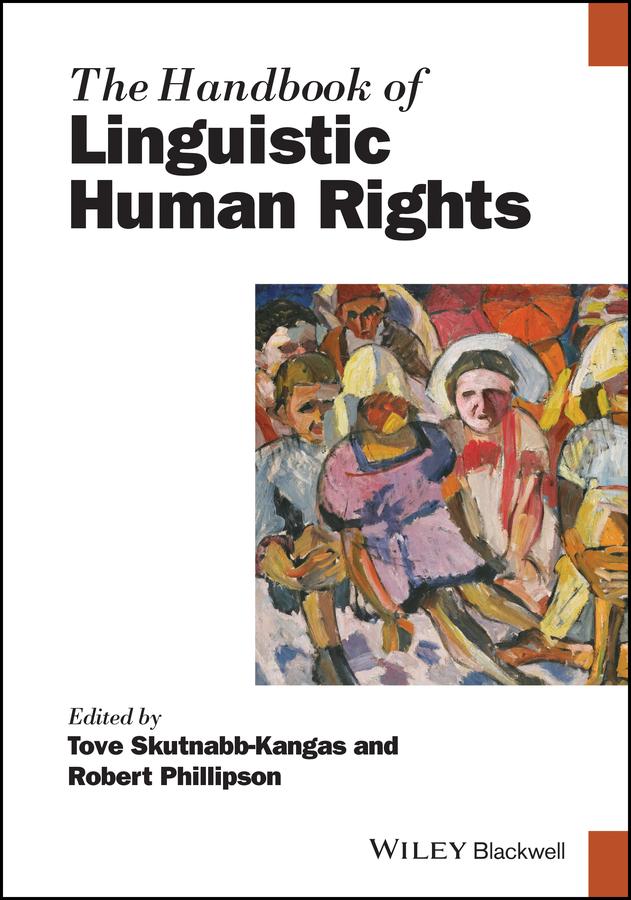
A groundbreaking new work that sheds light on case studies of linguistic human rights around the world, raising much-needed awareness of the struggles of many peoples and communities
The first book of its kind, the Handbook of Linguistic Human Rights presents a diverse range of theoretically grounded studies of linguistic human rights, exemplifying what linguistic justice is and how it might be achieved. Through explorations of ways in which linguistic human rights are understood in both national and international contexts, this innovative volume demonstrates how linguistic human rights are supported or violated on all continents, with a particular focus on the marginalized languages of minorities and Indigenous peoples, in industrialized countries and the Global South.
Organized into five parts, this volume first presents approaches to linguistic human rights in international and national law, political theory, sociology, economics, history, education, and critical theory. Subsequent sections address how international standards are promoted or impeded and cross-cutting issues, including translation and interpreting, endangered languages and the internet, the impact of global English, language testing, disaster situations, historical amnesia, and more. This essential reference work:
- Explores approaches to linguistic human rights in countries of great demographic diversity and conflict
- Covers cases of linguistic human rights in the Americas, China, Europe, North Africa, India, Nepal and New Zealand, including international minorities, such as the Kurds and the Roma, and the Deaf worldwide.
- Illustrates how education worldwide has often blocked off minority languages by not offering mother-tongue medium education
- Presents and assesses conventions, declarations, and recommendations that recognize the rights of Indigenous peoples and minorities.
- Includes a selection of short texts that present additional existential evidence of linguistic human rights.
Edited by two renowned leaders in the field, the Handbook of Linguistic Human Rights is an ideal resource for undergraduate and graduate students of language and law, sociolinguistics, applied linguistics, language policy, language education, indigenous studies, language rights, human rights, and globalization.
Zahle einfach mit Karte, Klarna, Apple Pay oder Google Pay. Nicht zufrieden? Du hast immer ein 14-tägiges Widerrufsrecht. Lies mehr in unseren AGB. Hast du Fragen, schreib uns eine E-Mail an hello@memmo.org.
Memmo macht das Lernen einfacher – wo auch immer du bist. Bei uns findest du deine Kursbücher und smarte Lerntools an einem Ort: Zusammenfassungen, Quizzes, Podcasts und Lernkarten. Und Ted, dein Lernbuddy, beantwortet alles, was du wissen möchtest. Über 50.000 Studierende lernen bereits hier – gemacht, damit du schneller lernst und weniger Stress hast.