
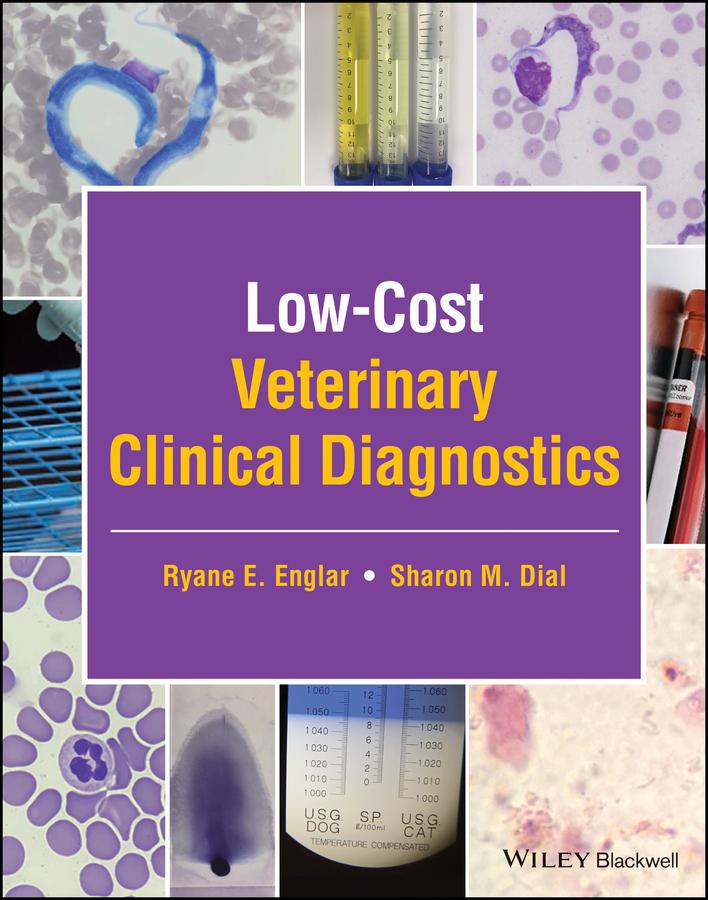
A practical guide to maximizing the diagnostic value of in-house quick assessment tests (QATs)
In Low-Cost Veterinary Clinical Diagnostics, the authors provide a hands-on resource designed to facilitate healthcare delivery across the spectrum of care.
Historically, clinicians have been taught to apply the gold standard approach to the practice of medicine. However, recent advances in veterinary medical care and associated technologies have made practitioners question whether a one-size-fits-all approach is truly best. After all, when we perform diagnostic tests, are we testing out of the desire for completeness, to cover all bases for the good of the patient? Or are we testing because we are expected to?
The reality is that gold standard care is not always advisable and not always possible. In clinical practice, veterinarians frequently encounter obstacles that limit their approaches to case management. Cost of care is a significant constraint that requires practitioners to rethink which diagnostic tests are essential.
Not every patient requires a complete blood count (CBC), chemistry profile, urinalysis, and fecal analysis to obtain diagnostic value. This text suggests that the “best” approach to case management be determined by the situation, the context, the patient, and the client.
While sophisticated panels of tests may remain the recommended approach to case management, Low-Cost Veterinary Clinical Diagnostics outlines entry-level, in-house diagnostic blood, urine, fecal, and body cavity fluid tests: how to perform them as well as the breadth and depth of patient-specific data that can be gleaned from quick assessment tests (QATs).
Readers will also find:
- A thorough introduction to patient care considerations, communication strategies that facilitate cost-conscious shared decision-making
- Comprehensive explorations of quick assessment tests (QATs) in hematology, including packed cell volume (PCV), total solids (TS), buffy coat analysis, blood smears, blood glucose, blood urea nitrogen (BUN), saline agglutination tests, and activated clotting time.
- Practical discussions of quick assessment tests (QATs) involving urine, including urine color, dipstick analysis, specific gravity (USG), and urine sediment analysis
- Pragmatic evaluation of fecal analysis, including considerations surrounding fecal color, volume, consistency, and odor; saline smears or wet mounts, and fecal flotation.
- Discussion on body cavity fluid analysis
- Sample case vignettes, complete with question and answer (Q&A)
Perfect for veterinary practitioners, veterinary technicians, veterinary and veterinary technician students, Low-Cost Veterinary Clinical Diagnostics offers a quick and easy reference guide to maximizing diagnostic value in those cases where care is cost-prohibitive.
Zahle einfach mit Karte, Klarna, Apple Pay oder Google Pay. Nicht zufrieden? Du hast immer ein 14-tägiges Widerrufsrecht. Lies mehr in unseren AGB. Hast du Fragen, schreib uns eine E-Mail an hello@memmo.org.
Memmo macht das Lernen einfacher – wo auch immer du bist. Bei uns findest du deine Kursbücher und smarte Lerntools an einem Ort: Zusammenfassungen, Quizzes, Podcasts und Lernkarten. Und Ted, dein Lernbuddy, beantwortet alles, was du wissen möchtest. Über 50.000 Studierende lernen bereits hier – gemacht, damit du schneller lernst und weniger Stress hast.