
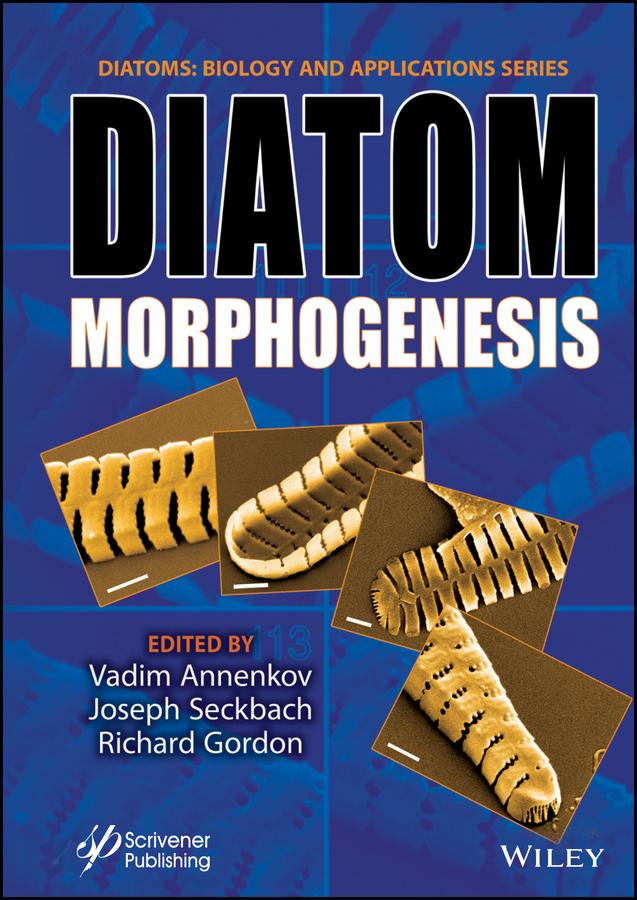
A unique book presenting the range of silica structures formed by diatoms, theories and hypotheses of how they are made, and applications to nanotechnology by use or imitation of diatom morphogenesis.
There are up to 200,000 species of diatoms, each species of these algal cells bearing an ornate, amorphous silica glass shell. The silica is structured at 7 orders of magnitude size range and is thus the most complex multiscalar solid structure known. Recent research is beginning to unravel how a single cell marshals chemical, physical, biochemical, genetic, and cytoskeletal processes to produce these single-cell marvels. The field of diatom nanotechnology is advancing as this understanding matures.
Diatoms have been actively studied over the recent 10-20 years with various modern equipment, experimental and computer simulation approaches, including molecular biology, fluorescence-based methods, electron, confocal, and AFM microscopy. This has resulted in a huge amount of information but the key stages of their silica morphogenesis are still not clear. This is the time to reconsider and consolidate the work performed so far and to understand how we can go ahead.
The main objective of this book is to describe the actual situation in the science of diatom morphogenesis, to specify the most important unresolved questions, and to present the corresponding hypotheses. The following areas are discussed:
- A tutorial chapter, with a glossary for newcomers to the field, who are often from outside of biology, let alone phycology;
- Diatom Morphogenesis: general issues, including symmetry and size issues;
- Diatom Morphogenesis: simulation, including analytical and numerical methods for description of the diatom valve shape and pore structure;
- Diatom Morphogenesis: physiology, biochemistry, and applications, including the relationship between taxonomy and physiology, biosilicification hypotheses, and ideas about applications of diatoms.
Audience
Researchers, scientists, and graduate students in the fields of phycology, general biology, marine sciences, the chemistry of silica, materials science, and ecology.
Zahle einfach mit Karte, Klarna, Apple Pay oder Google Pay. Nicht zufrieden? Du hast immer ein 14-tägiges Widerrufsrecht. Lies mehr in unseren AGB. Hast du Fragen, schreib uns eine E-Mail an hello@memmo.org.
Memmo macht das Lernen einfacher – wo auch immer du bist. Bei uns findest du deine Kursbücher und smarte Lerntools an einem Ort: Zusammenfassungen, Quizzes, Podcasts und Lernkarten. Und Ted, dein Lernbuddy, beantwortet alles, was du wissen möchtest. Über 50.000 Studierende lernen bereits hier – gemacht, damit du schneller lernst und weniger Stress hast.