
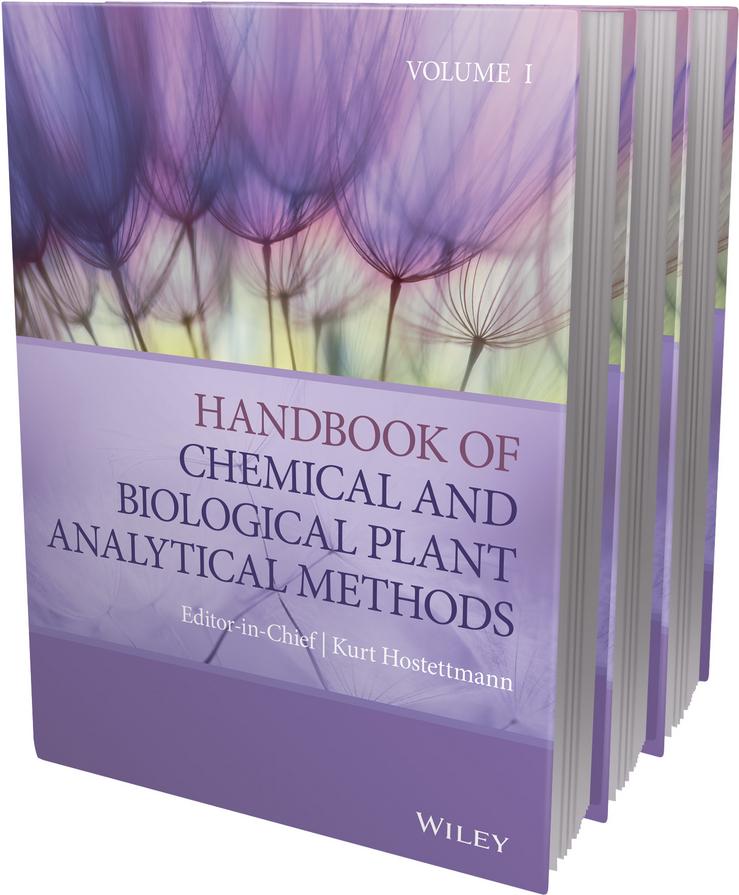
Plants and plant-derived compounds and drugs are becoming more and more popular with increasing numbers of scientists researching plant analysis. The quality control of herbal drugs is also becoming essential to avoid severe health problems, and in the future many more new drugs will be developed from plant sources.
This three-volume Handbook, featuring 47 detailed review articles, is unique as it deals with chemical and biological methodologies for plant analysis. It presents the most important and most accurate methods which are available for plant analysis.
This comprehensive work is divided into six sections as follows:
Sample preparation and identification – discussing plant selection and collection, followed by extraction and sample preparation methodologies.
Extraction and sample preparation methodologies
Instrumentation for chemical analysis - several instrumentations for chemical plant analysis are presented with an emphasis on hyphenated techniques, e.g. the coupling between HPLC and mass spectroscometry, and HPLC with NMR.
Strategies for selective classes of compounds – coverage of the most interesting classes of compounds such as polysaccharides, saponins, cardiotonic glycosides, alkaloids, terpenoids, lipids, volatile compounds and polyphenols ( flavonoids, xanthones, coumarins, naphthoquinones, anthraquinones, proanthocyanidins, etc.).
Biological Analysis - includes phenotyping, DNA barcoding techniques, transcriptome analysis , microarray, metabolomics and proteomics.
Drugs from Plants – covers the screening of plant extracts and strategies for the quick discovery of novel bioactive natural products. Safety assessment of herbal drugs is highly dependent on outstanding chromatographic and spectroscopic methods which are also featured here.
This Handbook introduces to scientists involved in plant studies the current knowledge of methodologies in various fields of chemically- and biochemically-related topics in plant research.
The content from this Handbook will publish online within the Encyclopedia of Analytical Chemistry via Wiley Online Library: http://www.wileyonlinelibrary.com/ref/eac
Benefit from the introductory offer, valid until 30 November 2014!
Introductory price: £425.00 / $695.00 / €550.00
List price thereafter: £495.00 / $795.00 / €640.00
Zahle einfach mit Karte, Klarna, Apple Pay oder Google Pay. Nicht zufrieden? Du hast immer ein 14-tägiges Widerrufsrecht. Lies mehr in unseren AGB. Hast du Fragen, schreib uns eine E-Mail an hello@memmo.org.
Memmo macht das Lernen einfacher – wo auch immer du bist. Bei uns findest du deine Kursbücher und smarte Lerntools an einem Ort: Zusammenfassungen, Quizzes, Podcasts und Lernkarten. Und Ted, dein Lernbuddy, beantwortet alles, was du wissen möchtest. Über 50.000 Studierende lernen bereits hier – gemacht, damit du schneller lernst und weniger Stress hast.