
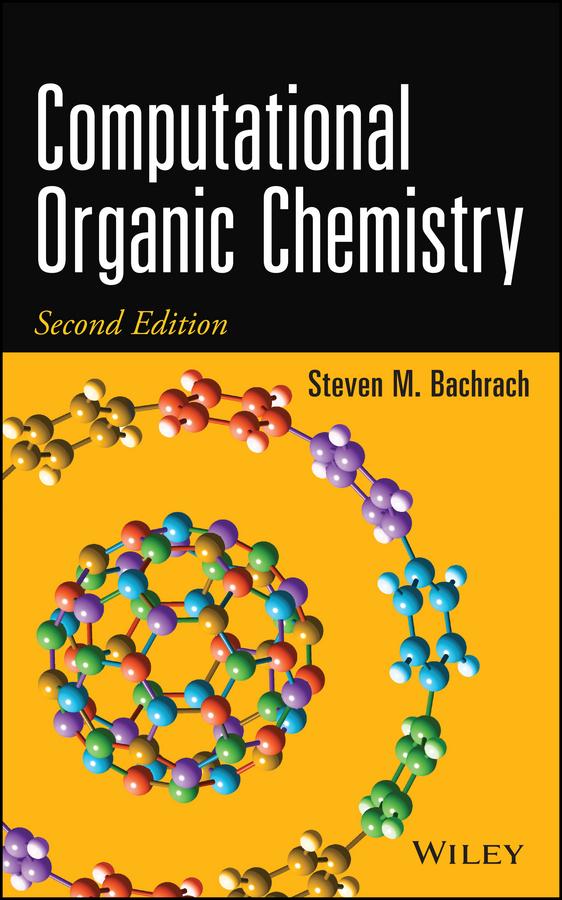
The Second Edition demonstrates how computational chemistry continues to shed new light on organic chemistry
The Second Edition of author Steven Bachrach’s highly acclaimed Computational Organic Chemistry reflects the tremendous advances in computational methods since the publication of the First Edition, explaining how these advances have shaped our current understanding of organic chemistry. Readers familiar with the First Edition will discover new and revised material in all chapters, including new case studies and examples. There’s also a new chapter dedicated to computational enzymology that demonstrates how principles of quantum mechanics applied to organic reactions can be extended to biological systems.
Computational Organic Chemistry covers a broad range of problems and challenges in organic chemistry where computational chemistry has played a significant role in developing new theories or where it has provided additional evidence to support experimentally derived insights. Readers do not have to be experts in quantum mechanics. The first chapter of the book introduces all of the major theoretical concepts and definitions of quantum mechanics followed by a chapter dedicated to computed spectral properties and structure identification. Next, the book covers:
- Fundamentals of organic chemistry
- Pericyclic reactions
- Diradicals and carbenes
- Organic reactions of anions
- Solution-phase organic chemistry
- Organic reaction dynamics
The final chapter offers new computational approaches to understand enzymes. The book features interviews with preeminent computational chemists, underscoring the role of collaboration in developing new science. Three of these interviews are new to this edition.
Readers interested in exploring individual topics in greater depth should turn to the book’s ancillary website www.comporgchem.com, which offers updates and supporting information. Plus, every cited article that is available in electronic form is listed with a link to the article.
Zahle einfach mit Karte, Klarna, Apple Pay oder Google Pay. Nicht zufrieden? Du hast immer ein 14-tägiges Widerrufsrecht. Lies mehr in unseren AGB. Hast du Fragen, schreib uns eine E-Mail an hello@memmo.org.
Memmo macht das Lernen einfacher – wo auch immer du bist. Bei uns findest du deine Kursbücher und smarte Lerntools an einem Ort: Zusammenfassungen, Quizzes, Podcasts und Lernkarten. Und Ted, dein Lernbuddy, beantwortet alles, was du wissen möchtest. Über 50.000 Studierende lernen bereits hier – gemacht, damit du schneller lernst und weniger Stress hast.