
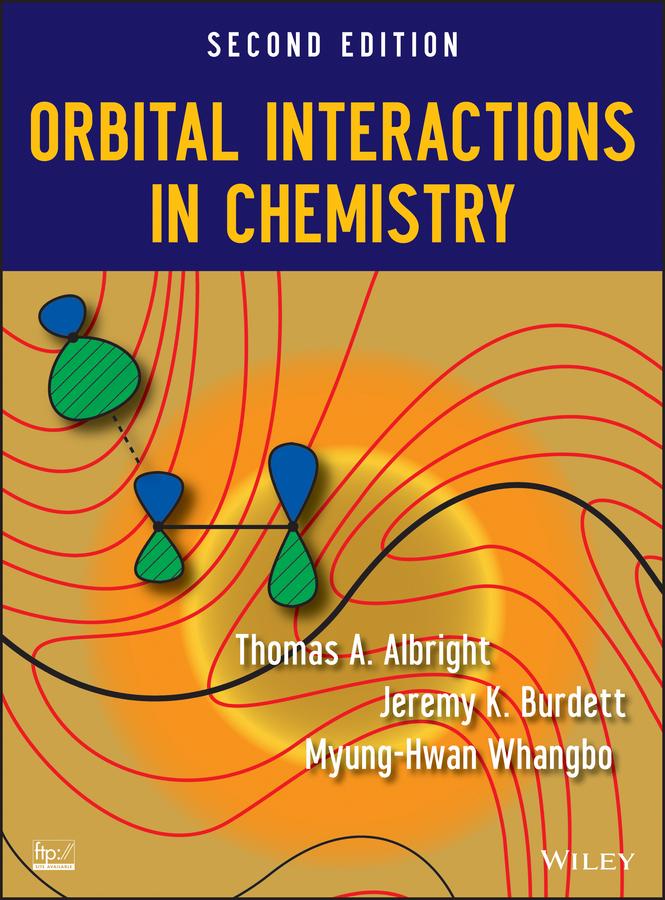
Explains the underlying structure that unites all disciplinesin chemistry
Now in its second edition, this book explores organic,organometallic, inorganic, solid state, and materials chemistry,demonstrating how common molecular orbital situations arisethroughout the whole chemical spectrum. The authors explore therelationships that enable readers to grasp the theory thatunderlies and connects traditional fields of study withinchemistry, thereby providing a conceptual framework with which tothink about chemical structure and reactivity problems.
Orbital Interactions in Chemistry begins by developingmodels and reviewing molecular orbital theory. Next, the bookexplores orbitals in the organic-main group as well as in solids.Lastly, the book examines orbital interaction patterns that occurin inorganic-organometallic fields as well as clusterchemistry, surface chemistry, and magnetism in solids.
This Second Edition has been thoroughly revised andupdated with new discoveries and computational tools since thepublication of the first edition more than twenty-five years ago.Among the new content, readers will find:
* Two new chapters dedicated to surface science and magneticproperties
* Additional examples of quantum calculations, focusing oninorganic and organometallic chemistry
* Expanded treatment of group theory
* New results from photoelectron spectroscopy
Each section ends with a set of problems, enabling readers totest their grasp of new concepts as they progress through the text.Solutions are available on the book's ftp site.
Orbital Interactions in Chemistry is written for bothresearchers and students in organic, inorganic, solid state,materials, and computational chemistry. All readers will discoverthe underlying structure that unites all disciplines inchemistry.
Now in its second edition, this book explores organic,organometallic, inorganic, solid state, and materials chemistry,demonstrating how common molecular orbital situations arisethroughout the whole chemical spectrum. The authors explore therelationships that enable readers to grasp the theory thatunderlies and connects traditional fields of study withinchemistry, thereby providing a conceptual framework with which tothink about chemical structure and reactivity problems.
Orbital Interactions in Chemistry begins by developingmodels and reviewing molecular orbital theory. Next, the bookexplores orbitals in the organic-main group as well as in solids.Lastly, the book examines orbital interaction patterns that occurin inorganic-organometallic fields as well as clusterchemistry, surface chemistry, and magnetism in solids.
This Second Edition has been thoroughly revised andupdated with new discoveries and computational tools since thepublication of the first edition more than twenty-five years ago.Among the new content, readers will find:
* Two new chapters dedicated to surface science and magneticproperties
* Additional examples of quantum calculations, focusing oninorganic and organometallic chemistry
* Expanded treatment of group theory
* New results from photoelectron spectroscopy
Each section ends with a set of problems, enabling readers totest their grasp of new concepts as they progress through the text.Solutions are available on the book's ftp site.
Orbital Interactions in Chemistry is written for bothresearchers and students in organic, inorganic, solid state,materials, and computational chemistry. All readers will discoverthe underlying structure that unites all disciplines inchemistry.
Zahle einfach mit Karte, Klarna, Apple Pay oder Google Pay. Nicht zufrieden? Du hast immer ein 14-tägiges Widerrufsrecht. Lies mehr in unseren AGB. Hast du Fragen, schreib uns eine E-Mail an hello@memmo.org.
Memmo macht das Lernen einfacher – wo auch immer du bist. Bei uns findest du deine Kursbücher und smarte Lerntools an einem Ort: Zusammenfassungen, Quizzes, Podcasts und Lernkarten. Und Ted, dein Lernbuddy, beantwortet alles, was du wissen möchtest. Über 50.000 Studierende lernen bereits hier – gemacht, damit du schneller lernst und weniger Stress hast.