
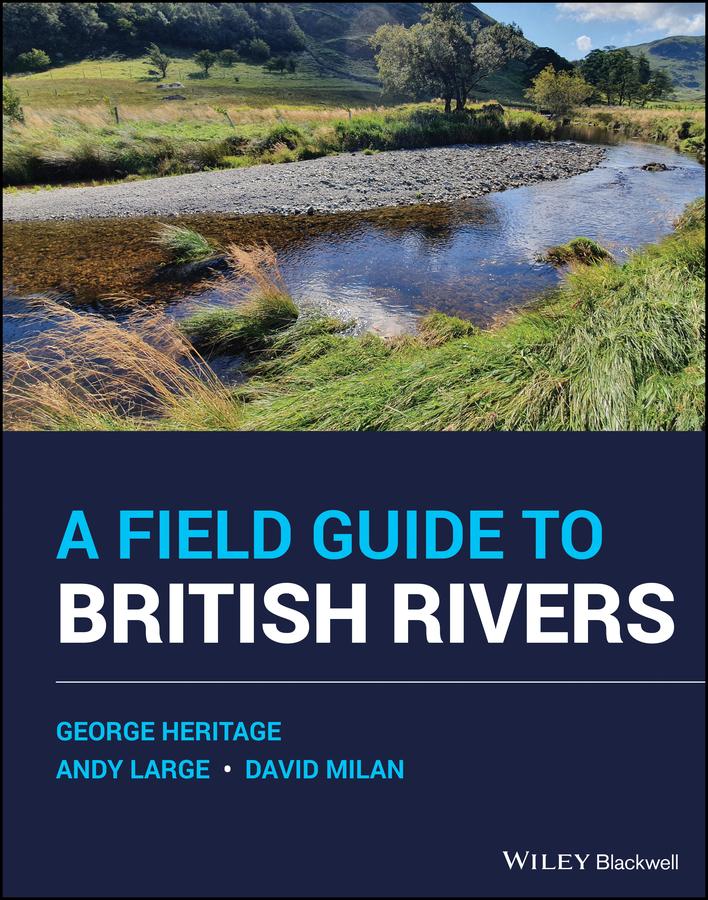
Temperate rivers are influenced by many factors including geology, climate, soils, sediment type, flow, as well as human activity. The complex interactions of the non-anthropogenic controlling factors have led to a wonderful diversity of river type throughout the British Isles. Sadly, almost all rivers in the UK have suffered significant and long-lasting modification by unsympathetic management, that has all but destroyed this variety, creating watercourses that are simplified conduits for water and sediment, designed primarily to drain the land and reduce flood risk. This volume aims to help reverse this, illustrating using over 200 images and descriptions, this variety of rivers in Britain, highlighting the many forms that temperate river systems take and providing an accessible summary of the underlying river science knowledge base.
A Field Guide to British Rivers covers the full range of upland and lowland channel types and describes the full variety of substrate conditions from bedrock through boulder, cobble and gravel, to silt dominated systems. The authors describe examples gathered from their extensive research and practical experience working with rivers throughout mainland Britain and set those examples in their wider landscape context to exemplify the natural functioning of temperate river types. This book offers a practical and contextualised guide to contribute to efforts towards the sympathetic and sustainable restoration and re-naturalisation of degraded channels in the UK. Offering a unique viewpoint of both the underpinning science and the practicalities of river management, A Field Guide to British Rivers is an essential a stand-alone guide for anyone involved in river restoration and management as well as for those simply interested in rivers in general.
Written as a field guide to demonstrate practical examples of river types, and to highlight the pressures they experience and their often-parlous condition, this book is intended to better inform both river management approaches and the policy necessary to achieve this. Fundamentally, the authors seek to demonstrate how the hydrological, geomorphological, and ecological functions of rivers and their catchments are inexorably intertwined, and together how they generate and maintain rivers as dynamic entities.
Zahle einfach mit Karte, Klarna, Apple Pay oder Google Pay. Nicht zufrieden? Du hast immer ein 14-tägiges Widerrufsrecht. Lies mehr in unseren AGB. Hast du Fragen, schreib uns eine E-Mail an hello@memmo.org.
Memmo macht das Lernen einfacher – wo auch immer du bist. Bei uns findest du deine Kursbücher und smarte Lerntools an einem Ort: Zusammenfassungen, Quizzes, Podcasts und Lernkarten. Und Ted, dein Lernbuddy, beantwortet alles, was du wissen möchtest. Über 50.000 Studierende lernen bereits hier – gemacht, damit du schneller lernst und weniger Stress hast.