
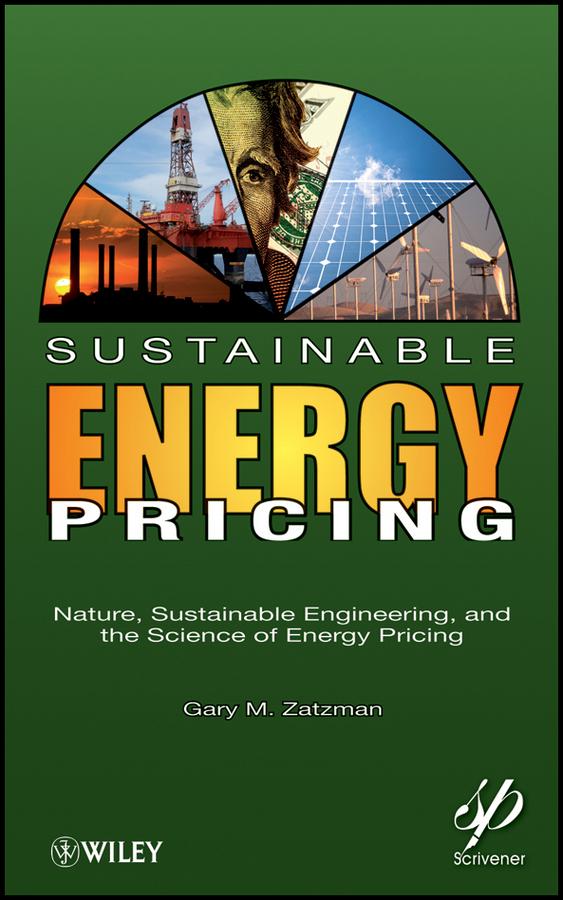
This is the first book to address the issues of affordable power, sustainable energy, and reduced environmental impact through the science of energy pricing. Looking at the availability of natural resources from an engineering perspective, and determining how they can be priced to achieve sustainability in the energy sector, is the aim of this groundbreaking new work.
Most current models used in energy pricing are based on linear analyses. While these models work well for targeted scenarios within a short time frame, they do not provide one with a scientific tool that can include many facets of the information age. The existing models do not include environmental sustainability in an integrated fashion. This is mainly because environmental costs are still considered to be intangible, and intractable with conventional economic analysis tools. Though one existing model acknowledges some possible theoretical truth to concerns expressed about the onset of 'peak oil'—the period in which new oil production must begin a decline of unknown and indefinite duration —this model has little or nothing to say about continuing practices in the extraction and production of fossil fuel that are themselves based on denying any significance or role for such thinking in the immediate future.
A serious limitation of that discourse is its insistence on polarizing opinions "for" or "against" environmental sustainability, peak oil, and affordable energy prices. This book proceeds instead to isolate the absence of any agreed criteria for what would constitute inherently sustainable development and examines the main outlines of the history and political economy of energy resource exploration and development since the 1850s from this standpoint. It proposes specific directions in which to take some of the leading alternatives and amendments to current energy pricing practices (as well as some of the most promising energy development alternatives) in order to fulfill the time criteria required for an inherently sustainable trend.
The author shows how, and why, identifying unsustainable practices and consequences can make a case for closing down particular oil and gas production operations, while averting the time-wasting approach of trying to fix what really has gone beyond fixing. However, it is possible, necessary, and actually far better to replace these methods with newer, scientifically based methods for achieving overall energy sustainability.
Zahle einfach mit Karte, Klarna, Apple Pay oder Google Pay. Nicht zufrieden? Du hast immer ein 14-tägiges Widerrufsrecht. Lies mehr in unseren AGB. Hast du Fragen, schreib uns eine E-Mail an hello@memmo.org.
Memmo macht das Lernen einfacher – wo auch immer du bist. Bei uns findest du deine Kursbücher und smarte Lerntools an einem Ort: Zusammenfassungen, Quizzes, Podcasts und Lernkarten. Und Ted, dein Lernbuddy, beantwortet alles, was du wissen möchtest. Über 50.000 Studierende lernen bereits hier – gemacht, damit du schneller lernst und weniger Stress hast.