
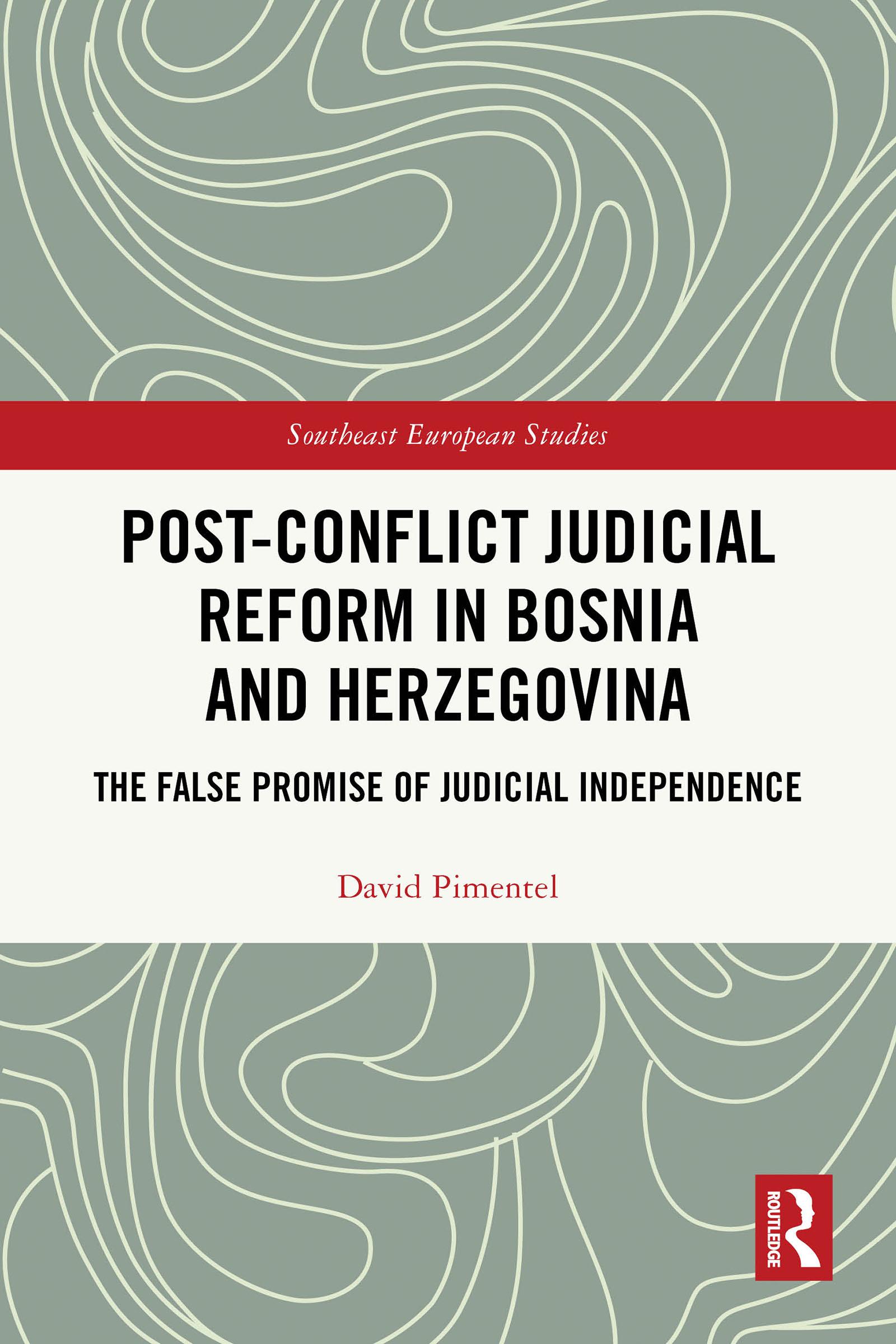
Judicial reform became a priority for international development in the 1990s and remains central to EU enlargement conditionality today. Yet despite significant investment, there is limited empirical evidence about the effectiveness of these initiatives. This book addresses this gap through a comprehensive longitudinal study of Bosnia and Herzegovina's post-war judicial reforms.
Drawing on unique survey data from judges and prosecutors, it provides the first long-term empirical assessment of post-conflict judicial reform outcomes. The findings reveal a complex picture: while reforms successfully established judicial independence and insulated courts from ethnic politics, they also created new vulnerabilities to corruption and impunity. The book demonstrates that judicial independence, when introduced without adequate integrity safeguards, can become counterproductive to rule of law objectives. Considering original survey data spanning more than two decades of post-reform implementation, it offers a critical analysis of judicial independence and accountability tensions and evidence-based insights for EU conditionality and development policy.
It will be of interest to scholars and students of comparative law, transitional justice, and development studies, challenging prevailing assumptions about judicial independence, particularly in post-conflict settings.
Zahle einfach mit Karte, Klarna, Apple Pay oder Google Pay. Nicht zufrieden? Du hast immer ein 14-tägiges Widerrufsrecht. Lies mehr in unseren AGB. Hast du Fragen, schreib uns eine E-Mail an hello@memmo.org.
Memmo macht das Lernen einfacher – wo auch immer du bist. Bei uns findest du deine Kursbücher und smarte Lerntools an einem Ort: Zusammenfassungen, Quizzes, Podcasts und Lernkarten. Und Ted, dein Lernbuddy, beantwortet alles, was du wissen möchtest. Über 50.000 Studierende lernen bereits hier – gemacht, damit du schneller lernst und weniger Stress hast.