
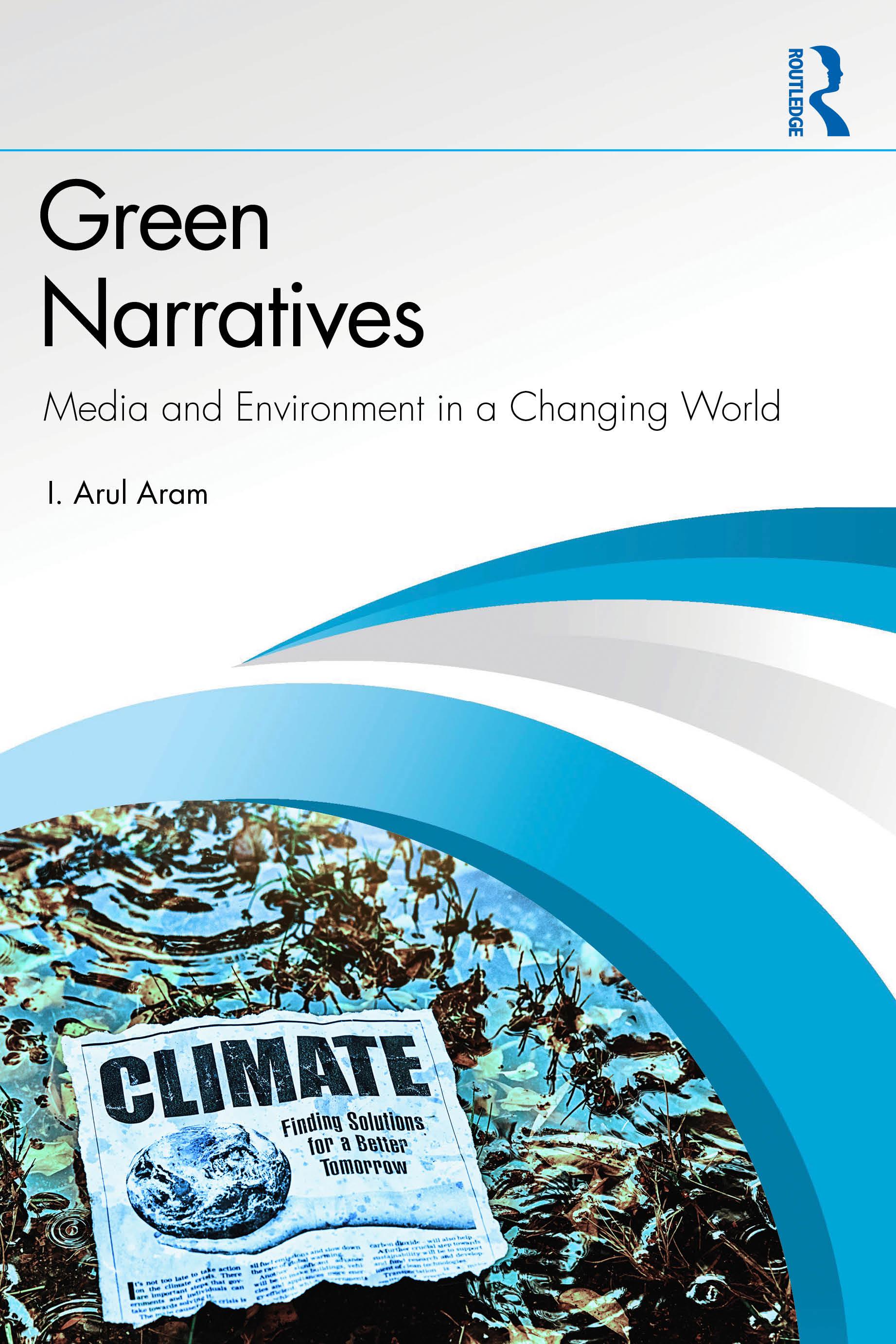
This book examines the nuances of how the media conveys environmental issues, drawing on scientific facts and documenting grassroots realities, and influencing popular perceptions. It provides a broad overview of the emerging field of environmental communication research. It is a valuable resource for scholars of environmental communication across various disciplines, including environmental studies and media and communication studies.
This book arises from the need to guide media academics undertaking research in environmental communication, as well as media professionals, environmental enthusiasts, and environmental non-governmental organisations. It discusses the issues, theories, and methods related to environmental communication research practised around the globe. It goes beyond the Green Revolution and its aftermath, and examines the mass media’s coverage of agriculture. Case studies such as the Fukushima nuclear disaster and the Bhopal gas disaster provide an in-depth understanding of pollution policies and the role of the media in monitoring their implementation. Greta Thunberg’s climate change movement and the depletion of the ozone layer are also discussed. The book covers how human-wildlife conflict revolves around protected areas. It focuses on how the media creates a platform for the exchange of eco-sensitive information and ideas. The book provides an in-depth account of ecocriticism and visual analysis. All chapters are intertwined with examples of media coverage of the environment.
This book has an advocacy approach, aiming to encourage people and governments to take action by promoting research in environmental communication. It will be an invaluable textbook for students, researchers, and educators studying environmental communication, media studies, environmental studies, disaster studies, and cultural studies. It will also serve as an essential resource for academics, policymakers, disaster management professionals, media practitioners, mental health experts, social workers, and general readers seeking a deeper understanding of ecology and environment, disaster narratives, memory, and resilience.
Zahle einfach mit Karte, Klarna, Apple Pay oder Google Pay. Nicht zufrieden? Du hast immer ein 14-tägiges Widerrufsrecht. Lies mehr in unseren AGB. Hast du Fragen, schreib uns eine E-Mail an hello@memmo.org.
Memmo macht das Lernen einfacher – wo auch immer du bist. Bei uns findest du deine Kursbücher und smarte Lerntools an einem Ort: Zusammenfassungen, Quizzes, Podcasts und Lernkarten. Und Ted, dein Lernbuddy, beantwortet alles, was du wissen möchtest. Über 50.000 Studierende lernen bereits hier – gemacht, damit du schneller lernst und weniger Stress hast.