
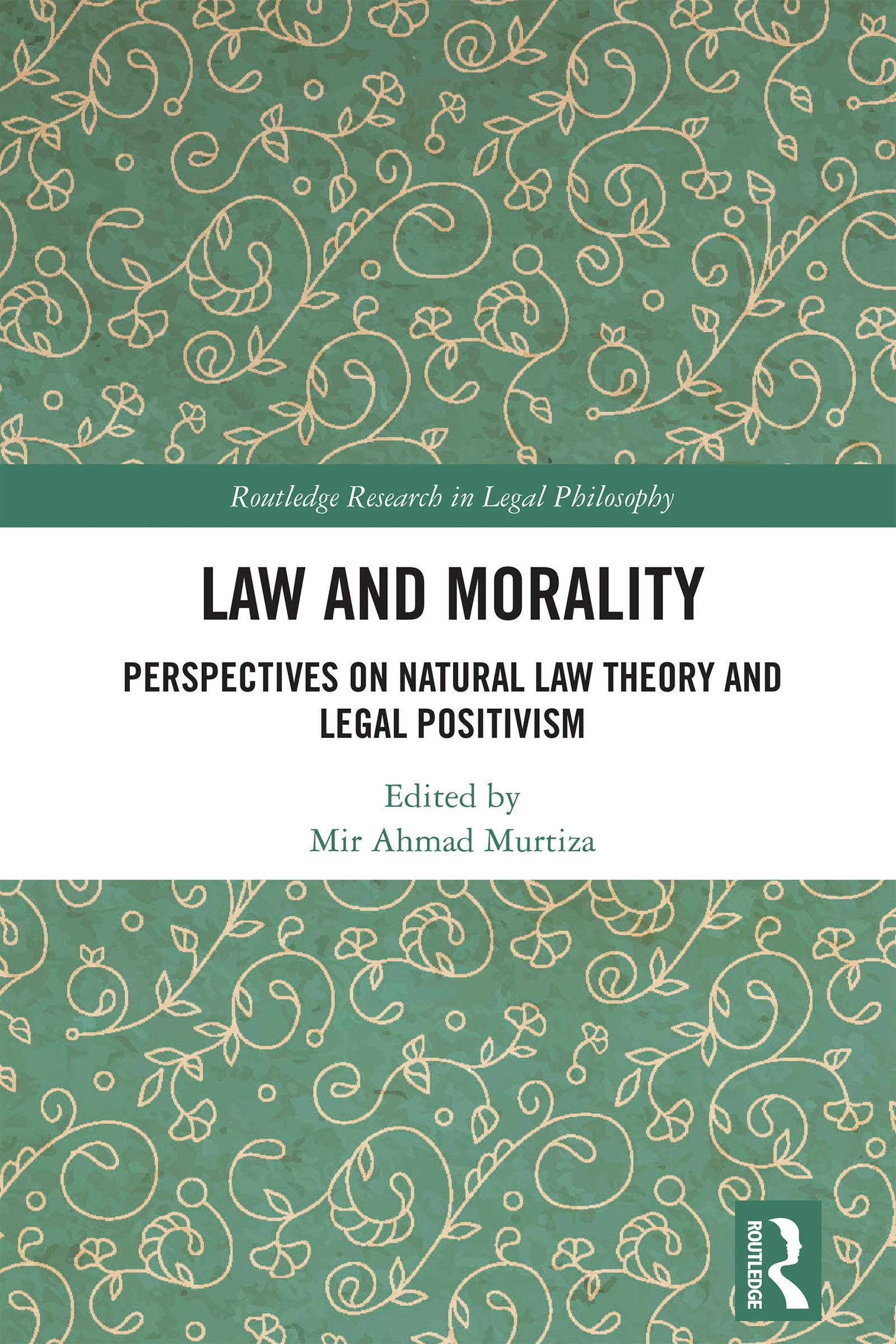
Philosophers considering the relationship between law and morality are often divided into two schools: natural law theory and legal positivism. Broadly speaking, natural law theorists assert that law is intrinsically linked to the moral order and that ethical considerations are integral to the identification and interpretation of legal norms. Legal positivists, by contrast, maintain that law is essentially a human construct and that its connection to morality, if any, is contingent rather than necessary. This volume presents a collection of accessible yet intellectually rigorous perspectives on this ongoing debate. The primary objective is to introduce the reader to the traditions of natural law and legal positivism and familiarise them with the important figures and issues. The work discusses the nature of jurisprudence and its role in human communities. The section on natural law essentially takes a historical approach, charting the origins of natural law thought in ancient Greece, then discussing the natural law thought of St. Thomas Aquinas, and concluding with a discussion of contemporary restatement of the natural law thought in the works of John Finnis. The section on legal positivism comprises ruminations on the works of the two most important legal theorists of the last century: H. L. A. Hart and Hans Kelsen. It also includes a chapter on the planning theory of law, a recent development in legal positivism. The inclusion of a chapter on Islamic tradition situates these debates in an Islamic intellectual context and gives a comparative perspective on the debate. Written by scholars who are at the forefront of the debate on the relationship between natural law and legal positivism, the work offers fresh perspectives on the debate concerning the relationship between law and morality. Building upon a long tradition of thought and advancing the debate, their contributions are expected to stimulate and inform further work on these crucial questions. The collection will be of interest to academics and students working in the areas of legal philosophy, jurisprudence, legal and political theory, and law and religion.
Zahle einfach mit Karte, Klarna, Apple Pay oder Google Pay. Nicht zufrieden? Du hast immer ein 14-tägiges Widerrufsrecht. Lies mehr in unseren AGB. Hast du Fragen, schreib uns eine E-Mail an hello@memmo.org.
Memmo macht das Lernen einfacher – wo auch immer du bist. Bei uns findest du deine Kursbücher und smarte Lerntools an einem Ort: Zusammenfassungen, Quizzes, Podcasts und Lernkarten. Und Ted, dein Lernbuddy, beantwortet alles, was du wissen möchtest. Über 50.000 Studierende lernen bereits hier – gemacht, damit du schneller lernst und weniger Stress hast.