
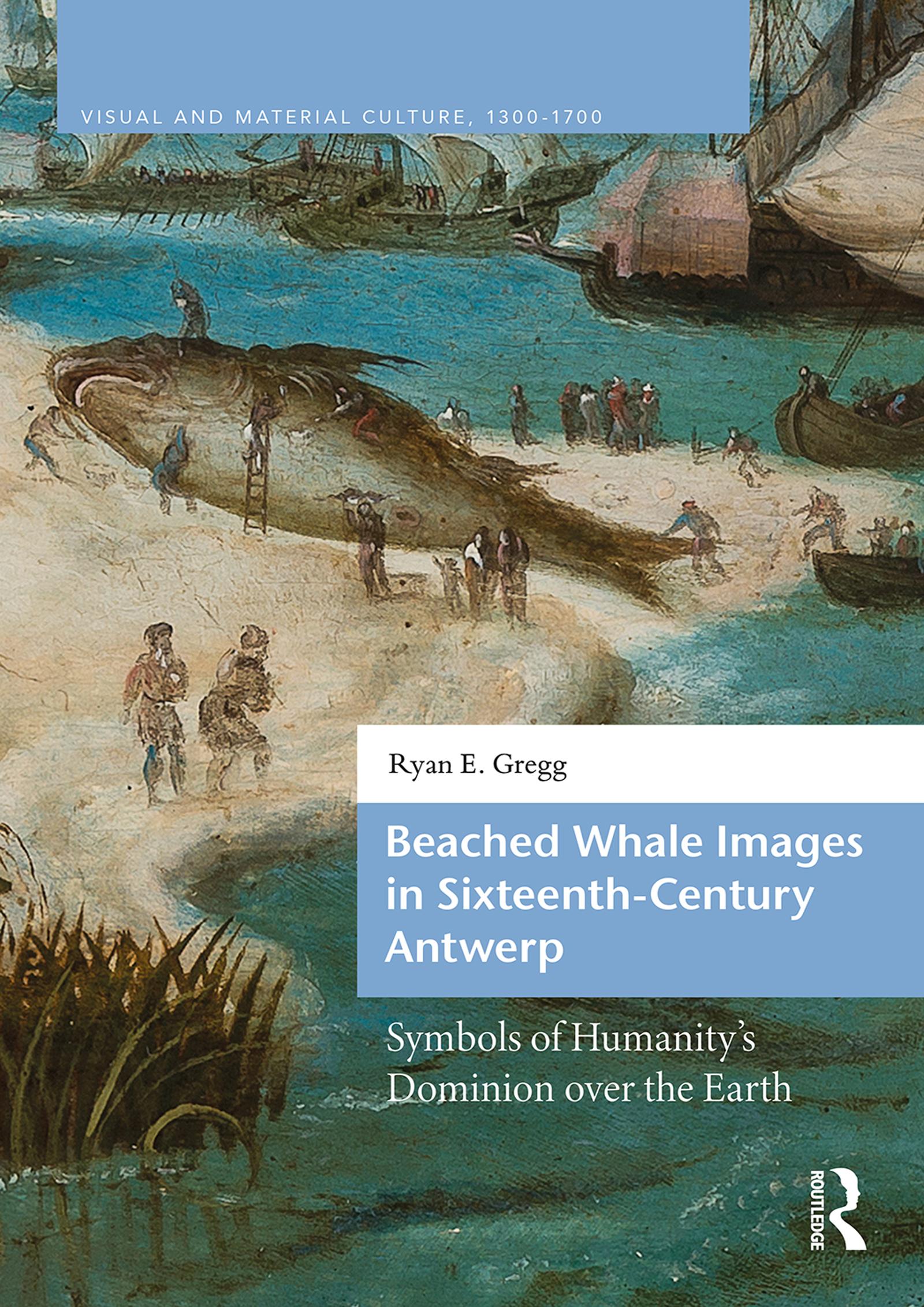
This book examines a small group of sixteenth-century Antwerp artworks depicting the butchering of beached whales, revealing how these images represent a pivotal moment in European attitudes toward nature. It argues that these "cetaceous units"—iconographic compounds showing humans dominating marine mammals—served as powerful symbols of humanity's relationship with the ocean and the natural world more broadly, marking a transition from medieval moralizing approaches to early modern empirical investigation.
The study provides a detailed iconographical analysis of works by artists such as Herri met de Bles, Master J. Kock, Anton van den Wyngaerde, and Hendrick Goltzius. It traces the evolution of whale imagery from ancient Roman sources through medieval bestiaries to Renaissance naturalist texts, examining how flensing scenes reflected contemporary whaling practices while symbolizing Christian themes and political authority. The study incorporates ecocritical methodology to demonstrate how these images justified European exploitation of natural resources and established visual precedents for later scientific illustration.
This book will appeal to art historians specializing in early modern art, environmental historians, and scholars of ecocriticism. It offers valuable insights for researchers interested in human–animal relationships, maritime history, and the intersection of art with scientific inquiry during the Renaissance period.
Zahle einfach mit Karte, Klarna, Apple Pay oder Google Pay. Nicht zufrieden? Du hast immer ein 14-tägiges Widerrufsrecht. Lies mehr in unseren AGB. Hast du Fragen, schreib uns eine E-Mail an hello@memmo.org.
Memmo macht das Lernen einfacher – wo auch immer du bist. Bei uns findest du deine Kursbücher und smarte Lerntools an einem Ort: Zusammenfassungen, Quizzes, Podcasts und Lernkarten. Und Ted, dein Lernbuddy, beantwortet alles, was du wissen möchtest. Über 50.000 Studierende lernen bereits hier – gemacht, damit du schneller lernst und weniger Stress hast.