
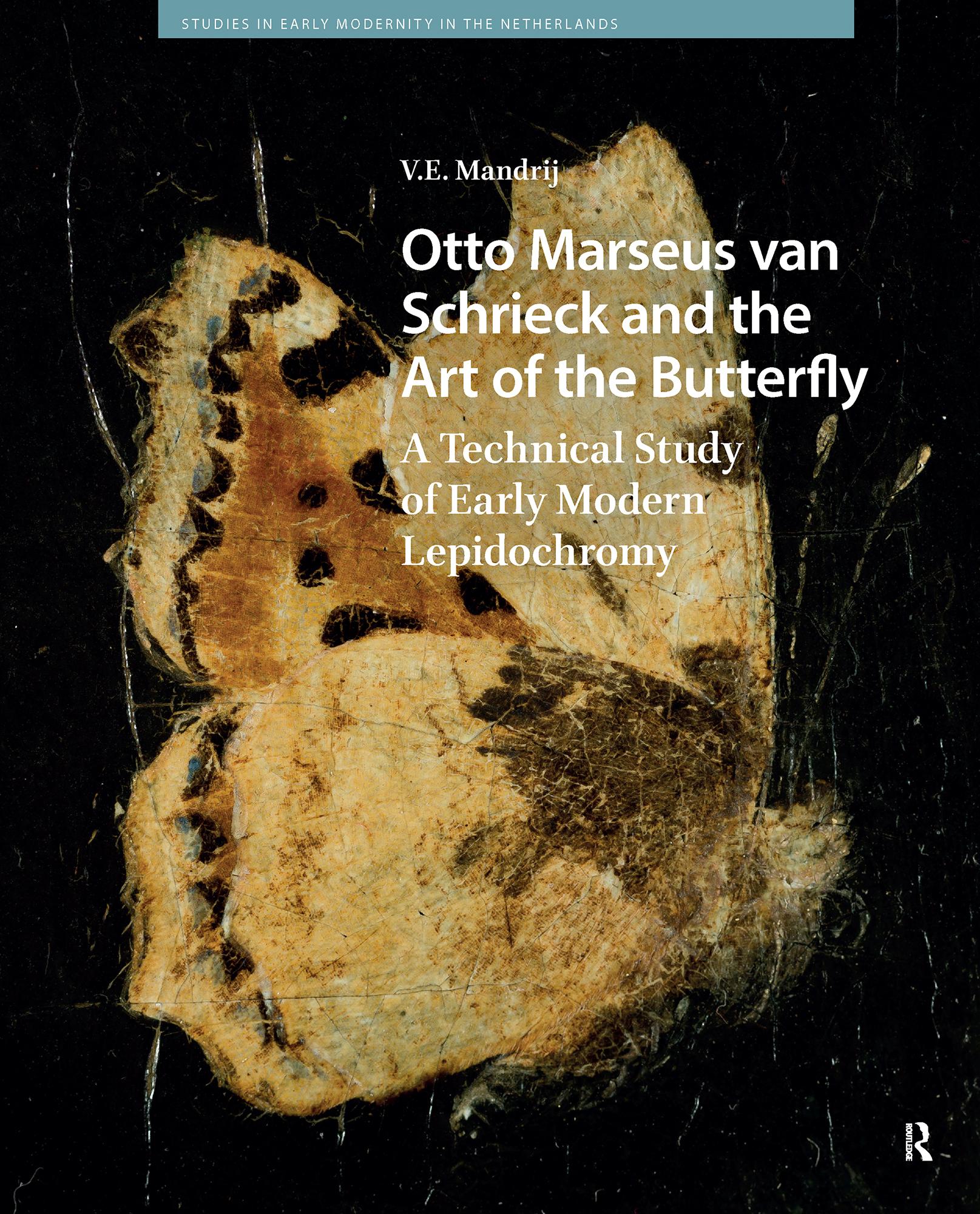
The Dutch painter and naturalist Otto Marseus van Schrieck (c. 1619/20–1678) became famous for an unusual iconography that mixed characteristics of landscape, animal painting, natural history illustration, and still life: the sottobosco paintings. These artworks, which he developed during his voyage to Italy around 1650, represent reptiles, amphibians, and insects in dark forests. To increase the realistic representations of butterflies and moths, he pressed the wings of dead specimens onto the paintings to transfer their original colours. The technique of printing butterfly wings, named lepidochromy in this book, was already being used in the sixteenth century and has been documented as a means of conserving and classifying lepidopterans from the eighteenth through twentieth century.
With a strong focus on the techniques and materials involved in making butterfly imprints, this book introduces readers for the first time to the development, uses, and meanings of lepidochromy in the oeuvre of Otto Marseus van Schrieck at the crossroads of art and natural history.
Zahle einfach mit Karte, Klarna, Apple Pay oder Google Pay. Nicht zufrieden? Du hast immer ein 14-tägiges Widerrufsrecht. Lies mehr in unseren AGB. Hast du Fragen, schreib uns eine E-Mail an hello@memmo.org.
Memmo macht das Lernen einfacher – wo auch immer du bist. Bei uns findest du deine Kursbücher und smarte Lerntools an einem Ort: Zusammenfassungen, Quizzes, Podcasts und Lernkarten. Und Ted, dein Lernbuddy, beantwortet alles, was du wissen möchtest. Über 50.000 Studierende lernen bereits hier – gemacht, damit du schneller lernst und weniger Stress hast.