
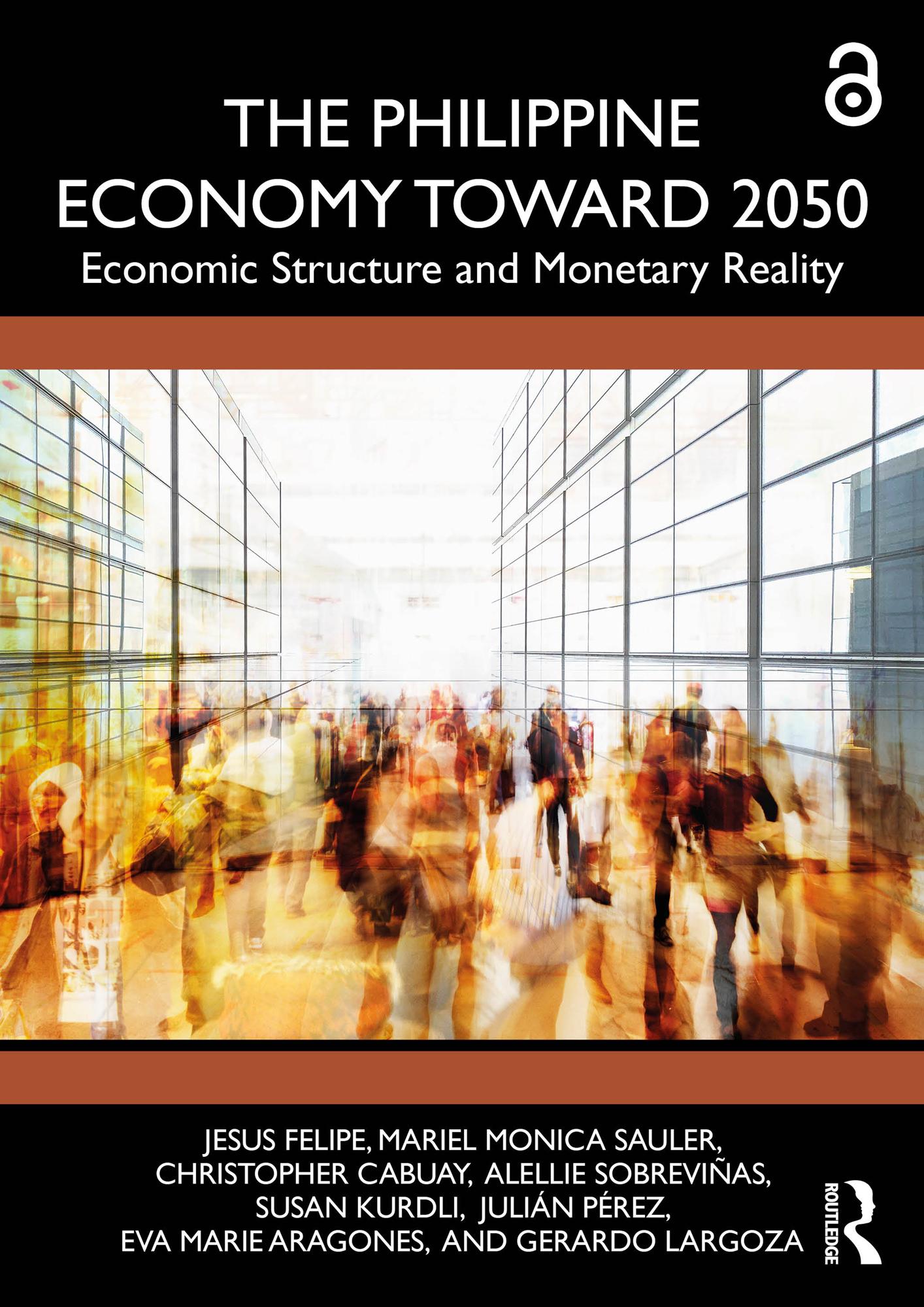
This book provides a rigorous analysis of the factors underlying the Philippines’ relative economic stagnation compared with its Southeast Asian neighbors despite sustained optimistic government rhetoric.
Three critical factors are identified: failure to industrialize and undergo a complete economic transformation, resulting in an underdeveloped agricultural sector and an economy dependent on low-productivity services; ineffective reforms that differ markedly from successful regional models; and self-defeating fiscal conservatism that has prevented adequate investment in essential public goods and industrial policy. Using two innovative economic models—a macro-econometric model and an employment-education forecasting model—the book offers forecasts of the Philippines' income per capita, poverty, or economic structure, through 2050. The researchers warn that unless the country’s economic policy focuses on the transformation of the economy (with emphasis on the modernization of agriculture and the development of the manufacturing sector) and the government adopts a more active role, the Philippines will experience more of the same (MOTS) during the next decades.
An accessible resource for scholars, students, journalists, officials, and business professionals as an introduction to Philippine history, politics, and economy, the book will also be useful for development practitioners with its insights on structural transformation and on fiscal and monetary policy.
Zahle einfach mit Karte, Klarna, Apple Pay oder Google Pay. Nicht zufrieden? Du hast immer ein 14-tägiges Widerrufsrecht. Lies mehr in unseren AGB. Hast du Fragen, schreib uns eine E-Mail an hello@memmo.org.
Memmo macht das Lernen einfacher – wo auch immer du bist. Bei uns findest du deine Kursbücher und smarte Lerntools an einem Ort: Zusammenfassungen, Quizzes, Podcasts und Lernkarten. Und Ted, dein Lernbuddy, beantwortet alles, was du wissen möchtest. Über 50.000 Studierende lernen bereits hier – gemacht, damit du schneller lernst und weniger Stress hast.