
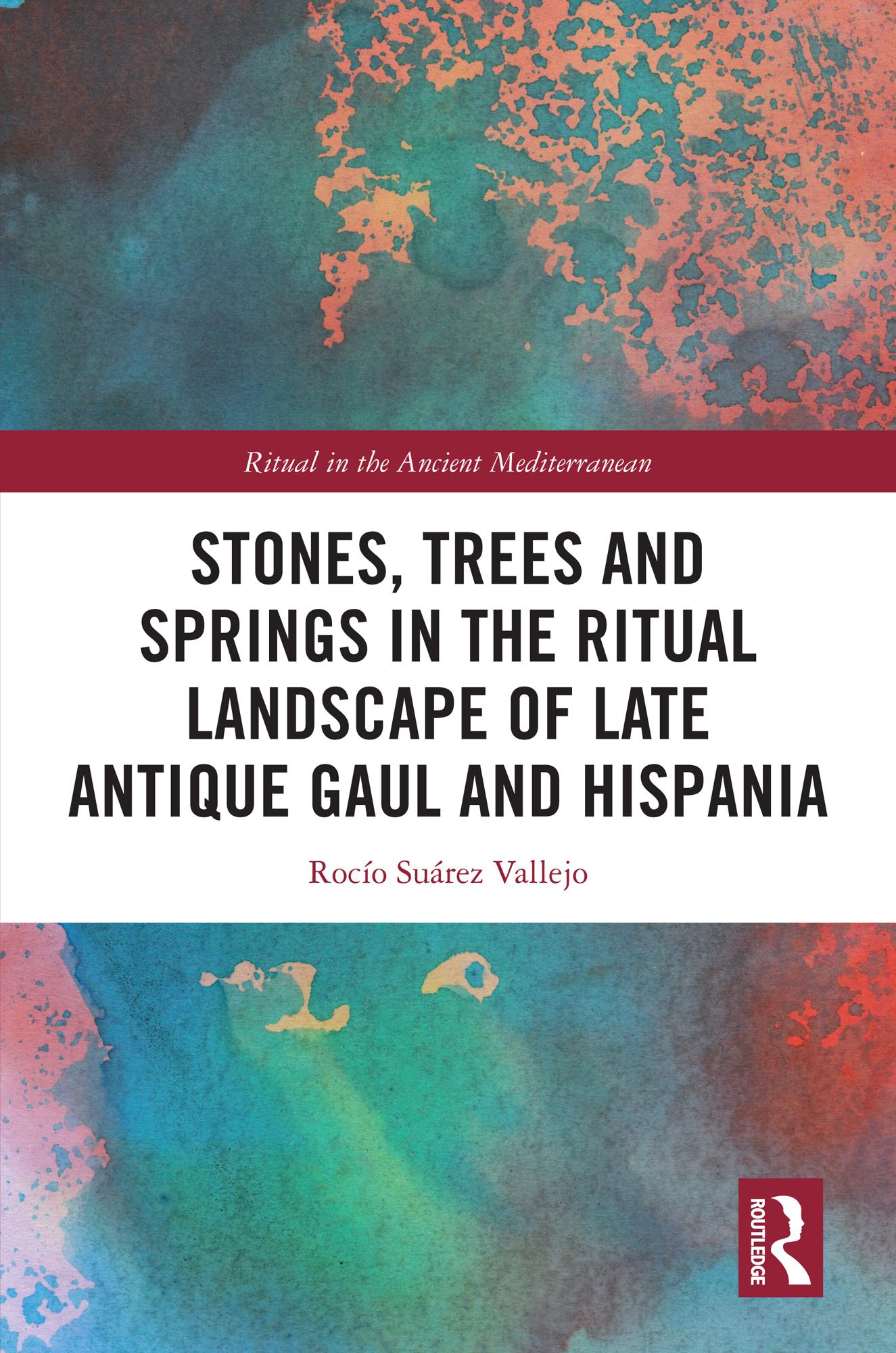
This book explores how late antique condemnations of rituals at stones, trees and springs reveal deliberate ecclesiastical strategies designed to control devotion, redefine sacred landscapes and consolidate episcopal control across the rural territories of post-Roman Gaul and Hispania.
By analysing sermons, conciliar canons, penitentials, hagiography and civil legislation, the book shows how accusations of idolatry in natural spaces functioned as rhetorical tools to regulate ritual plurality and impose orthodoxy in Gaul and Hispania in the 6th to 8th centuries. Engaging with ongoing historiographical debates on the persistence of non-Christian practices in rural areas during Late Antiquity, it challenges the conventional view that such rituals were merely residual traces of pre-Roman or Roman belief systems. Combining historical, textual and anthropological approaches, it reframes so-called ‘rural paganism’ as a discursive construction and proposes novel insights into the intersection of ritual practices, ecclesiastical authority and the role of natural features in the construction of religious landscapes.
Intended for scholars and students of religion in Late Antiquity and the early Middle Ages and of the history of early Christianity, this book also appeals to readers interested in cultural landscapes and the transformation of religious practices in the post-Roman West.
Zahle einfach mit Karte, Klarna, Apple Pay oder Google Pay. Nicht zufrieden? Du hast immer ein 14-tägiges Widerrufsrecht. Lies mehr in unseren AGB. Hast du Fragen, schreib uns eine E-Mail an hello@memmo.org.
Memmo macht das Lernen einfacher – wo auch immer du bist. Bei uns findest du deine Kursbücher und smarte Lerntools an einem Ort: Zusammenfassungen, Quizzes, Podcasts und Lernkarten. Und Ted, dein Lernbuddy, beantwortet alles, was du wissen möchtest. Über 50.000 Studierende lernen bereits hier – gemacht, damit du schneller lernst und weniger Stress hast.