
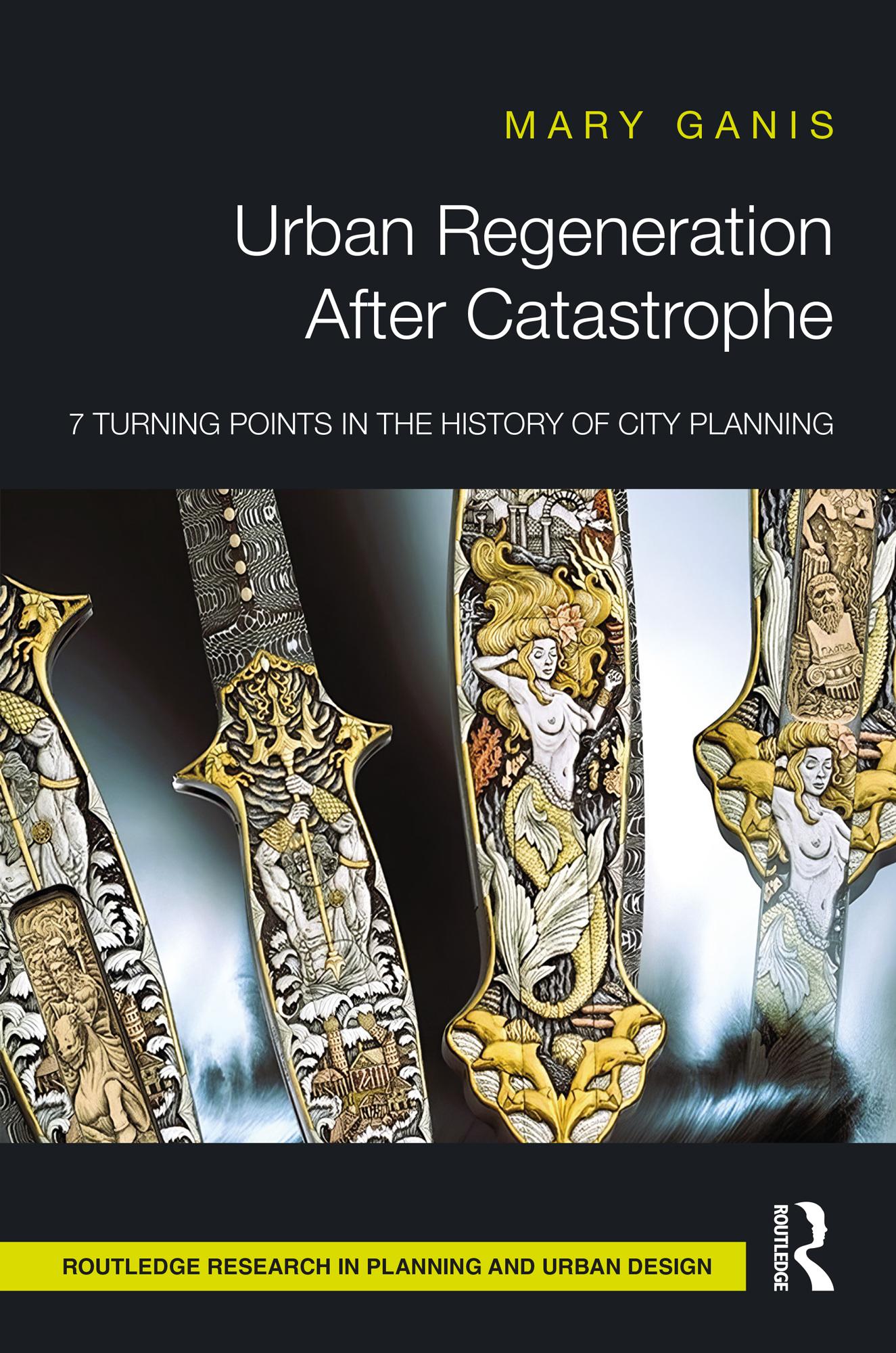
This book examines how catastrophes—natural, technological, ideological, biological and socioeconomic—transform urban design and planning, potentially creating "turning points" in a city's development trajectory.
Through historical case studies, the book traces urban responses to catastrophe: the 1755 Lisbon Earthquake that accelerated European Enlightenment; Haussmann's Paris redesign addressing cholera and social unrest; Chicago's reinvention following the 1871 fire and economic depression; and New York's expressway developments that sparked community activism. Each case reveals significant shifts in urban planning theory and practice. The book explores how urban planning often begins with promising visions that ultimately betray their original intent. Drawing on Plato's Republic and the myth of Atlantis, urban development is framed as a cycle where destruction is inevitable, yet contains seeds of renewal and innovation. This examination of catastrophe's role in urban transformation offers critical insights for understanding contemporary cities and planning for their futures.
The book will be of interest to researchers and students of architecture, urban design, planning history, and planning theory.
Zahle einfach mit Karte, Klarna, Apple Pay oder Google Pay. Nicht zufrieden? Du hast immer ein 14-tägiges Widerrufsrecht. Lies mehr in unseren AGB. Hast du Fragen, schreib uns eine E-Mail an hello@memmo.org.
Memmo macht das Lernen einfacher – wo auch immer du bist. Bei uns findest du deine Kursbücher und smarte Lerntools an einem Ort: Zusammenfassungen, Quizzes, Podcasts und Lernkarten. Und Ted, dein Lernbuddy, beantwortet alles, was du wissen möchtest. Über 50.000 Studierende lernen bereits hier – gemacht, damit du schneller lernst und weniger Stress hast.