
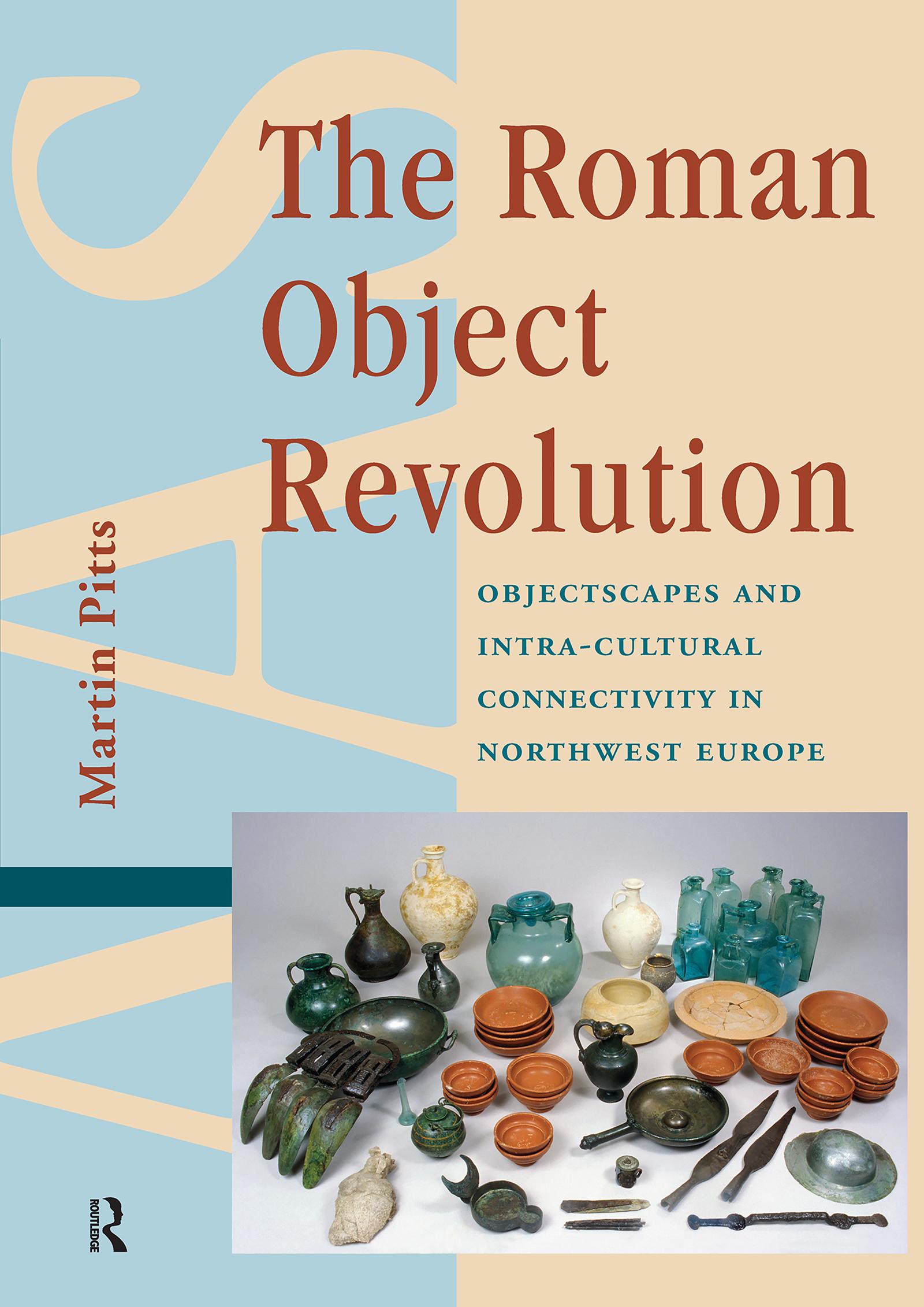
Archaeologists working in northwest Europe have long remarked on the sheer quantity and standardisation of objects unearthed from the Roman period, especially compared with earlier eras. What was the historical significance of this boom in standardised objects? With a wide and ever-changing spectrum of innovative objects and styles to choose from, to what extent did the choices made by people in the past really matter? To answer these questions, this book sheds new light on the make-up of late Iron Age and early Roman ‘objectscapes’, through an examination of the circulation and selections of thousands of standardised pots, brooches, and other objects, with emphasis on funerary repertoires, c. 100 bc-ad 100. Breaking with the national frameworks that inform artefact research in much ‘provincial’ Roman archaeology, the book tests the idea that marked increases in the movement of people and objects fostered pan-regional culture(s) and transformed societies. Using a rich database of cemeteries and settlements spanning a swathe of northwest Europe, including southern Britannia, Gallia Belgica, and Germania Inferior, the study extensively applies multivariate statistics (such as Correspondence Analysis) to examine the roles of objects in an ever-changing and richly complex cultural milieu.
Zahle einfach mit Karte, Klarna, Apple Pay oder Google Pay. Nicht zufrieden? Du hast immer ein 14-tägiges Widerrufsrecht. Lies mehr in unseren AGB. Hast du Fragen, schreib uns eine E-Mail an hello@memmo.org.
Memmo macht das Lernen einfacher – wo auch immer du bist. Bei uns findest du deine Kursbücher und smarte Lerntools an einem Ort: Zusammenfassungen, Quizzes, Podcasts und Lernkarten. Und Ted, dein Lernbuddy, beantwortet alles, was du wissen möchtest. Über 50.000 Studierende lernen bereits hier – gemacht, damit du schneller lernst und weniger Stress hast.
Das könnte dir auch gefallen
Buch kaufen0