
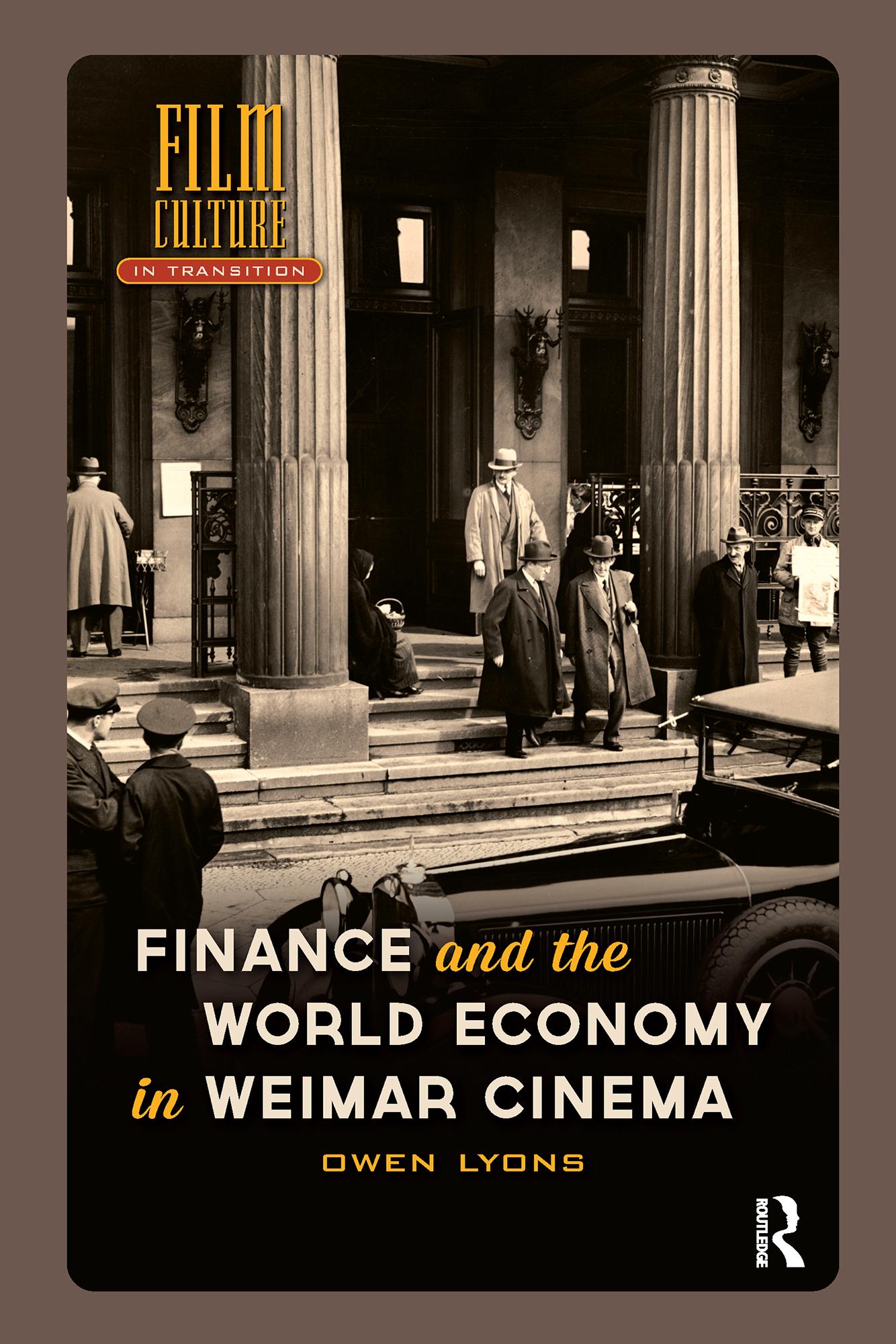
After the First World War, the effects of financial crisis could be felt in all corners of the newly formed Weimar Republic. The newly interconnected world economy was barely understood and yet it was increasingly made visible in the films of the time. The complexities of this system were reflected on screen to both the everyday spectator as well as a new class of financial workers who looked to popular depictions of speculation and crisis to make sense of their own place on the shifting ground of modern life. Finance and the World Economy in Weimar Cinema turns to the many underexamined depictions of finance capital that appear in the films of 1920s Germany. The representation of finance capital in these films is essential to our understanding of the culture of the Weimar Republic – particularly in the relation between finance and ideas of gender, nation and modernity. As visual records, these films reveal the stock exchange as a key space of modernity and coincide with the abstraction of finance as a vast labour of representation in its own right. In so doing, they introduce core visual tropes that have become essential to our understanding of finance and capitalism throughout the twentieth century.
Zahle einfach mit Karte, Klarna, Apple Pay oder Google Pay. Nicht zufrieden? Du hast immer ein 14-tägiges Widerrufsrecht. Lies mehr in unseren AGB. Hast du Fragen, schreib uns eine E-Mail an hello@memmo.org.
Memmo macht das Lernen einfacher – wo auch immer du bist. Bei uns findest du deine Kursbücher und smarte Lerntools an einem Ort: Zusammenfassungen, Quizzes, Podcasts und Lernkarten. Und Ted, dein Lernbuddy, beantwortet alles, was du wissen möchtest. Über 50.000 Studierende lernen bereits hier – gemacht, damit du schneller lernst und weniger Stress hast.