
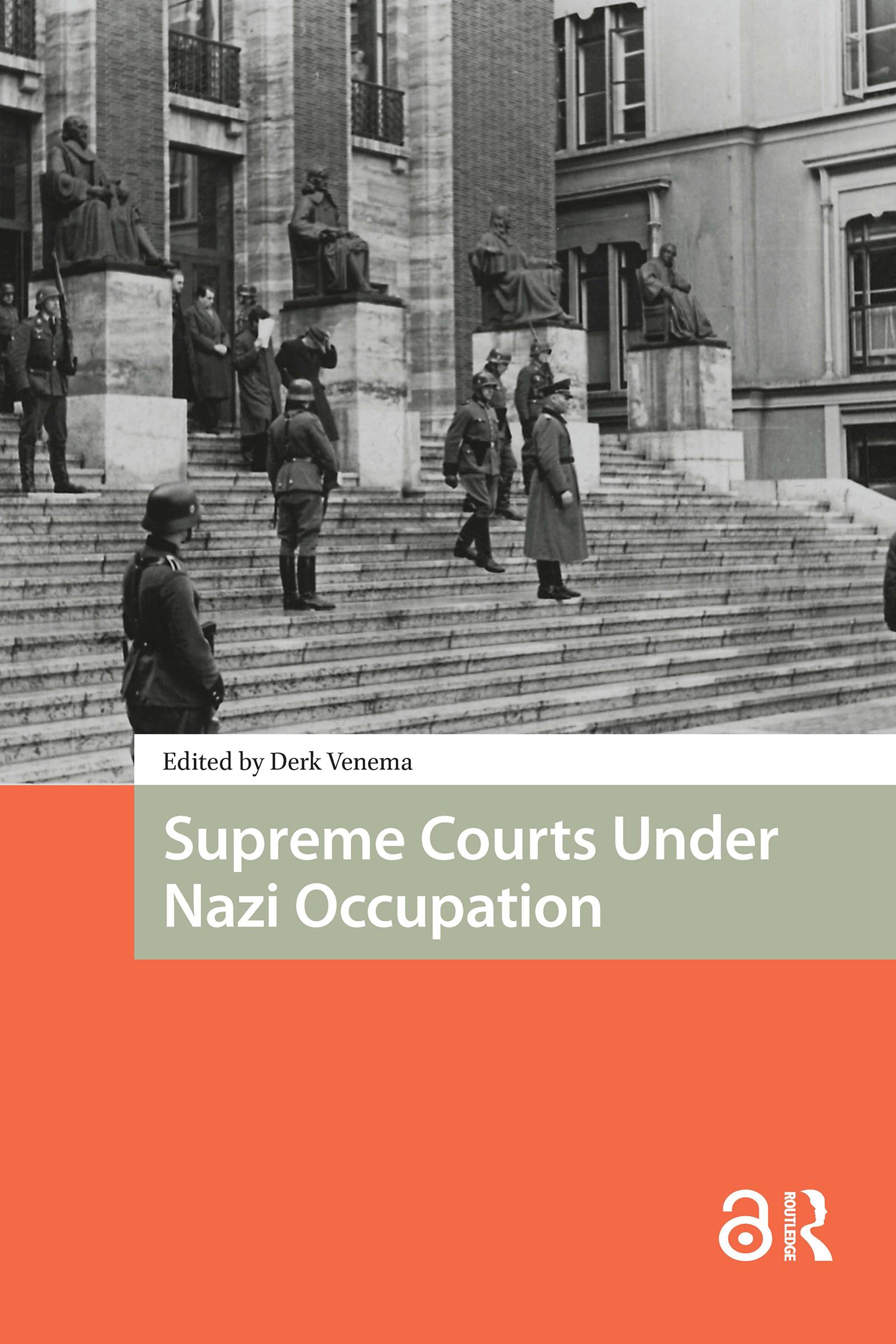
This is the first extensive treatment of leading judicial institutions under Nazi rule in WWII. It focusses on all democratic countries under German occupation, and provides the details for answering questions like: how can law serve as an instrument of defence against an oppressive regime? Are the courts always the guardians of democracy and rule of law? What role was there for international law? How did the courts deal with dismissals, new appointees, new courts, forced German ordinances versus national law? How did judges justify their actions, help citizens, appease the enemy, protest against injustice? Experts from all democracies that were occupied by the Nazis paint vivid pictures of oppression, collaboration, and resistance. The results are interpreted in a socio-legal framework introducing the concept of ‘moral hygiene’ to explain the clash between normative and descriptive approaches in public opinion and scholarship concerning officials’ behaviour in war-time.
Zahle einfach mit Karte, Klarna, Apple Pay oder Google Pay. Nicht zufrieden? Du hast immer ein 14-tägiges Widerrufsrecht. Lies mehr in unseren AGB. Hast du Fragen, schreib uns eine E-Mail an hello@memmo.org.
Memmo macht das Lernen einfacher – wo auch immer du bist. Bei uns findest du deine Kursbücher und smarte Lerntools an einem Ort: Zusammenfassungen, Quizzes, Podcasts und Lernkarten. Und Ted, dein Lernbuddy, beantwortet alles, was du wissen möchtest. Über 50.000 Studierende lernen bereits hier – gemacht, damit du schneller lernst und weniger Stress hast.
Das könnte dir auch gefallen
Buch kaufen0