
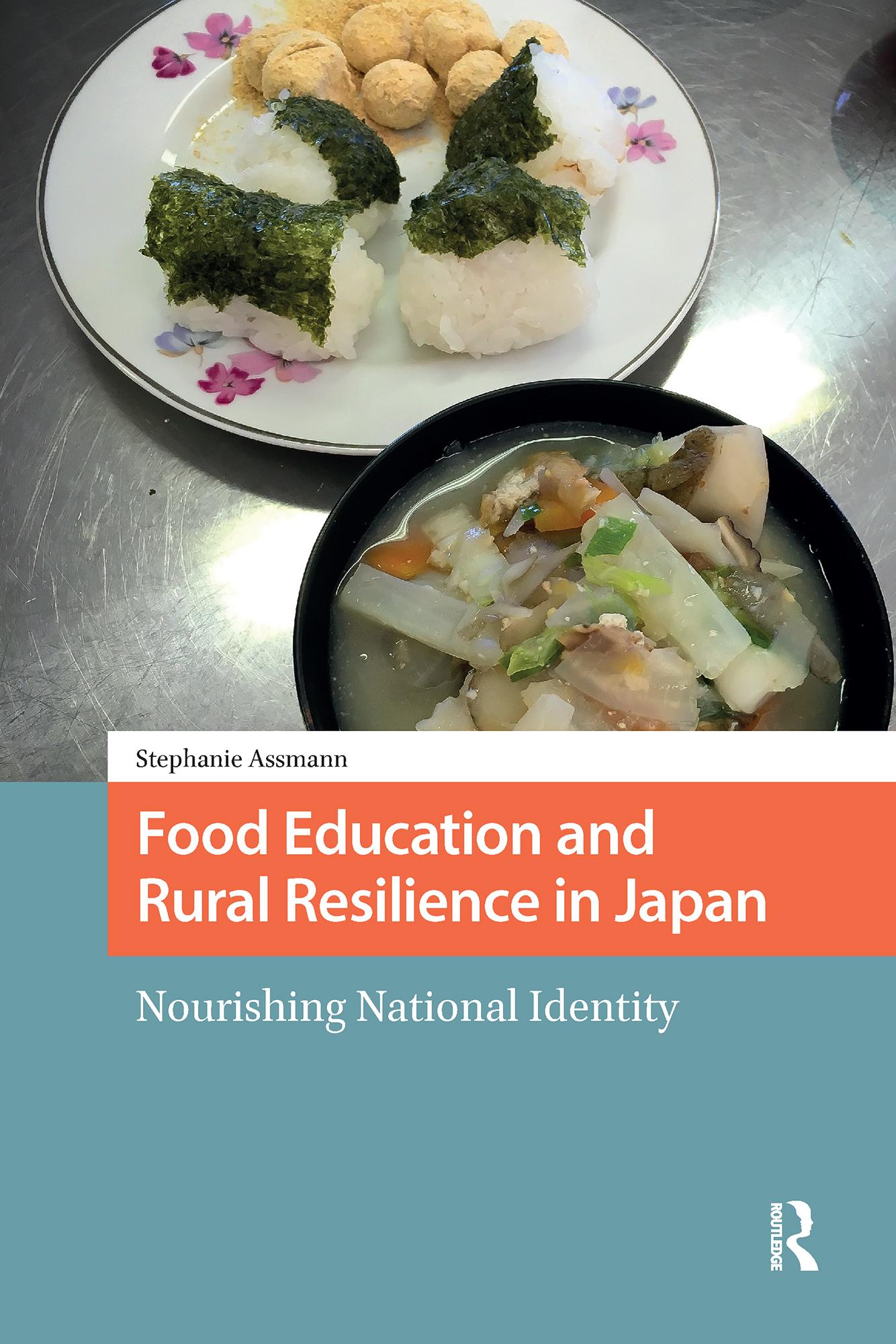
Food education initiatives exist worldwide, but Japan remains unique with its food education law known as shokuiku. The country’s impressive health metrics — high life expectancies, low obesity, and affordable health care — often lead observers to praise this approach. This book presents a more nuanced analysis. First, it challenges the assumption that food education is wholly a “good thing” by exposing underlying power mechanisms. Through food diagrams, food fairs, and school lunch programs, government ministries promote both nationalism and traditional gender roles. Second, it explores how food education operates in Japan’s rural regions, where educators champion resilience and food self-sufficiency to alleviate depopulation and economic decline. This emphasis on local food persisted even in the aftermath of the 2011 Fukushima nuclear disaster. Using Foucault’s concept of governmentality, historical contextualization, and extensive fieldwork in rural Japan, this study reveals the complex political agenda driving food education in a non-Western society.
Zahle einfach mit Karte, Klarna, Apple Pay oder Google Pay. Nicht zufrieden? Du hast immer ein 14-tägiges Widerrufsrecht. Lies mehr in unseren AGB. Hast du Fragen, schreib uns eine E-Mail an hello@memmo.org.
Memmo macht das Lernen einfacher – wo auch immer du bist. Bei uns findest du deine Kursbücher und smarte Lerntools an einem Ort: Zusammenfassungen, Quizzes, Podcasts und Lernkarten. Und Ted, dein Lernbuddy, beantwortet alles, was du wissen möchtest. Über 50.000 Studierende lernen bereits hier – gemacht, damit du schneller lernst und weniger Stress hast.