
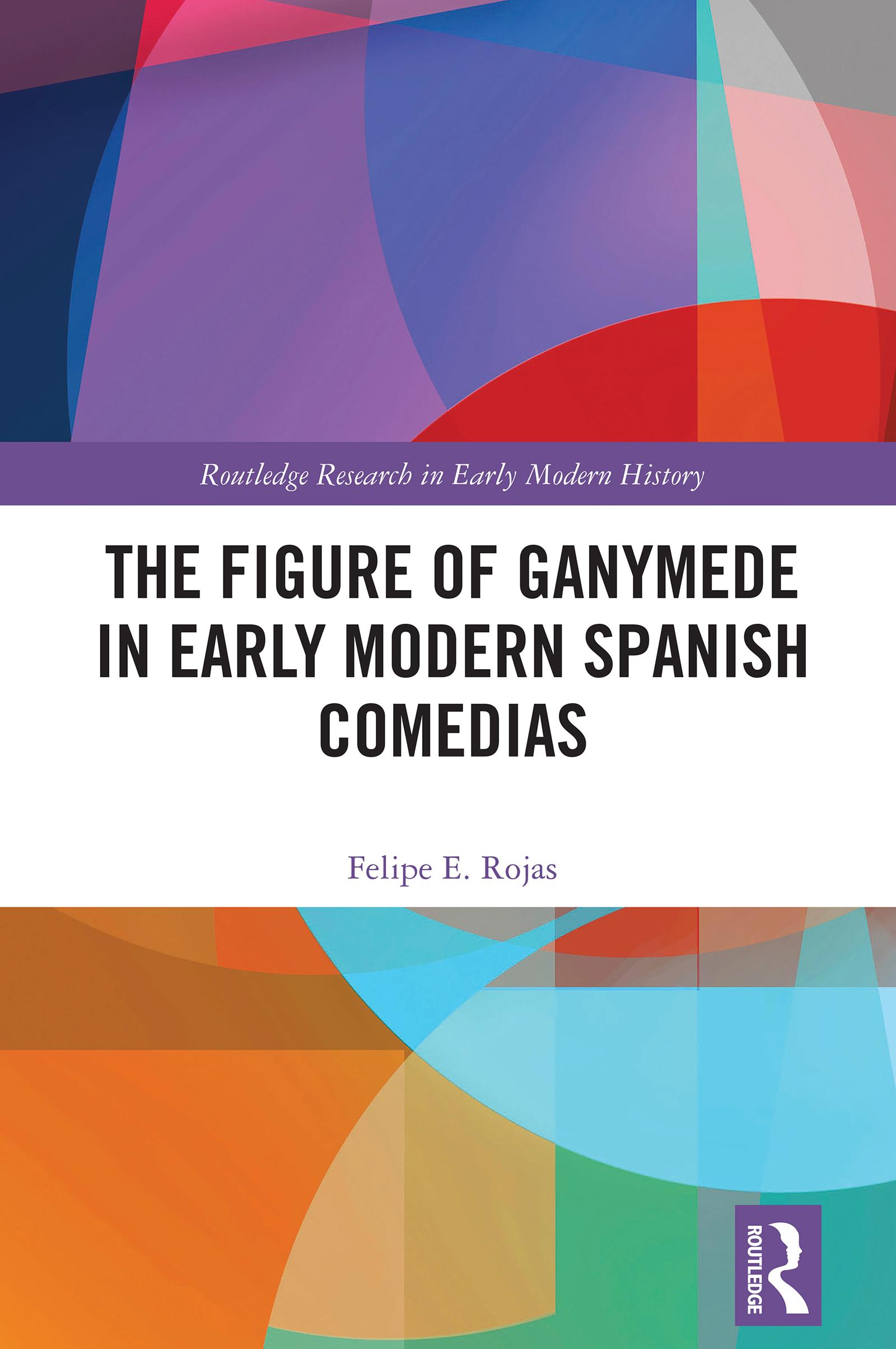
Abducted by Jupiter for his beauty and made cupbearer to the gods, Ganymede has long been interpreted as an emblem of pederasty and queer desire. While critics such as James M. Saslow and Leonard Barkan have emphasized the (homo)erotic readings of this mythological figure, they have largely overlooked the Iberian Peninsula. This book offers the first sustained study of Ganymede in seventeenth-century Spain, a context marked by political decline and an extraordinary flowering of literary production.
Focusing on comedias, this book identifies sixteen overt references to Ganymede across works from Lope de Vega, Tirso de Molina, Juan Ruiz de Alarcón, Ana Caro, Andrés de Claramonte, and others, ranging from La escolástica celosa (1596–1602) to Fray Manuel de Guerra’s Aprobación (1682). By analyzing canonical and noncanonical plays alike, it demonstrates how Spanish playwrights reimagined Ganymede as a political, moral, and erotic figure whose meanings were fluid and contested. Drawing also on non-theatrical sources such as Juan Peréz de Moya, the study shows how Ganymede became a tool for guiding, criticizing, and educating audiences, complicating the assumption that he functioned only as a symbol of forbidden desire.
The Figure of Ganymede in Early Modern Spanish Comedias will be of interest to scholars and students of Early Modern literature, theater, and mythology, as well as those engaged with queer theory, reception studies, and cultural history. Its distinctive contribution lies in recovering the neglected Iberian dimension of Ganymede’s reception and in demonstrating that his ambiguities open new ways of reading the political, moral, and sexual cultures of Early Modern Spain.
Zahle einfach mit Karte, Klarna, Apple Pay oder Google Pay. Nicht zufrieden? Du hast immer ein 14-tägiges Widerrufsrecht. Lies mehr in unseren AGB. Hast du Fragen, schreib uns eine E-Mail an hello@memmo.org.
Memmo macht das Lernen einfacher – wo auch immer du bist. Bei uns findest du deine Kursbücher und smarte Lerntools an einem Ort: Zusammenfassungen, Quizzes, Podcasts und Lernkarten. Und Ted, dein Lernbuddy, beantwortet alles, was du wissen möchtest. Über 50.000 Studierende lernen bereits hier – gemacht, damit du schneller lernst und weniger Stress hast.