
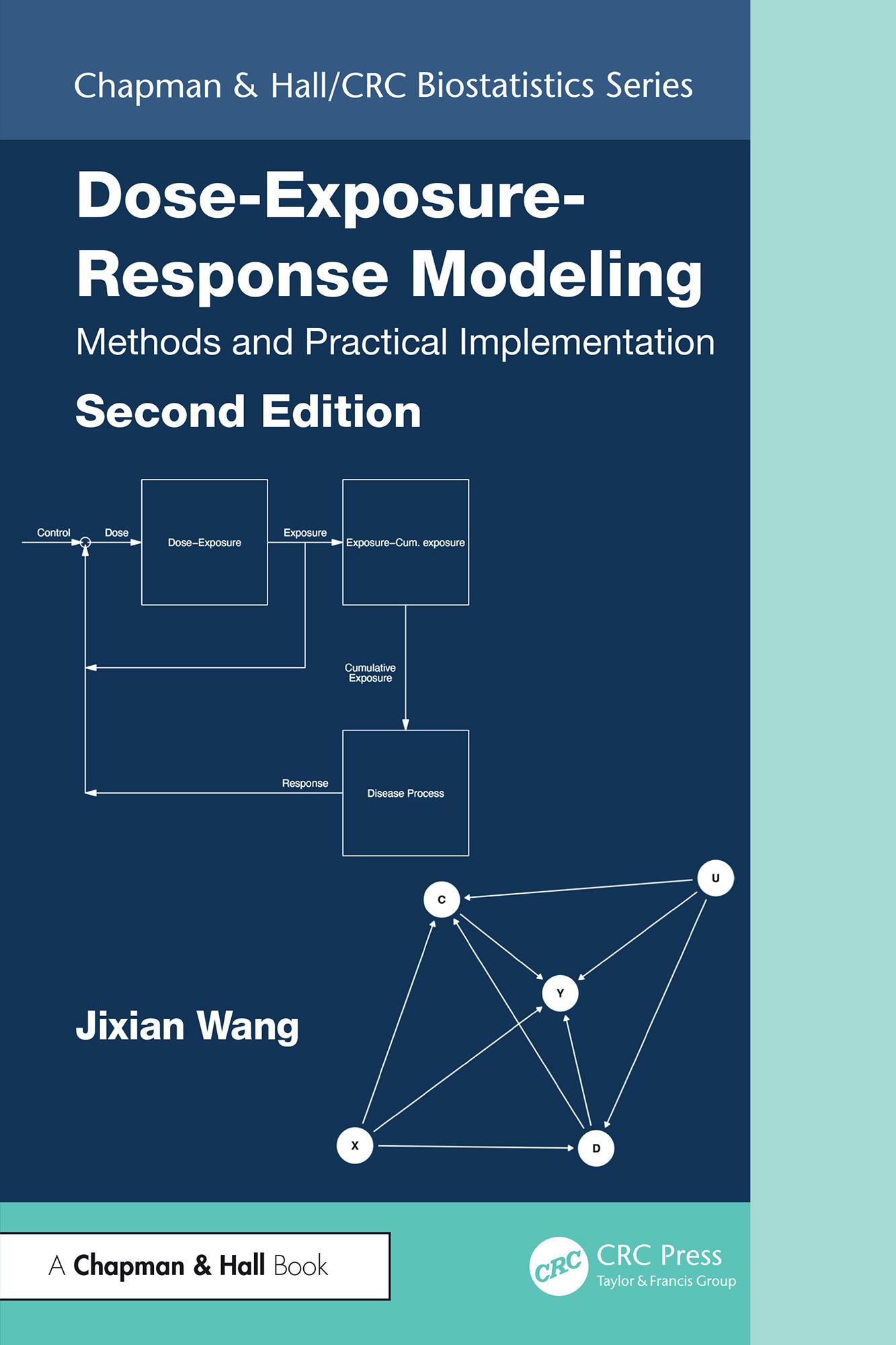
This thoroughly revised and updated new edition reflects the progress that has been made in dose-exposure-response (DER) modeling. As the title suggests, the new edition covers more topics on dose and dose adjustment. A large part of the book has been rewritten, including an updated Bayesian analysis and modeling chapter with new materials on ap-proximate Bayesian modeling with misspecified models, Bayesian bootstrap for the "cut-the-feedback" approach, and meta-regression with Stan codes for implementation. Two new chapters in this edition include one on causal DER modeling, with an introduction to the concept of causal DER relationship, approaches such as the generalized propensity score and instrumental/control function approaches for adjustment for observed and un-observed confounders, and Bayesian causal DER modeling. Another new chapter is dedicated to learning DER relationships with the concept and methods of machine learning, including applications to adaptive dose finding trials by bandits, contextual bandits, and Thompson sampling with Bayesian bootstrap, adaptive control for tracking using a dynamic model with an application for individual warfarin dosing. The new appendix contains non-standard materials used in the book.
Applied statisticians and modelers can find details on how to implement new approaches, while researchers can find topics for or applications of their work. In addition, students can see how complicated methodology and models are applied to practical situations.
Key Features:
- Provides SAS, R, and Stan codes that will enable readers to test the approaches in their own scenarios.
- Gives a systematic treatment of concepts and methodology.
- Helps with understanding concepts and evaluating the performance of new methods, particularly those in Chapters 7, 8, and 9.
- Includes a large amount of R codes for methods introduced in the new materials in chapters on Bayesian analyses, causal inference, and dose-adjustment.
- Includes a simulation to show how some complex methods such as generalized propensity score adjustment and adaptive dose adjustment can be implemented with simple codes.
Zahle einfach mit Karte, Klarna, Apple Pay oder Google Pay. Nicht zufrieden? Du hast immer ein 14-tägiges Widerrufsrecht. Lies mehr in unseren AGB. Hast du Fragen, schreib uns eine E-Mail an hello@memmo.org.
Memmo macht das Lernen einfacher – wo auch immer du bist. Bei uns findest du deine Kursbücher und smarte Lerntools an einem Ort: Zusammenfassungen, Quizzes, Podcasts und Lernkarten. Und Ted, dein Lernbuddy, beantwortet alles, was du wissen möchtest. Über 50.000 Studierende lernen bereits hier – gemacht, damit du schneller lernst und weniger Stress hast.