
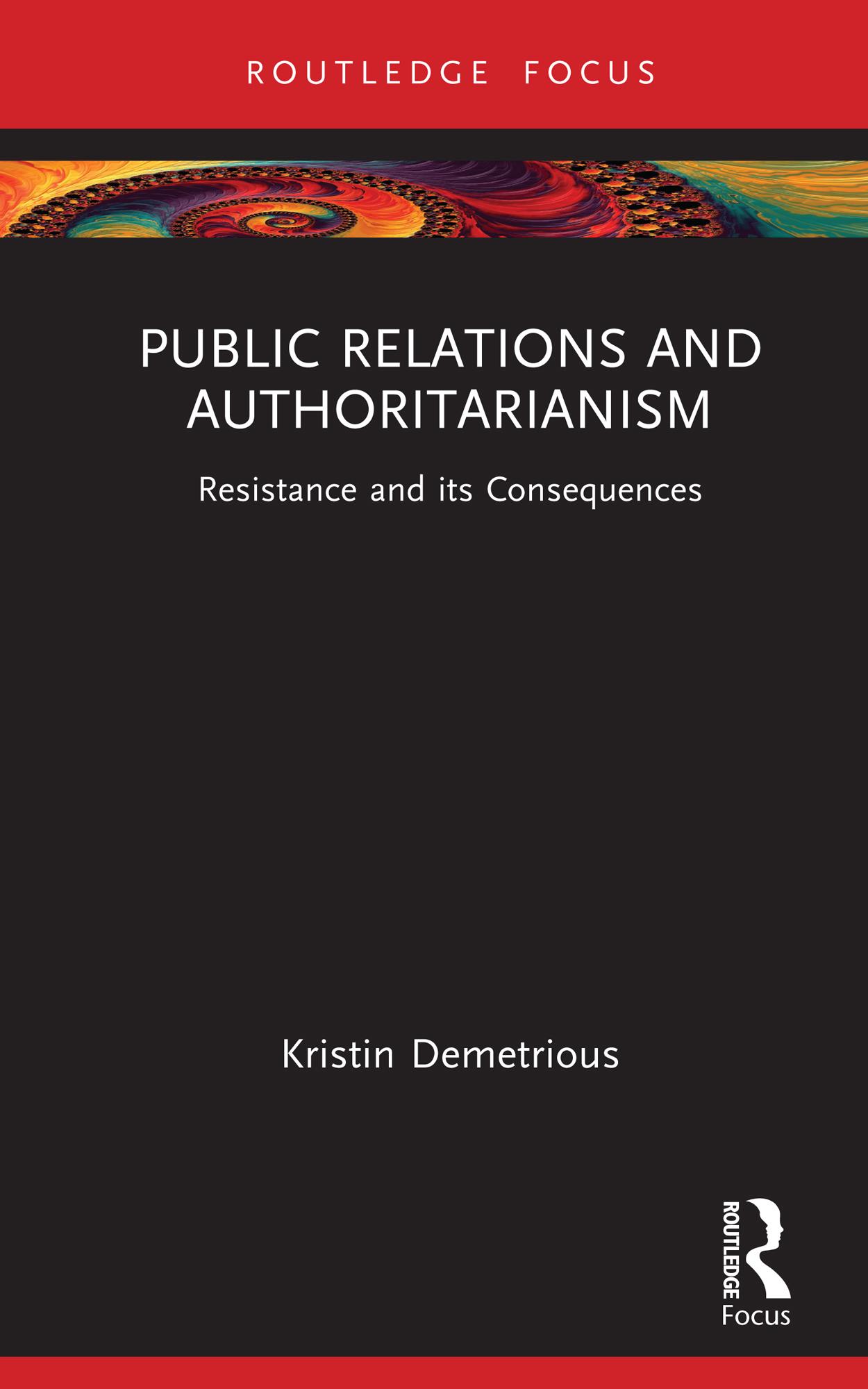
This book traces a resistance to public relations (PR) from the postwar period that sought to expose it as a dangerous, but little understood political dynamic. Critically exploring authoritarianism as a key concept, it argues “PR”’s market-friendly but oppressive and concealed language practices have systematically led to many of the divisive and polarised communication styles that we see today, and has had wider damaging effects for society.
Rich with illustrative examples, the chapters set out the limits of "PR" in relation to "truth" and show how literature and websites opened an important but under-recognised space in which neoliberal dogma was challenged. Offering a major new theory, it introduces a radical way to think about public relations and its relationship to democracy and society, and to understand its legacies like climate change denial.
This accessible book renews critique and is a valuable reference for undergraduate and postgraduate students studying and researching media and communication, politics, sociology, cultural sociology, cultural studies and history, and for those working in the communication industries.
Zahle einfach mit Karte, Klarna, Apple Pay oder Google Pay. Nicht zufrieden? Du hast immer ein 14-tägiges Widerrufsrecht. Lies mehr in unseren AGB. Hast du Fragen, schreib uns eine E-Mail an hello@memmo.org.
Memmo macht das Lernen einfacher – wo auch immer du bist. Bei uns findest du deine Kursbücher und smarte Lerntools an einem Ort: Zusammenfassungen, Quizzes, Podcasts und Lernkarten. Und Ted, dein Lernbuddy, beantwortet alles, was du wissen möchtest. Über 50.000 Studierende lernen bereits hier – gemacht, damit du schneller lernst und weniger Stress hast.