
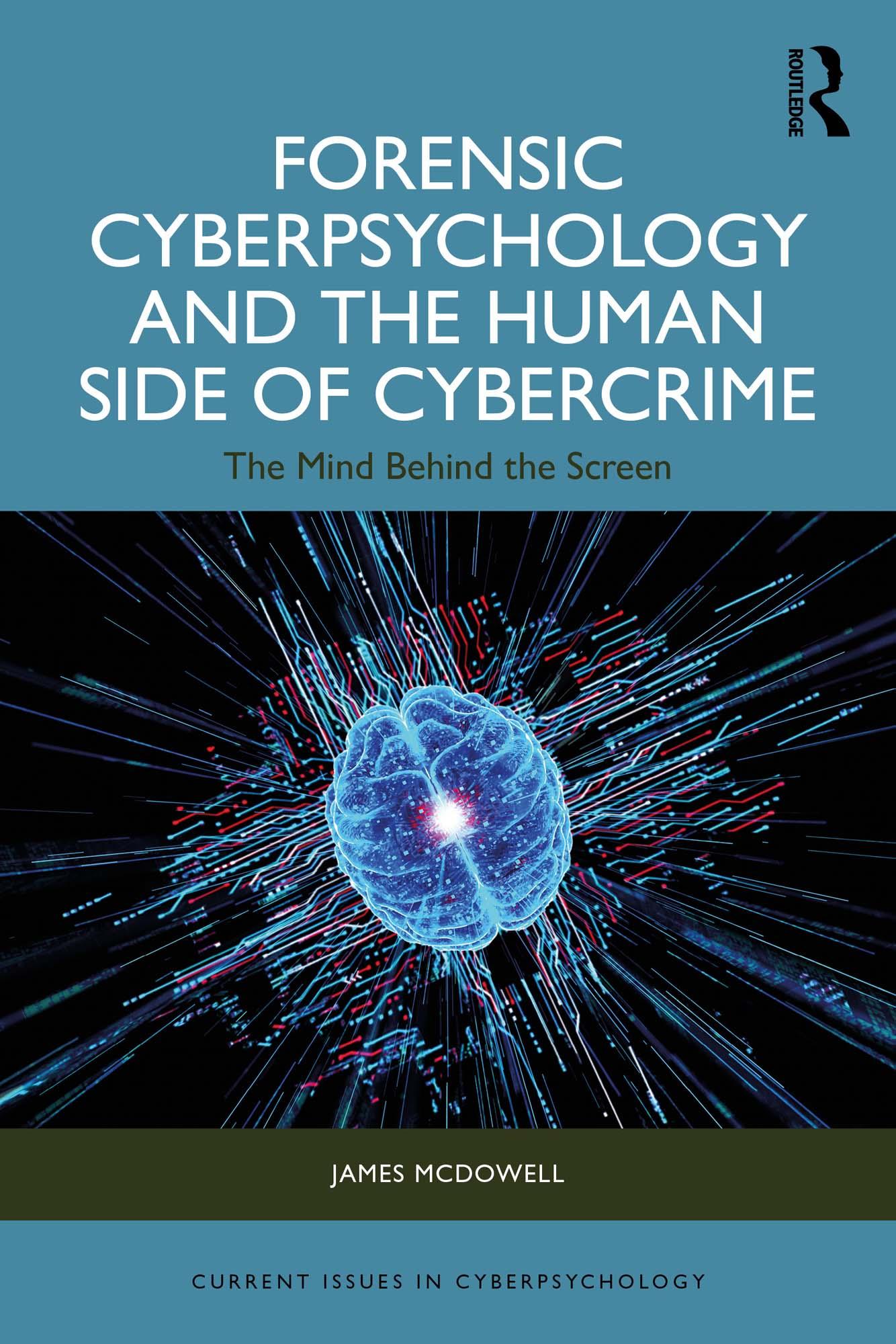
This book provides readers with an insightful and nuanced look at the human component of cybercrime. James McDowell delves into the intriguing domain of forensic cyberpsychology by exploring the complex relationship between humans and technology in the realm of cybercrime.
This groundbreaking work provides the first unifying theory of forensic cyberpsychology, weaponized affective vulnerability engineering (WAVE) theory, to illuminate the motivations, behaviors, and thought processes of both perpetrators and their targets using psychological analysis and real‑world case studies. As the boundaries between the physical and digital worlds continue to blur, understanding and addressing this topic demands a nuanced approach. This book demystifies the multifaceted nature of cybercrime, investigates the duality of technological innovation, and provides practical strategies to mitigate cybercrime in an ever‑evolving threat landscape. From explaining the tactics underpinning common schemes to discussing the emotional impact of exploitation, it delivers an extensive and innovative analysis of the human factor in cybercrime to support combating digital threats in an increasingly connected world.
This book is a vital resource for forensic psychologists, law enforcement professionals, business leaders, and the public in their efforts to better predict, mitigate, and respond to complex threats in the cyber arena.
Zahle einfach mit Karte, Klarna, Apple Pay oder Google Pay. Nicht zufrieden? Du hast immer ein 14-tägiges Widerrufsrecht. Lies mehr in unseren AGB. Hast du Fragen, schreib uns eine E-Mail an hello@memmo.org.
Memmo macht das Lernen einfacher – wo auch immer du bist. Bei uns findest du deine Kursbücher und smarte Lerntools an einem Ort: Zusammenfassungen, Quizzes, Podcasts und Lernkarten. Und Ted, dein Lernbuddy, beantwortet alles, was du wissen möchtest. Über 50.000 Studierende lernen bereits hier – gemacht, damit du schneller lernst und weniger Stress hast.