
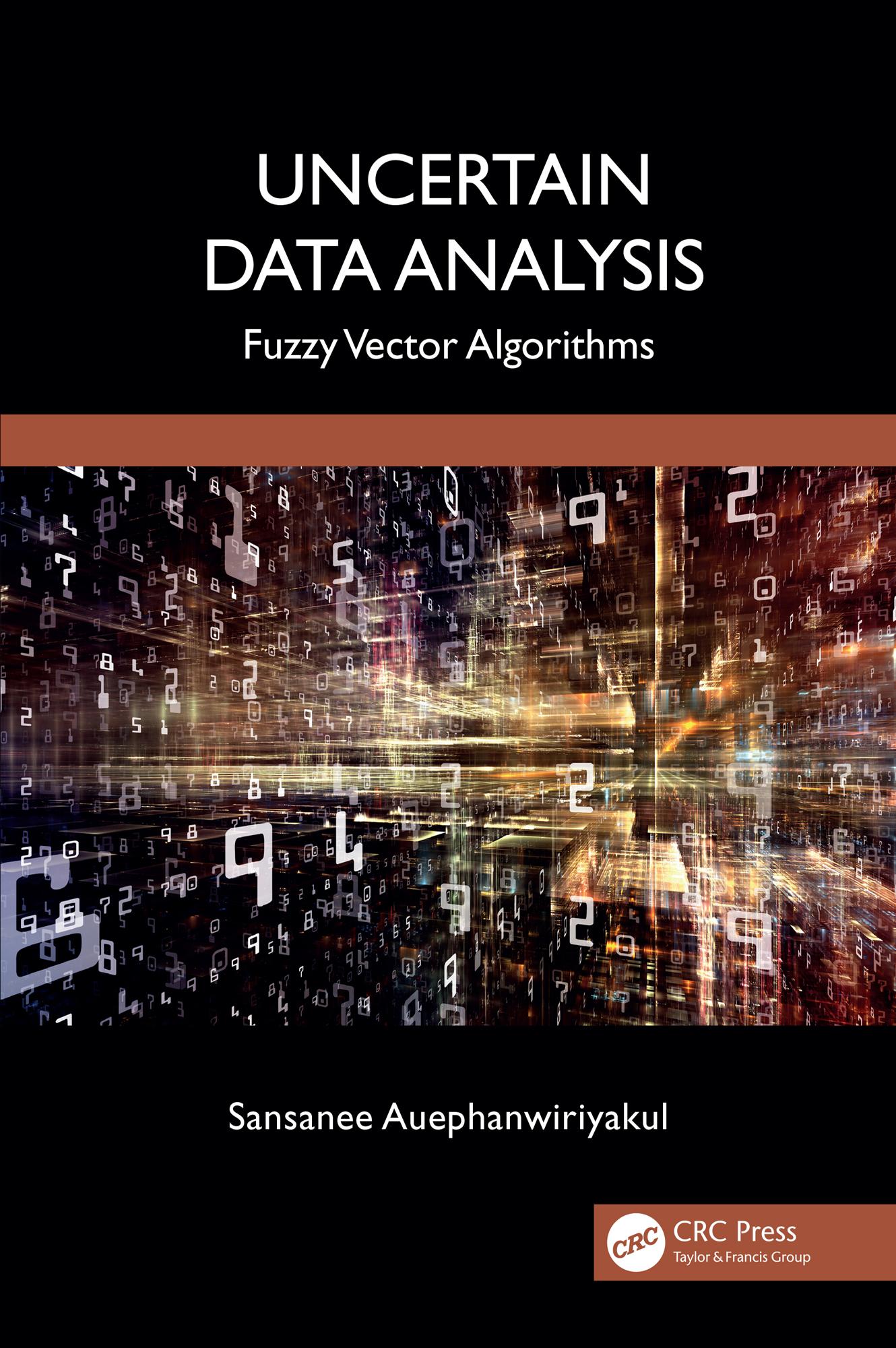
This book studies different classification, detection, and decision fusion algorithms, and it helps practitioners deal with uncertainty in their data sets. Data uncertainties are considered as a collection of linguistic/fuzzy values or a vector of fuzzy numbers, and fuzzy algorithms are used to analyze these data sets. There are many theories and applications developed based on fuzzy set theory.
The topics of classification and prediction using fuzzy algorithms are introduced in the chapters on K-nearest prototype, clustering, and neural networks. The linguistic/fuzzy algorithm is designed to work with linguistic data represented by fuzzy vectors. The linguistic K-nearest prototypes algorithm is particularly useful in fields where data is inherently imprecise or fuzzy, such as in management questionnaire analysis, where responses may not be strictly quantitative. The reader also learns about clustering algorithms, such as linguistic hard C-means and linguistic fuzzy C-means, for hard and fuzzy partitions, respectively. The book explores the integration of fuzzy multilayer perceptrons (FMLPs) with the cuckoo search (CS) algorithm to enhance the performance and applicability of neural networks in handling complex fuzzy data. The extended version of two commonly used fuzzy integrals covered include the Choquet and the Sugeno integrals. Mathematical analysis of these algorithms is included in the study of the different approaches each takes to the aggregation of uncertain data. Both integrals are powerful tools for handling fuzzy data, and their use in improving decision-making and analysis is demonstrated through real-world application examples using both of these algorithms. Very importantly, decision fusion is studied using fuzzy Dempster–Shafer theory with a real-world example of an application.
This book serves as a guide for practitioners, such as robotics engineers, computer scientists, and researchers working on computational intelligence. It is also suitable for graduate courses on fuzzy theories and fuzzy techniques.
Zahle einfach mit Karte, Klarna, Apple Pay oder Google Pay. Nicht zufrieden? Du hast immer ein 14-tägiges Widerrufsrecht. Lies mehr in unseren AGB. Hast du Fragen, schreib uns eine E-Mail an hello@memmo.org.
Memmo macht das Lernen einfacher – wo auch immer du bist. Bei uns findest du deine Kursbücher und smarte Lerntools an einem Ort: Zusammenfassungen, Quizzes, Podcasts und Lernkarten. Und Ted, dein Lernbuddy, beantwortet alles, was du wissen möchtest. Über 50.000 Studierende lernen bereits hier – gemacht, damit du schneller lernst und weniger Stress hast.