
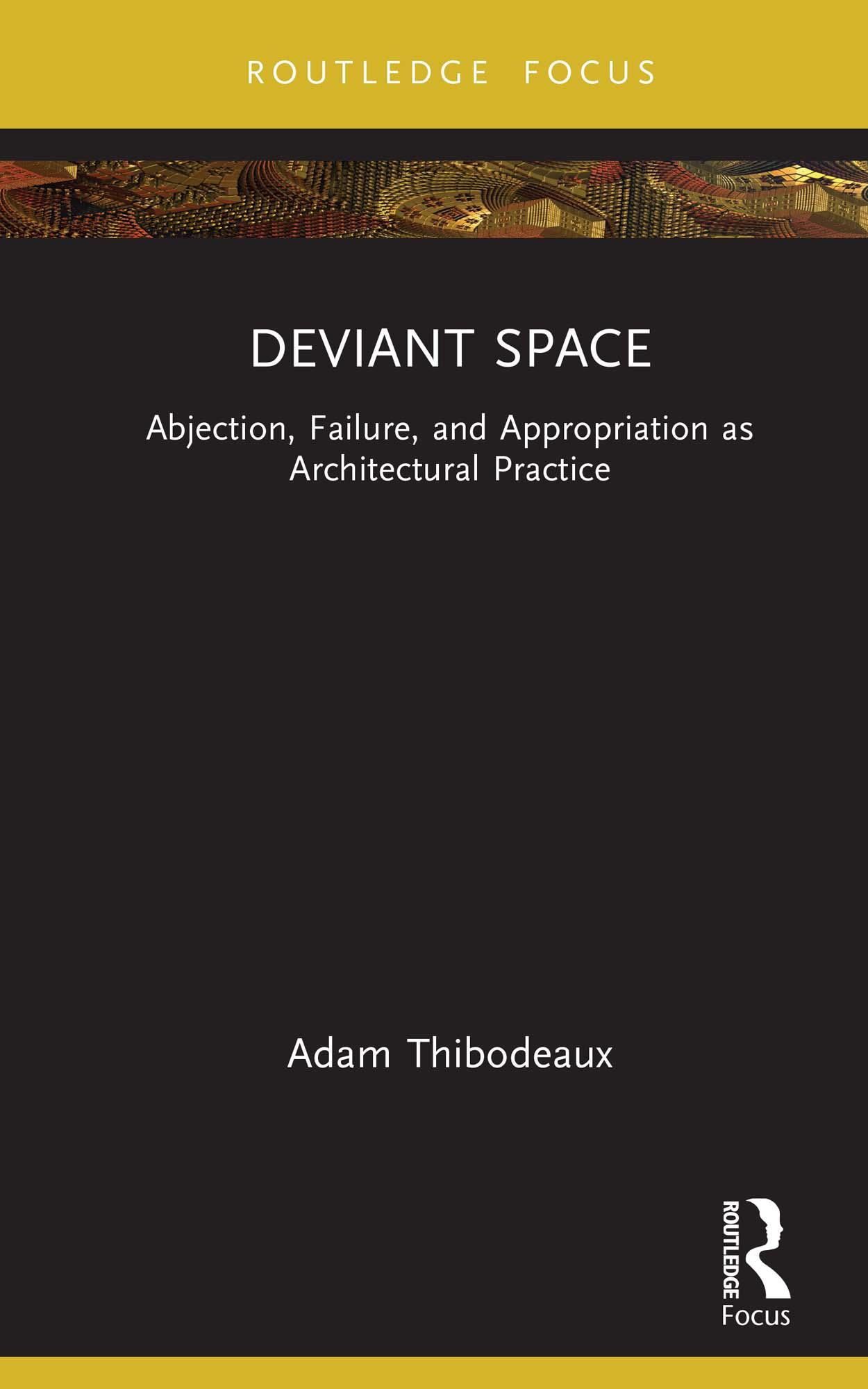
Deviant Space: Abjection, Failure, and Appropriation as Architectural Practice frames architecture as a fragile Symbolic construct, susceptible to appropriation, disruption, and reorientation by deviant bodies. Anchored in phenomenology and queer theory, it examines how spatial practices subvert architectural function, with particular focus on the tactics of men who have sex with men (MSM) in major North American cities during the AIDS epidemic.
The book offers a theoretical and contextual framework for reading architecture as both a mechanism of control and a site of resistance. Through the lenses of abjection and failure, borrowed from psychoanalytic and sociological theory, it outlines a methodology for analyzing spatial tactics like passing, outing, and flagging as examples of how deviant users navigate and respond to the built environment.
Its two-part structure—first philosophical, then historical—moves from broad, translatable phenomena to their tangible manifestations in context. The first offers architects and scholars of environmental design a reframing of the production of space, while the second offers theorists of phenomenology and queer studies new spatial dimensions for precedent theory. Deviant Space speaks to those invested in understanding architecture as mutable terrain: unstable, coded, and open to appropriation.
Zahle einfach mit Karte, Klarna, Apple Pay oder Google Pay. Nicht zufrieden? Du hast immer ein 14-tägiges Widerrufsrecht. Lies mehr in unseren AGB. Hast du Fragen, schreib uns eine E-Mail an hello@memmo.org.
Memmo macht das Lernen einfacher – wo auch immer du bist. Bei uns findest du deine Kursbücher und smarte Lerntools an einem Ort: Zusammenfassungen, Quizzes, Podcasts und Lernkarten. Und Ted, dein Lernbuddy, beantwortet alles, was du wissen möchtest. Über 50.000 Studierende lernen bereits hier – gemacht, damit du schneller lernst und weniger Stress hast.