
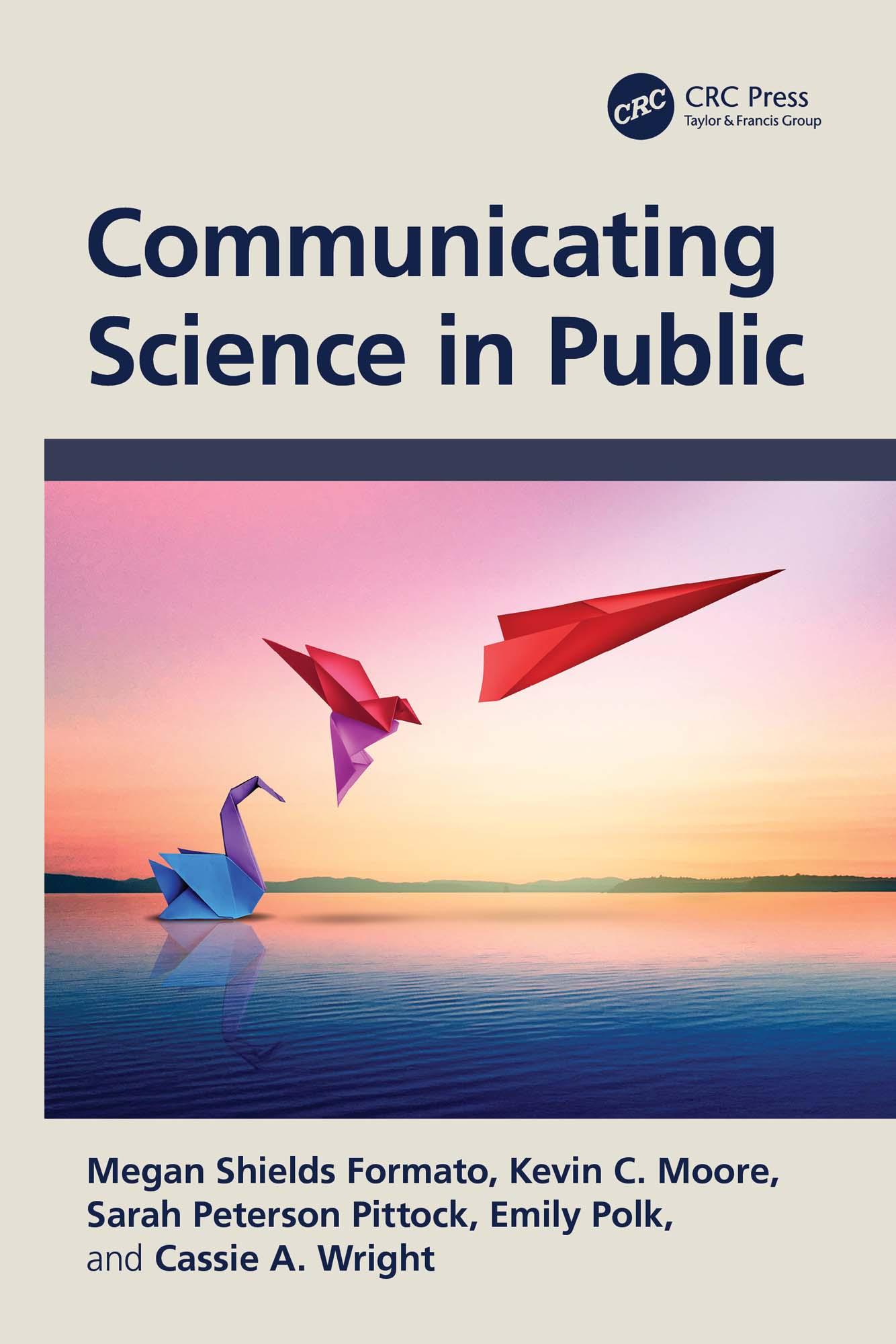
Amid intersecting climate and health crises, as well as rapid developments in artificial intelligence and new media forms, the need for communicating science with nuance and care has never been greater. Communicating Science in Public supports science communicators who seek to engage in compelling ways with audiences with varied levels of scientific expertise. The volume provides not a rule book, nor a set of templates and formulas, but rather a portable set of rhetorical strategies for working across science communication genres with the expectation that these genres will continue to change and new ones will emerge.
Introductory chapters provide a foundation for communicating science in public across genres. The genre‑specific chapters—including chapters on personal essays, op‑eds, science exhibits, and podcasts—then offer histories of how a given genre evolved as well as where it fits into broader media ecologies. These chapters provide examples of the genre, key considerations for navigating its affordances and constraints, and a process for brainstorming, composing, revising, and reflecting.
By taking a genre‑based approach, this book asks its readers to reimagine science communication as more than an act of translating complex ideas into simpler terms. Instead, readers learn to reflect on the opportunities and limitations of different forms of communication and how to engage diverse publics in inclusive, accessible ways, developing transferable, transformative rhetorical knowledge.
This book can be used as a science communication textbook geared toward advanced undergraduate students and graduate students with a foundation in the sciences who are learning how to communicate scientific ideas to non‑specialist audiences.
Key Features:
• Helps science communicators navigate a complex communication landscape.
• Builds skills for engaging public audiences through multiple genres and modalities beyond print.
• Offers practical advice for scientists, new and established, who want to communicate their science more broadly.
Zahle einfach mit Karte, Klarna, Apple Pay oder Google Pay. Nicht zufrieden? Du hast immer ein 14-tägiges Widerrufsrecht. Lies mehr in unseren AGB. Hast du Fragen, schreib uns eine E-Mail an hello@memmo.org.
Memmo macht das Lernen einfacher – wo auch immer du bist. Bei uns findest du deine Kursbücher und smarte Lerntools an einem Ort: Zusammenfassungen, Quizzes, Podcasts und Lernkarten. Und Ted, dein Lernbuddy, beantwortet alles, was du wissen möchtest. Über 50.000 Studierende lernen bereits hier – gemacht, damit du schneller lernst und weniger Stress hast.