
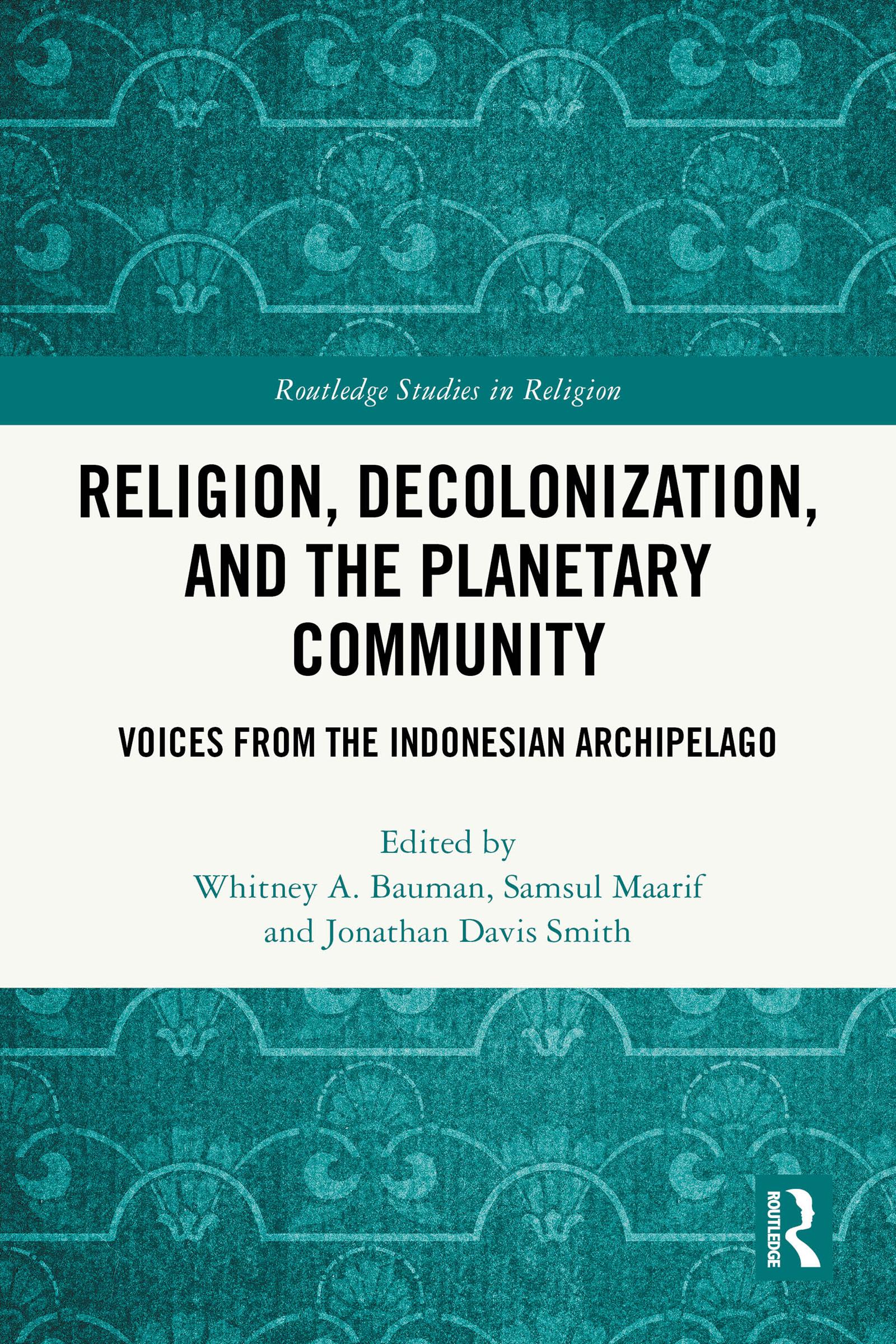
In light of the two great phenomena that define the era of the Anthropocene, globalization and climate change, what does it mean to be a human subject or person in the world today? One response to these phenomena in the world has been some sort of return to nationalism (usually on the political right) or localism/bioregionalism (usually on the political left). A second response has been a continuation of the spread of neo-liberal capitalism without any apparent regard for the problems it is causing (on the political right) or with social and environmental protections tagged on (on the political left).
This volume provides what is needed: new and multiple stories and ideas about the many different ways of being human in the world, and what this might mean for the planetary future. The volume brings together 17 scholars (14 Indonesians and three Global North scholars) working from or deeply influenced by the Indonesian archipelago. Each contributor examines the interconnected themes of religion, decolonization, and the planetary from their distinctive disciplinary and geographic locations.
This volume is divided into four parts, each with four chapters that share a thematic focus. “Thinking about Decolonization and the Planetary” provides the philosophical and theoretical groundwork for decolonizing religion and planetary thinking from an Indonesian context. “Decolonizing Human–Nature Relations” presents case studies that demonstrate how some Indigenous Peoples and local communities live in subjective relationships with nature, opening up new possibilities for caring for and with the natural environment. “Decolonizing Religion, Nature, and Gender Studies” presents case studies of religious, gender, and ecological binaries that both disadvantage some groups and provide spaces for hybridity, resistance, and embodied practices of human–nature relations by women, LGBTQ+, and other minoritized communities. “Decolonizing Legal and Rights Frameworks for Indigenous Peoples” offers analyses of the top-down frameworks of law and human rights that perpetuate (post)colonial marginalization and erasure of Indigenous Peoples and local communities, and they propose ways of decolonizing these frameworks to better respect and integrate lived religion for a better planetary future.
This cutting-edge volume will be of interest to those within religion and critical theories, religion and Southeast Asia, religion and ecology, and religion and nature. In addition, it would be a valuable read for anyone who studies the broader humanities within the context of Indonesia or environmental humanities.
Zahle einfach mit Karte, Klarna, Apple Pay oder Google Pay. Nicht zufrieden? Du hast immer ein 14-tägiges Widerrufsrecht. Lies mehr in unseren AGB. Hast du Fragen, schreib uns eine E-Mail an hello@memmo.org.
Memmo macht das Lernen einfacher – wo auch immer du bist. Bei uns findest du deine Kursbücher und smarte Lerntools an einem Ort: Zusammenfassungen, Quizzes, Podcasts und Lernkarten. Und Ted, dein Lernbuddy, beantwortet alles, was du wissen möchtest. Über 50.000 Studierende lernen bereits hier – gemacht, damit du schneller lernst und weniger Stress hast.