
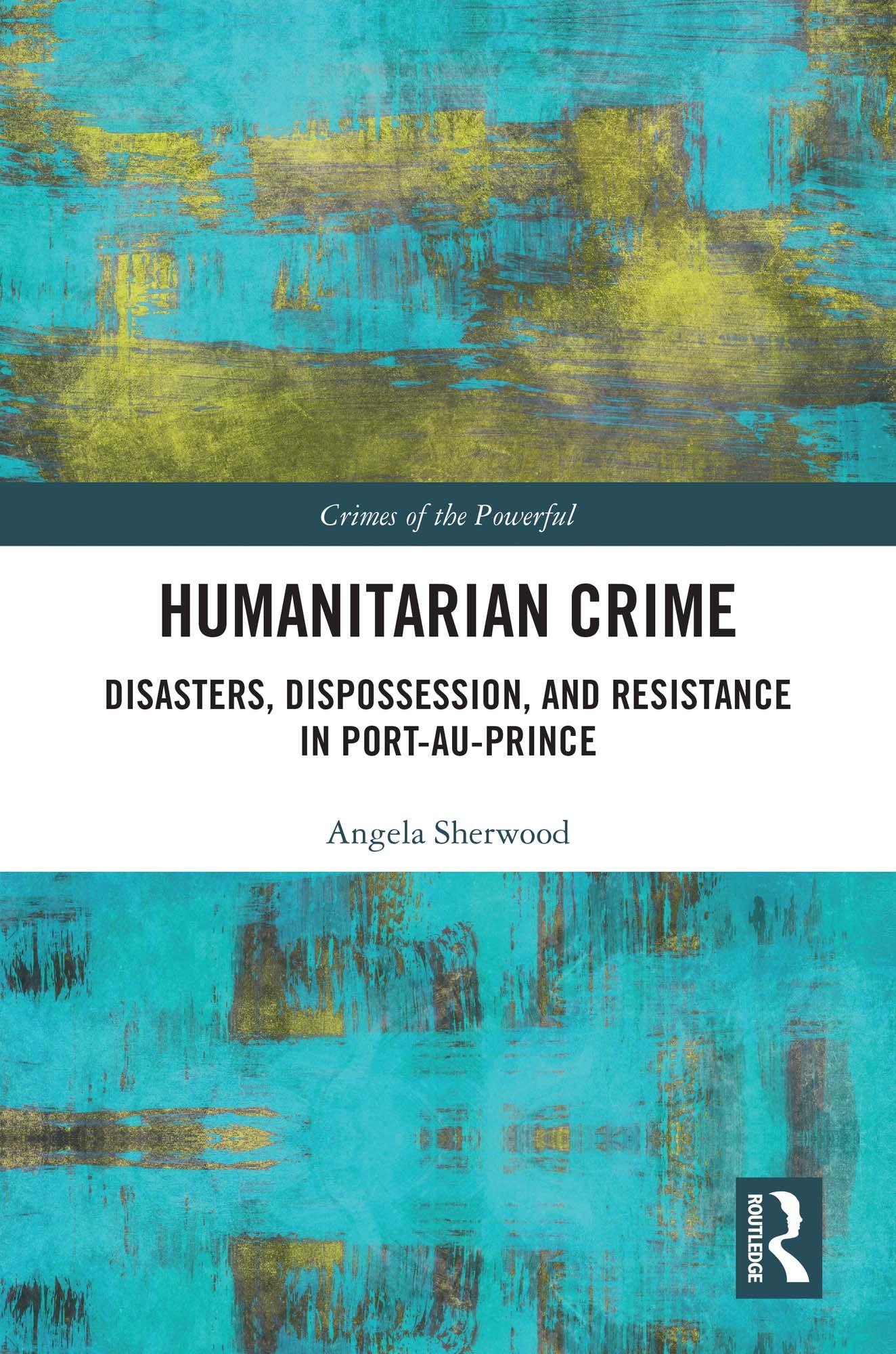
This is the first book to theorise humanitarian power within the crimes of the powerful tradition. It offers a compelling account of the structural forces embedded in humanitarian institutions and the practices and forms of legitimation through which the violent effects of humanitarian intervention are typically produced and obscured.
Focusing on post‑earthquake Haiti, a setting marked by large‑scale international involvement and deep historical and colonial inequalities, this book examines how humanitarian organisations helped shape the city’s post‑disaster
landscape. It shows how humanitarian actors, working alongside the Haitian state, contributed to the reproduction of homelessness, landlessness, and urban exclusion through their management of displacement camps, their
reliance on property‑based models of assistance, and their role in coercive programmes of camp closure.
Drawing on extensive fieldwork, interviews, and archival research, this book develops the concept of humanitarian crime to illuminate the state processes, institutional arrangements, and material structures that underpin violent
outcomes in humanitarian settings. At the same time, it centres the voices of Haitian civil society and affected communities, highlighting how those subjected to state–humanitarian expulsions interpret, contest, and resist the
harms inflicted through humanitarian governance. It foregrounds land occupations and informal urbanisation as key forms of resistance that expose and challenge the dispossession inscribed within the everyday workings of
humanitarian intervention.
By situating humanitarianism within wider relations of sovereignty, accumulation, and control, this book opens new pathways for studying humanitarian power and its role within contemporary global violence. It
also establishes a research agenda for understanding humanitarian crime and for examining how contemporary crises, not least increasingly frequent climate disasters, are being governed in ways that only deepen precarity and dispossession.
This book is essential reading for all those engaged in work on crimes of the powerful, disaster recovery, state and corporate crime, and Caribbean Studies.
Zahle einfach mit Karte, Klarna, Apple Pay oder Google Pay. Nicht zufrieden? Du hast immer ein 14-tägiges Widerrufsrecht. Lies mehr in unseren AGB. Hast du Fragen, schreib uns eine E-Mail an hello@memmo.org.
Memmo macht das Lernen einfacher – wo auch immer du bist. Bei uns findest du deine Kursbücher und smarte Lerntools an einem Ort: Zusammenfassungen, Quizzes, Podcasts und Lernkarten. Und Ted, dein Lernbuddy, beantwortet alles, was du wissen möchtest. Über 50.000 Studierende lernen bereits hier – gemacht, damit du schneller lernst und weniger Stress hast.