
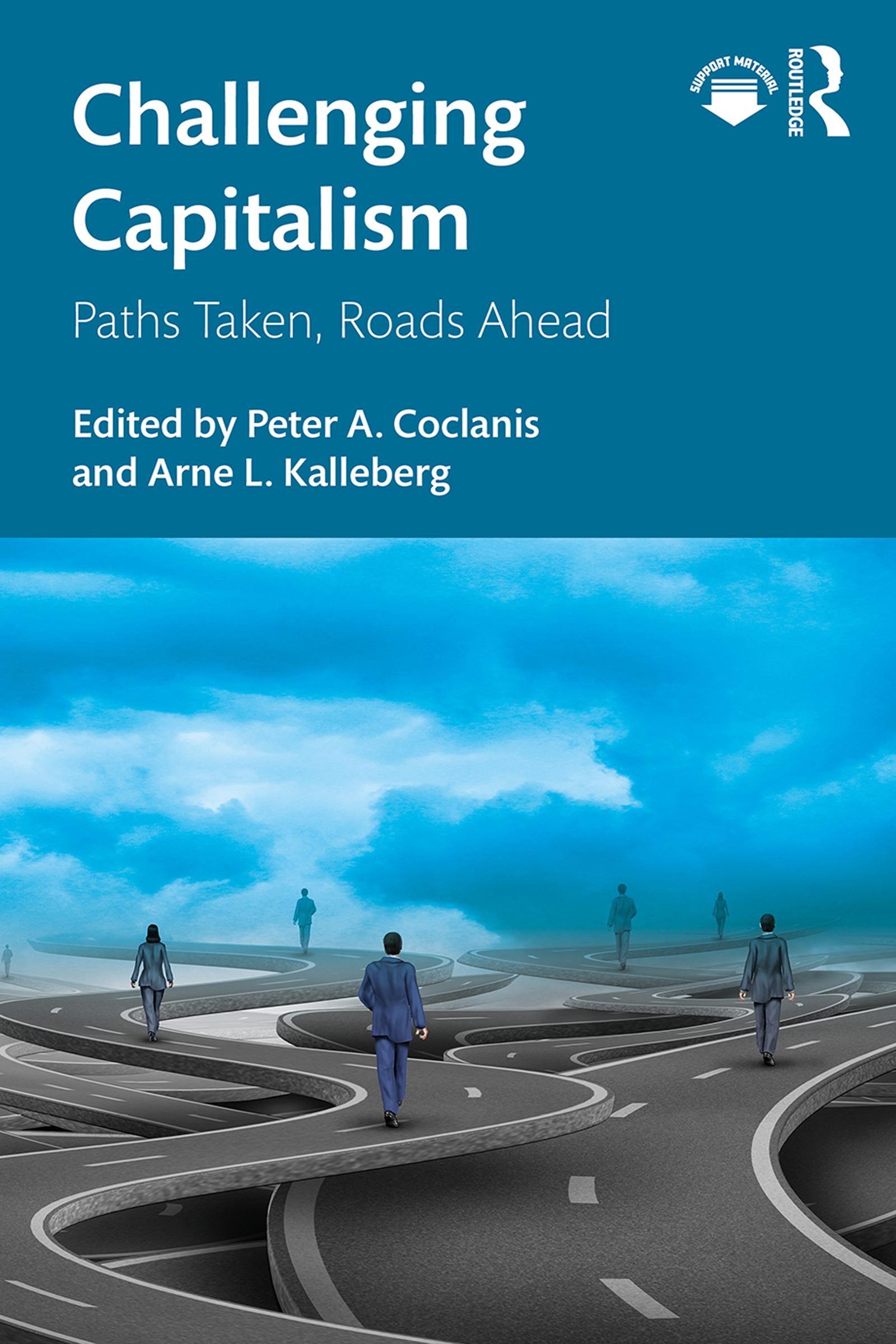
Commentators today generally agree that we are at an inflection point in the history of capitalism. This economic system in its long-regnant neoliberal form—privileging free international trade, promoting the transnational movement of capital and labor, and advocating a limited role for the state—has faltered, if not failed, and needs to be superseded by a new political-economic architecture that accommodates pressing concerns relating to national security, climate change, inequality and equity, and resiliency among others. Few serious writers are calling for capitalism to be razed, as this system has proven far superior to others in generating wealth and providing higher living standards. Moreover, since its emergence centuries ago, capitalism has proved highly adaptable, able to survive, even to thrive, in both hospitable and inhospitable circumstances and surroundings, often in the face of stiff competition and outright opposition.
In Challenging Capitalism, an interdisciplinary group of distinguished scholars addresses some of the likely challenges of a new political-economic order that minimizes capitalism’s deficiencies without impeding unduly its ability to facilitate and support wealth creation and human flourishing. An introductory chapter traces the development of capitalism as an economic system and identifies the three major eras in the modern version of capitalism. This chapter sets the stage for a baker’s dozen chapters that examine important features and forms of the dominant economic system, including racial capitalism, platform capitalism, surveillance capitalism, authoritarian capitalism, and stakeholder capitalism. The authors approach capitalism and its future from different angles and from a variety of ideological perspectives, offering keen insights into the capitalist paths we have traveled, our position today, and the road or roads ahead.
The book is essential reading for anyone interested in capitalism from across the social sciences and humanities, including political economy, sociology, history, political science, public policy, and economics.
Zahle einfach mit Karte, Klarna, Apple Pay oder Google Pay. Nicht zufrieden? Du hast immer ein 14-tägiges Widerrufsrecht. Lies mehr in unseren AGB. Hast du Fragen, schreib uns eine E-Mail an hello@memmo.org.
Memmo macht das Lernen einfacher – wo auch immer du bist. Bei uns findest du deine Kursbücher und smarte Lerntools an einem Ort: Zusammenfassungen, Quizzes, Podcasts und Lernkarten. Und Ted, dein Lernbuddy, beantwortet alles, was du wissen möchtest. Über 50.000 Studierende lernen bereits hier – gemacht, damit du schneller lernst und weniger Stress hast.